The Back Porch and the Unknown Visitor
It is not the storm or the lack of power that turns a neighborhood quiet into a security problem. It is the person knocking on the screen door when the lights are off. In late August, a mid-level outage can stretch into days, turning a comfortable evening into a prolonged test of patience and judgment. When the generator hums or the batteries run down, the immediate threat shifts from environmental discomfort to human friction.
As an Amazon Associate, I earn from qualifying purchases.
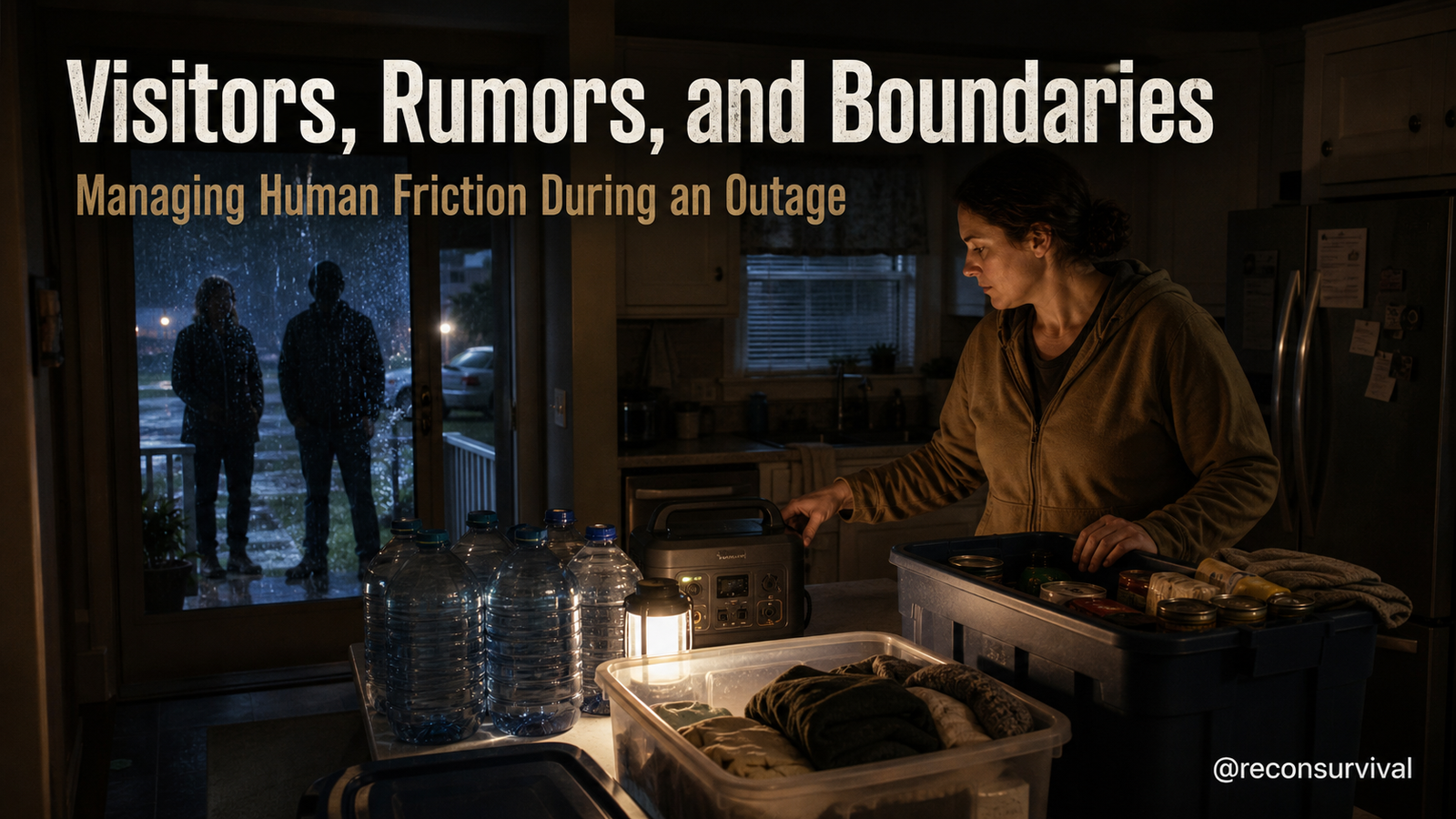
The most dangerous variable during an extended blackout is not the darkness; it is the pressure to answer. Neighbors may come seeking help, sharing unverified rumors, or asking for items you cannot spare. In the first few hours, the impulse to be helpful is strong. By the third day, that impulse can lead to poor decisions, resource depletion, or unsafe encounters. You need a way to manage these interactions without escalating tension or compromising your household's safety.
Why Access Control Becomes Security
Extended outages create a unique environment where normal social contracts fray. Without electricity, communication networks struggle, and the fear of scarcity grows. People may arrive at your home assuming they know your inventory or your plans. They may believe a rumor that you have backup supplies that they are desperate for.
This is where the security risk materializes. If you do not have a protocol for handling visitors, you are forced to make decisions in the moment, often under stress. A friendly request can become a demand. A shared rumor can turn into a panic that spills over into your yard. The danger is not necessarily a hostile intruder; it is the erosion of your ability to control who enters your space and what they know about your home.
Managing human friction is a form of security. When you control the narrative and the access, you reduce the likelihood of confrontation. You keep your energy focused on maintaining your systems rather than trying to placate every visitor. This approach applies to the front door, the garage, the side gate, and even the phone line.
The Trap of Immediate Hospitality
The most common mistake households make during an outage is the immediate assumption of hospitality. When the doorbell rings or someone shouts from the street, the instinct is to open the door, offer water, or explain what is happening inside. In the first few hours of a blackout, this is understandable. However, if the outage extends to a week, this habit becomes a vulnerability.
You cannot know the background or the urgency of the person at the door. You cannot verify if they are sharing accurate information or if they are driven by panic. If you answer every request immediately, you expose your household to unpredictable variables. You risk depleting resources on outsiders when you need to conserve for your family. You also risk revealing too much about your security posture or your remaining supplies.
The mistake is treating every knock as a social interaction rather than a security checkpoint. In an extended outage, the social contract is suspended. You must prioritize the safety and continuity of your household over the immediate comfort of the visitor.
The Recon Survival Boundary Protocol
The Recon Survival method for handling visitors, rumors, and pressure relies on a three-layer system: Visual Control, Verbal Filtering, and Resource Lockdown. This is not about being cold; it is about creating a buffer between your household and external pressure until you can assess the situation.
This system works for any interaction, whether it is a neighbor asking for water, a group sharing news about the grid, or a request for tools or fuel. The priority is to slow down the interaction and keep your household secure. You do this by controlling what you see, what you hear, and what you give away.
Visual Control: The Perimeter Check
Before you engage, you must establish your visual perimeter. When the power is out, your home should not look inviting to those who might be looking for a free meal or a safe haven.
Start at the front door. Ensure the entryway is well-lit by a battery lantern or a hand-cranked light. A dark doorway invites uncertainty and can be a signal that someone is inside looking for something. Move to the side gates. Close them and lock them. A locked gate signals a boundary. Do not leave a fence panel open or a side door unlocked because it is "convenient."
Check your windows. Ensure blinds are drawn or curtains are closed at night. If you have a backyard that is visible from the street, move chairs and tables away from the windows. This creates a visual blind spot for anyone watching from the street. You do not need to hide everything, but you must deny an easy read of your interior.
If you have a vehicle in the driveway, keep the fuel cap on and the doors locked. An open car during a blackout can signal that you have fuel or supplies to share. Move the vehicle inside a garage if possible, or at least park it under a canopy where it is less visible.
Verbal Filtering: The Communication Filter
When you do engage with someone at the door, you must use a verbal filter. This is a standardized set of responses that you can use without thinking. Do not volunteer information. Do not explain your situation in detail.
If a neighbor asks how you are doing, respond with a brief, non-committal statement. "We are managing. Thank you for checking in." If they ask for water, food, or medicine, use a standard refusal. "We are keeping our supplies for our immediate family right now."
This is not cruel; it is necessary. You cannot afford to be a resource hub for the neighborhood during a crisis. If a rumor is being shared, do not confirm it. Do not deny it either. Simply state, "I am not sure what is true right now. I am just focusing on keeping my home safe."
Keep your voice calm. If the person becomes agitated, do not argue. End the conversation. "We can talk later. Please keep moving." If the person persists, step back inside and lock the door. Do not engage in a debate about the outage.
Resource Lockdown: The Inventory Check
The final layer is securing your resources. During an extended outage, the temptation to share is strong. You must resist it.
Check your water containers, food storage, and fuel supplies. Ensure they are sealed and stored in a secure location. If you have a safe or a locked cabinet, keep the keys on your person. Do not leave supplies out in the open where they can be seen through a window.
If someone asks to borrow a generator or a tool, the answer is no. You do not know if they will return it, and you cannot risk them having a tool that could be used against you later. Keep all tools in a locked shed or garage. Do not leave them on the porch or in the yard.
The Room-by-Room Security Walk-Through
To implement these boundaries, you need to know exactly what is happening in each part of your home. A quick walk-through of the perimeter and the entry points helps you maintain control.
The Front Entry:
- Lighting: Ensure a battery-powered lantern is positioned to illuminate the porch and the door from the inside. Check the batteries today.
- Locks: Test the deadbolt and the chain lock. Make sure they slide smoothly.
- Visibility: Clear any debris from the walkway. Trim back bushes that block the view of the door from the street.
- Response: Decide on a standard phrase to use if the doorbell rings. Keep your hands visible but ready to reach for the lock.
The Garage and Side Gates:
- Access: Check that side gates are locked. If you have a driveway, ensure the car is parked securely.
- Lighting: Check the motion-sensor lights. Replace bulbs if they are dead.
- Tools: Move all power tools and ladders into the locked interior of the garage. Do not leave them on the porch.
- Fuel: If you have portable fuel containers, ensure they are stored in a locked area, away from the house.
The Kitchen and Utility Area:
- Storage: Check that food and water are in sealed containers. Move them away from the windows.
- Equipment: Ensure your generator or battery backup is in a safe, ventilated area. Do not leave it running unattended.
- Lighting: Have a dedicated lantern or flashlight ready for night use. Keep batteries charged.
The Backyard and Garden:
- Perimeter: Walk the entire perimeter of the yard. Check for open fences or loose gates.
- Lighting: Ensure the back porch is lit. A dark backyard can be an invitation to trespass.
- Plants: Move any valuable plants or tools away from the windows.
- Visibility: Ensure that no one can see into your living room from the backyard.
The Vehicle:
- Fuel: Check the fuel gauge. Ensure the fuel cap is secure.
- Locks: Verify that all doors are locked.
- Visibility: Park the car under a cover or inside the garage. If outside, keep the windows up and the interior dark at night.
The Recon Survival Principle
The core principle of Recon Survival during an outage is to treat access as a resource. Every interaction with the outside world consumes energy, time, and potential security. By establishing a clear boundary protocol, you preserve your resources for your household. You do not need to be aggressive; you simply need to be consistent.
A calm, firm boundary is more effective than a chaotic, emotional response. When you control the flow of information and access, you reduce the pressure on your household. You allow yourself to focus on the critical tasks of maintaining power, securing water, and keeping your family safe.
This principle applies to every interaction. If a neighbor asks for help, you can respond with a brief, non-committal statement. If a rumor is circulating, you do not spread it. You do not share your inventory. You maintain your focus on your own safety and the safety of your family.
Recon Survival Principle
Recon Survival is not about waiting for stress to make the decision. It is about turning weak signals into household action while the fix is still small. Handle requests, rumors, pressure, and neighborhood interactions calmly and safely.
Do Today
The first step is to conduct a perimeter walk. Walk the entire length of your property and note any open gates, broken locks, or areas where visibility is poor. Fix the immediate issues you find.
Check your lighting. Ensure that every exit, entry, and utility area has a battery-powered light source. Test the batteries and replace them if necessary.
Decide on your verbal filter. Choose a standard phrase you can use to respond to visitors or rumors. Practice saying it out loud until it feels natural.
Check your inventory. Ensure your water, food, and fuel are stored securely and are visible only to you. Move any valuable items or tools to a locked area.
Finally, discuss the plan with your family. Make sure everyone knows the boundary protocol and understands the importance of not opening the door to strangers. A unified family is a secure family.
By taking these steps, you create a safe environment where you can manage the uncertainty of an outage without succumbing to pressure. You control the narrative, you control the access, and you control the outcome.
- Put a working flashlight or headlamp where each person sleeps.
- Charge one backup battery per critical phone and pair it with the right cable.
- Test the weather radio, spare batteries, and the room where everyone will gather.
- Check carbon monoxide alarms before any generator, grill, or fuel-burning backup plan.
- Write the generator placement rule on paper and keep it with the cords.
- Stage extension cords, chargers, and lights where they will be used first.
- Assign one person to run the light check after sunset.