Entryway and Trunk Inventory Check
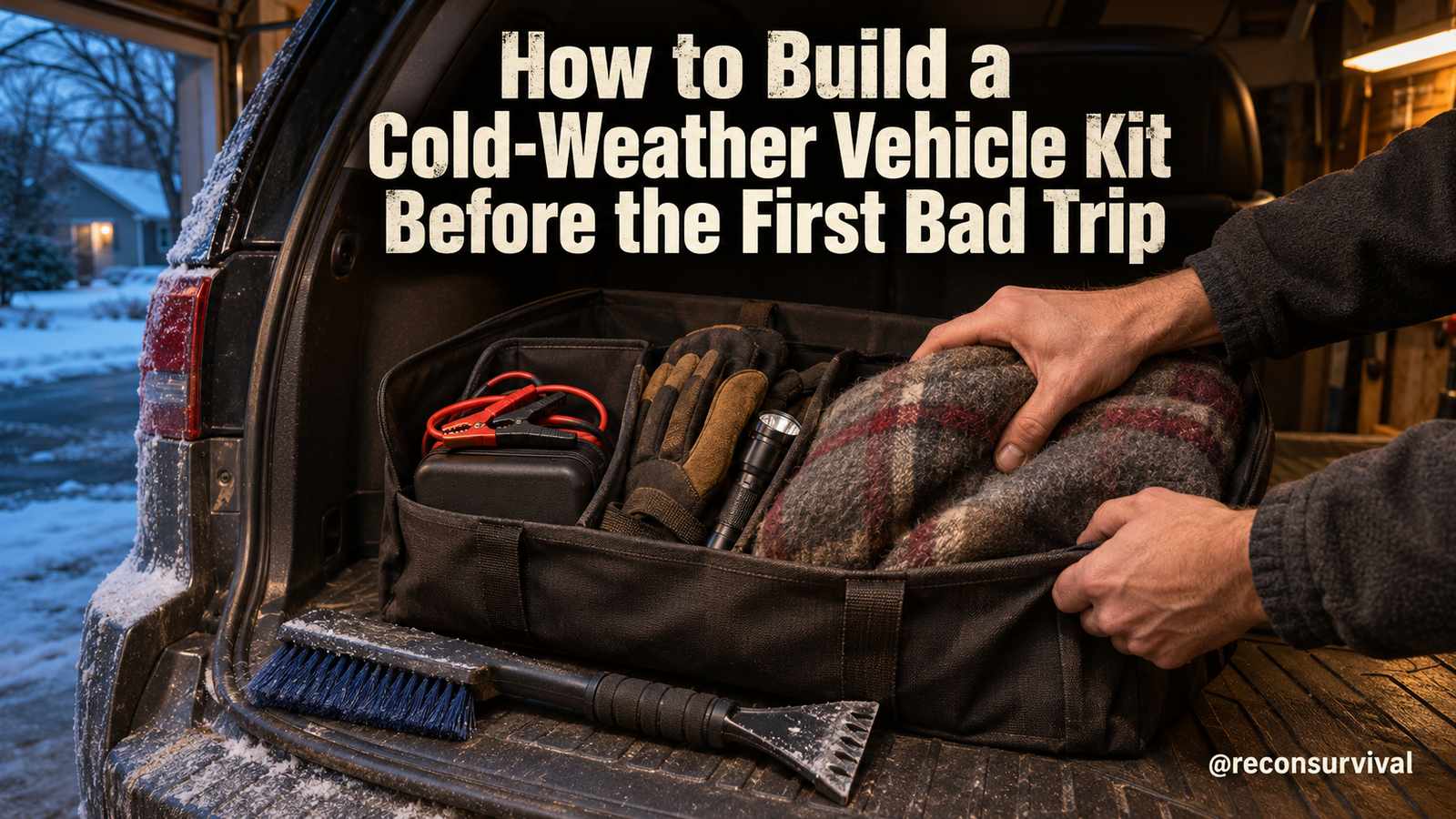
Most people wait until a winter storm warning is active to start packing. By then, store shelves are empty, and the urgency of the moment makes decision-making difficult. The mistake is packing nothing until the stress of the situation forces a hasty choice. For winter travel, you need a kit that separates the essential items for water, warmth, light, traction, power, tools, and communication from daily clutter. Begin by identifying a single dedicated container, such as a plastic tote or heavy-duty bin. Place this container in a consistent location, either near the front exit or in the trunk, so it remains separate from general household clutter. This approach ensures that the supplies for the seven essential functions are always ready for immediate use.
Warmth and Hydration Storage
Water freezes and spills in the cold. Pack insulated containers or bottles that have not been opened recently. Store a heavy blanket or sleeping bag inside the dedicated container rather than leaving it loose in the trunk where it is difficult to reach quickly. While a wool blanket retains heat even when damp, a synthetic fleece works if it stays dry. The tradeoff is space: a thick sleeping bag takes more room but provides more heat per ounce than a thin blanket.
Lighting and Power Management
Headlamps free your hands for driving tasks or vehicle checks in the dark. Batteries can lose effectiveness in low temperatures. Keep a set of spare alkaline batteries inside your pocket or a warm interior pocket, rather than loose in the trunk where they may lose charge. A small flashlight or headlamp with fresh batteries is a practical tool for finding a vehicle jack or checking a tire.
Traction and Tool Access
Traction is the first line of defense against being stuck. A bag of sand, salt, or specialized traction mats helps get a vehicle moving again. A small shovel or sturdy plastic tool is a practical addition for clearing snow from around tires. Include a multi-tool, a knife, and a set of heavy-duty work gloves. Your hands are the primary interface with cold metal and ice; if you cannot grip a wrench or pull a door handle because your hands are numb, the vehicle's mechanical status becomes irrelevant.
Communication and Contact Lists
Keep a printed contact list with names and numbers for family, road assistance, and local emergency services. Write this on cardstock or place it inside a waterproof sleeve. A paper list serves as a fallback when electronic devices lose power or when cellular networks are down. This document is not a digital backup; it is the essential alternative when all screens go black.
Recon Survival Principle
Identify the one location where you will store your winter kit. Verify that you have water, warmth, light, traction, power, tools, and communication items within that container. Ensure a printed contact list is included. Place the kit in the trunk or near the exit now.