Most people store extra food before a holiday trip, but water usually runs out or freezes first. If a trough leaks or a pipe freezes while you are at a Thanksgiving dinner, the animals are the first to suffer. The real gap appears when travel stresses set in and the household stops checking physical systems. <p class="rs-affiliate-disclosure"><em>As an Amazon Associate, I earn from qualifying purchases.</em></p>
Water Buckets and Troughs
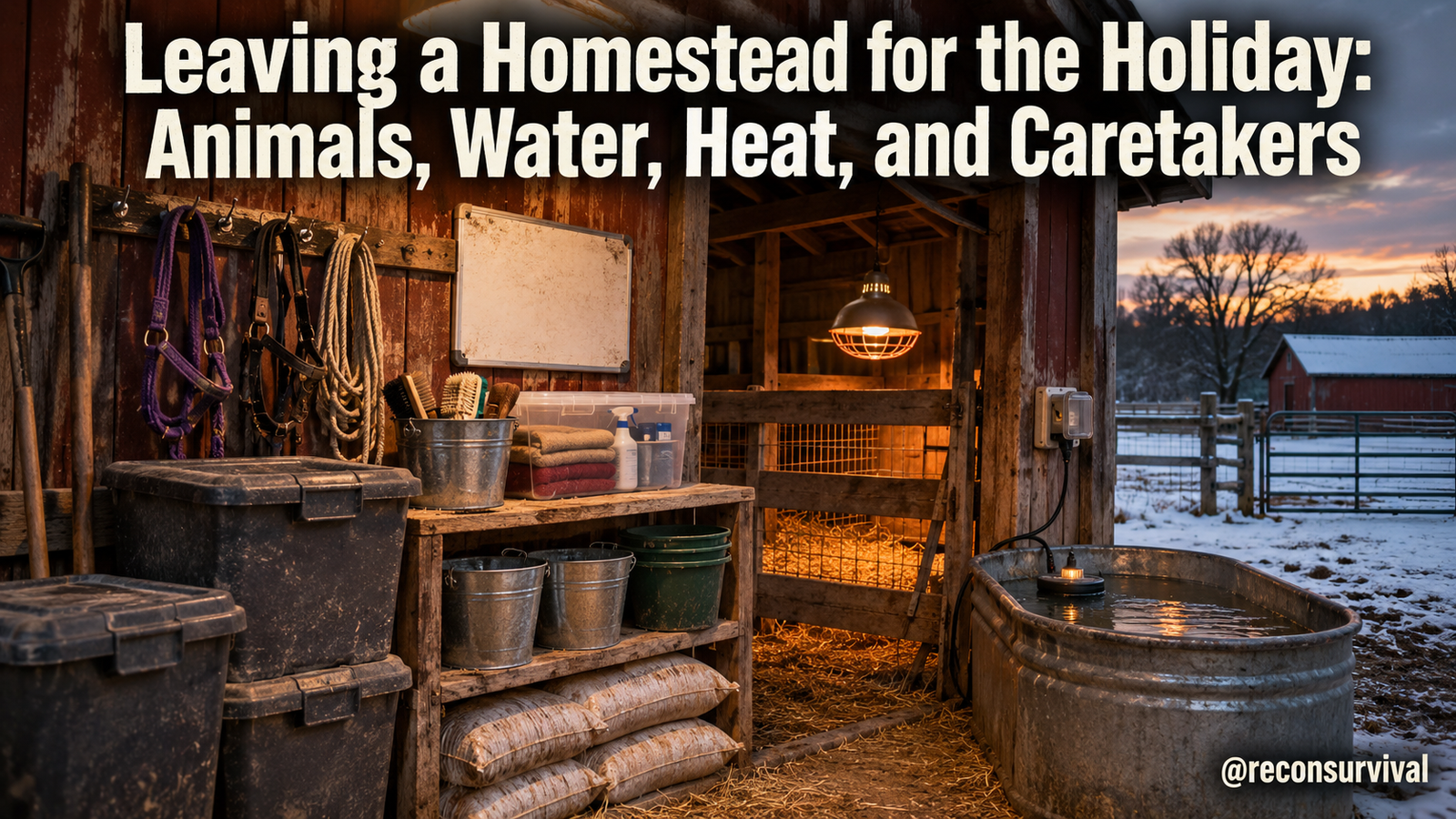
Start with the first physical check before you leave the property. Water is the limiting factor for both people and animals. Go to the water buckets and troughs. Look for cracks, holes, or loose fittings. A crack lets water drain onto frozen ground, creating an icy patch that hides a leak. A blocked drain prevents fresh water from reaching the animals if the supply freezes or the pump stops working. The mechanism is simple: animals drink regularly. If the source is dry or frozen, they stop eating and become stressed. You do not need a sensor to know this; you can see the empty bucket or the frozen ice sheet on top of the trough. Check: Lift the lid or look inside. Is there water? Is the bottom intact? Is the hose or pipe clear of kinks? If you find a leak, plug it with a patch or move the container to a sheltered spot. If the access is blocked by snow or debris, clear the path now. Do not wait for a storm to tell you the water is gone.
Heating and Fuel Systems
Keep the home warm enough to protect the water lines, but do not rely on guessing. Check the heat source you use to keep the house warm. This could be a furnace, a wood stove, or a space heater. The manufacturer specifies the fuel type, venting requirements, and safe operation for your specific model. If you use a generator or portable heater, confirm the fuel is stable and the tank is secure. The constraint is safety. Fuel and ventilation are linked. An indoor heater without proper airflow creates carbon monoxide. A generator placed too close to a window or door can back up exhaust into the house. Check the carbon monoxide alarm batteries and ensure they are fresh. Check: Is the alarm working? Does the unit run steadily without unusual smells? Is the fuel storage secure and away from living spaces? If the heating system requires internal service, leave it to a qualified technician. Do not attempt to fix a furnace sensor or replace a burner yourself. Follow the manual instructions for any filters or basic maintenance you can perform safely.
Feed and Care Instructions
Prepare the feed so it does not spoil or become inaccessible, and leave clear instructions for anyone who visits. Store feed in a dry, rodent-proof container. Moisture turns feed into mold, which can make animals sick. If you use a bin, check that the lid seals tightly. If you have dry goods like grains, keep them off the concrete floor to avoid moisture wicking. For a small backyard setup, you may need to measure out daily portions. For a small homestead, you might set up a bulk container with a gravity feeder. The difference is the volume and the access point. Write a single sheet of paper with the essential details. Include:
- Where the feed is stored. * How much to feed each animal. * How to check the water source. * Who to call if a door is stuck or a line bursts. Check: Can someone else find the feed without opening a locked shed? Does the sheet list the phone number for a local vet or emergency service? This is an example of a low-cost option: a printed note on the fridge. A more durable upgrade path is a laminated card taped to the feed bin or a digital document shared with a trusted neighbor. Neither is mandatory, but having the information accessible reduces the risk of confusion. ## Low-Cost vs. Durable Options
You can prepare the household without buying expensive gadgets. Low-Cost Option: Use a manual bucket system. Fill buckets with water, place them in a garage or shed where the temperature is above freezing, and ensure they are easy to reach. Check the lids are tight. Leave a written note with the caretaker on how to top them up. Durable Upgrade: Install a heated water bowl or a pipe insulation wrap. These devices keep water liquid in cold weather. They require electricity and a backup plan if the power fails. Confirm the rating on your equipment label before connecting to a circuit. The tradeoff is cost versus convenience. A heated bowl saves you a trip to check the water every morning. A manual bucket system saves you the expense but requires daily attention from someone on site. Choose based on your budget and the length of your trip.
Small Yard vs. Small Homestead
The same principles apply whether you keep a few chickens or a small herd. For a small backyard, focus on the water source. A single bucket or a small automatic waterer needs a daily check. If the power goes out, the automatic feeder stops. The caretaker must know how to refill it manually. For a small homestead, the system is larger. You may have multiple troughs and longer pipe runs. The risk of a frozen pipe is higher. Insulate the exposed pipes and leave extra feed on site. The written instructions should cover multiple zones. Check: Can the caretaker reach every water source without driving through snow? Do they know which animals need special attention? If the trip is longer than a weekend, consider a temporary caretaker who stays on-site. If the trip is short, a daily check-in from a neighbor may suffice. Confirm local requirements vary; some areas have strict rules about leaving animals unattended.
Recon Survival Takeaway
The most common mistake is waiting until the last minute to check the water. By then, pipes may already be frozen or buckets empty. A practical system for holiday travel relies on checking the physical state of the water, heating, and feed before you step out the door.
Do Today
Check the animals' water buckets and troughs for leaks and blocked access. Ensure the heat source is safe and the carbon monoxide alarm works. Leave a clear, written instruction sheet for any caretaker. If you find a leak, fix it now. If the heating system needs professional service, call a technician before you leave. If you are unsure about a specific safety rule, check the manufacturer manual or consult local emergency management guidance. This checklist is a starting point for your specific setup. Adjust it to fit your animals, your climate, and your home.