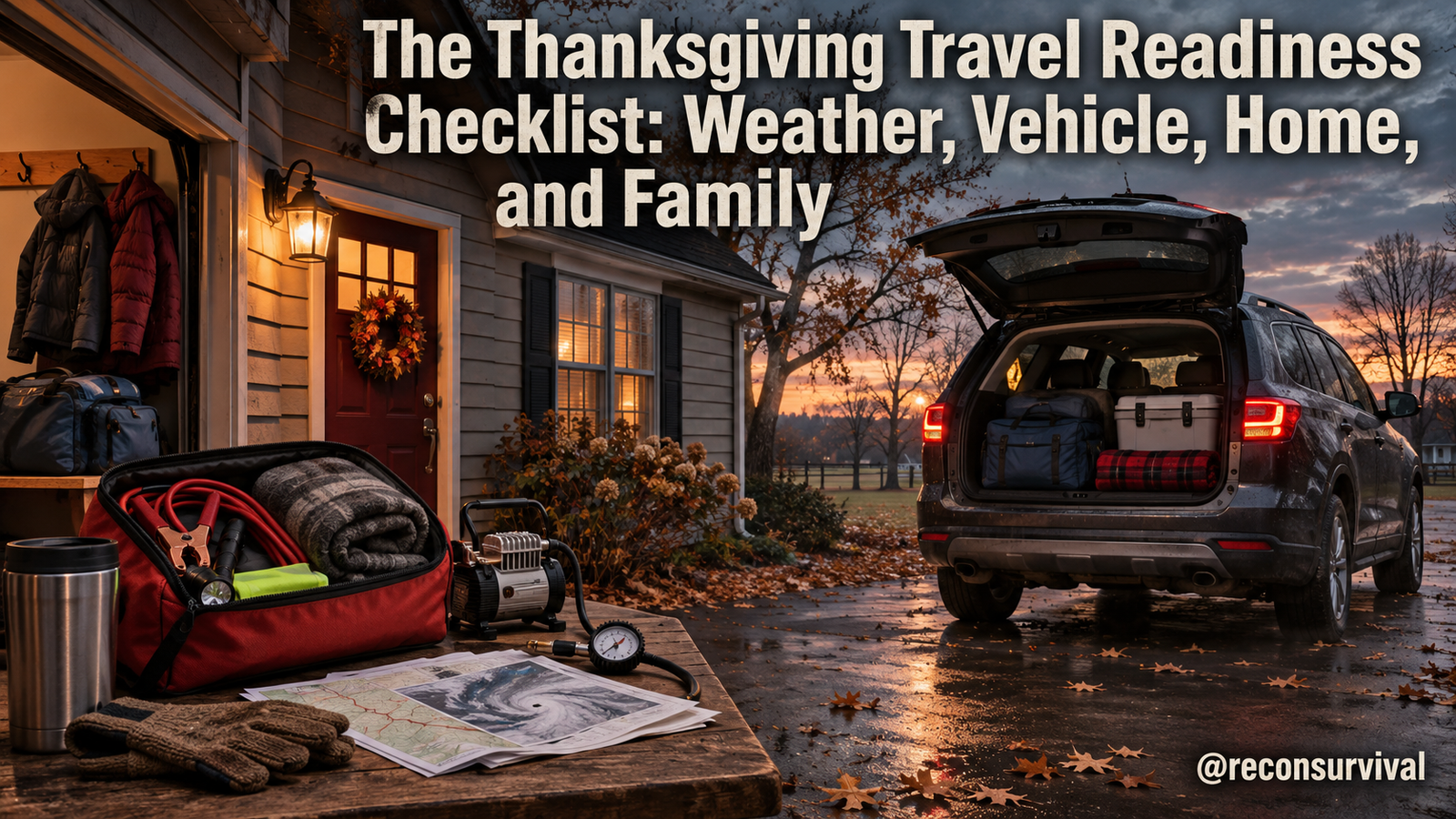
If your power goes out this afternoon and your phone battery dies, can your household still follow the plan for the trip, the guests, and the house? Most holiday travel plans dissolve when the weather turns or the road closes, and most home security checks happen only after the guests have already arrived. You can fix this gap before the rush begins. The Thanksgiving window brings predictable pressure: travel routes change overnight, cold snaps knock out power, and the number of people in one house rises sharply. These conditions create the exact moment when a missing phone charger or a closed gas line causes a delay, a canceled trip, or a safety hazard. You do not need new gear or a complex protocol to handle this. You need a physical backup to the digital plan you rely on today. The most common mistake is waiting until the morning of departure to confirm the route, the weather, or the home status. By then, the phone signal is weak, the roads are gridlocked, and the house is unprepared for a sudden power outage or a guest with a dietary need. The decision to leave or stay is harder when you are looking for a charger or hunting for a spare key.
The Vehicle and the Road
The car is the first place to fail because the plan is usually stored in an app or a browser tab. If the battery dies or the cell towers are overloaded by holiday traffic, the navigation fails. Your first action is to create a physical route sheet and a home readiness card. These are not digital files; they are paper that survives a dropped phone. Print a map of your route with major rest stops and alternative routes marked. Print a separate card that lists the home checklist: what to do before you leave the house and what to do if you are delayed. Put both documents in the glovebox of your car. This works because the glovebox is a dry, protected location that is always accessible, even if the car battery is dead or the engine is cold. It ensures you can verify your path without needing a signal. If the weather turns bad, you can still see the alternative route on paper. Check that the paper is current. If you change your route because of a road closure, update the sheet and move it back to the glovebox. Do not leave the car with a map that directs you to a highway that closed yesterday.
The Home and the Security
When you leave for the trip, the house is often left in a state that invites a break-in or a leak. The presence of guests complicates this because people move boxes, block vents, and leave doors open while socializing. You need a simple security sweep before anyone leaves. Check the perimeter for unlocked doors and windows. Ensure that any gas stoves or heaters are turned off. If you are using a smart device, verify that it is still connected to power; if not, rely on the physical plan. Place the home readiness card in a visible spot on the fridge or near the front door. The card should list:
- Which doors are locked and which windows are secured. – Which rooms have guests staying and which are empty. – Which appliances are turned off. – Who is responsible for checking the house at a specific time. This turns a complex security problem into a single visual check. If a storm knocks out power, the physical card tells you which circuits to cut and which doors to bolt, without needing to guess. ### The Family and the Communication
The hardest part of holiday travel is coordinating people who are in different places. One person is driving, one is cooking, and one is checking the house. If the primary communication channel fails, the group fragments. You must establish a single point of contact and a backup method. This is not about buying a satellite phone or a new radio. It is about writing down who calls whom and where to meet if the main plan fails. Write the name and phone number of the designated emergency contact on the family calendar and on the fridge. Include a backup contact who lives in a different time zone or region. If the primary person cannot be reached, the backup person knows to call the next contact. Test this system now. Call the designated contact and ask if they have your number. If they do not, write it down and stick it on their fridge or send it via text. Do not wait for the holiday to find out your contact list is wrong.
The Decision to Stay, Leave, or Wait
Mid-to-late November brings variable weather. A forecast that looks clear in the morning can turn to snow by noon. You need a decision point that does not rely on a single app or news feed. Consult the Oracle AXIS situation note or your local weather update to assess the current conditions. Based on the severity of the weather and the road conditions, decide whether to:
- Leave early to avoid the worst of the storm. – Stay until conditions improve. – Wait and reassess later in the day. This decision is not about fear; it is about timing. Leaving early often means avoiding the gridlock and the worst of the precipitation. Waiting allows you to see if the road clears. The key is to make this decision while you still have power and signal, not after the roads are closed and the phone is dead. ### What to Do Today, This Week, and Later
You do not need to do everything at once. Spread the work across the days leading up to the holiday to reduce stress.
Today:
- Print the route sheet and the home readiness card. – Put both in the glovebox. – Write down the family emergency contact numbers and place them on the fridge. ## This Week:
- Test the family communication plan by calling the designated contact. – Check the perimeter of the house for unlocked doors or windows. – Verify that your backup power sources (flashlights, batteries, portable chargers) are functional and charged. ## Later This Season:
- Review the weather forecast daily and update the route sheet if necessary. – Ensure that all guests know the location of the fire extinguisher and the emergency exit. – Confirm that the Oracle AXIS situation note or local guidance does not indicate a need to change your plans. ### Recon Survival Takeaway
The difference between a smooth holiday and a crisis is not the amount of gear you own. It is having a physical backup to the digital plan you rely on. When the power goes out or the phone dies, the paper in the glovebox and the card on the fridge tell you what to do next. This allows you to stay calm, keep the family together, and make the right decision about when to leave or stay.
Do Today: Print the Route and the Home Check
- Open your mapping app or navigation tool. 2. Print the current route, including alternative paths and rest stops. 3. Print a one-page home readiness card with locks, appliances, and guest locations. 4. Place both documents in the glovebox of your vehicle. 5. Stick a copy of the home readiness card on the front door or fridge. This single action gives your household a physical reference that works when technology fails. It is the most reliable way to ensure you can travel, secure your home, and communicate with your family even when the weather turns.