When the Power Stalls and the Countertops Fill
The first sign of trouble when the grid stalls is not a dark room, but food that no longer stays cold. During the crowded mid-to-late November season of travel and gatherings, the most common error is waiting until the power flickers to organize perishables. By then, the decision to act has been made by stress rather than by a plan.
As an Amazon Associate, I earn from qualifying purchases.
Visible Signs of Spoilage
Before worrying about what might happen, check what is already failing. Food safety relies on recognizing visible and olfactory failure signs rather than guessing based on time alone.
- Cans: Inspect the labels and rims of dated items. A can that is rusted, dented, or leaking requires disposal. If a can bulges or leaks, do not open it; pressure inside may indicate bacterial growth.
- Produce and Dairy: Discard dairy products that show signs of mold or separation. Do not attempt to wash off mold or cut it away from soft foods, as roots can penetrate deep. For hard cheeses or firm vegetables, cutting off at least an inch around and below the mold may be safe, but when in doubt, discard the item.
- Meat and Poultry: If meat smells sour or turns gray-green, discard it.
Do not taste food to check if it is spoiled. Many bacteria that cause foodborne illness do not change the smell or taste of food. If you are unsure whether the food stayed cold enough, the safest action is to discard the questionable items. This applies to meat, poultry, seafood, eggs, and prepared dishes.
Managing Crowded Storage
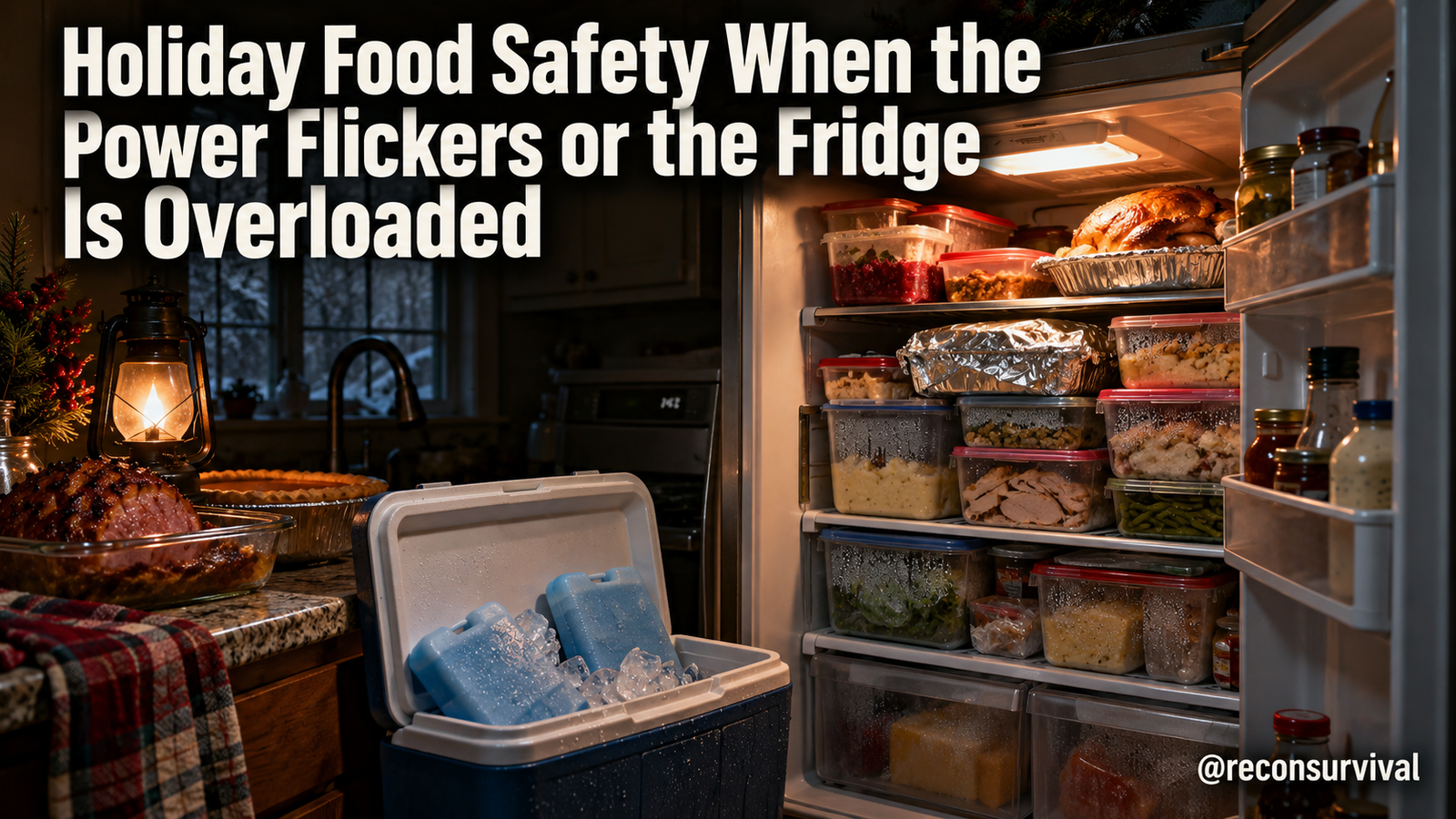
When guests arrive, new dishes and leftovers often stack inside the refrigerator. Heat does not move well through stacked items; the center of a deep casserole stays warm longer, extending the time food spends in the danger zone. The practical solution is a rotation check that prioritizes visible dates over arbitrary rules.
Start with the oldest dated can on the pantry shelf. Pull it to the front and inspect the label and rim. A can with a date in the past month belongs in the front row. This physical action forces a decision about what you will actually eat first.
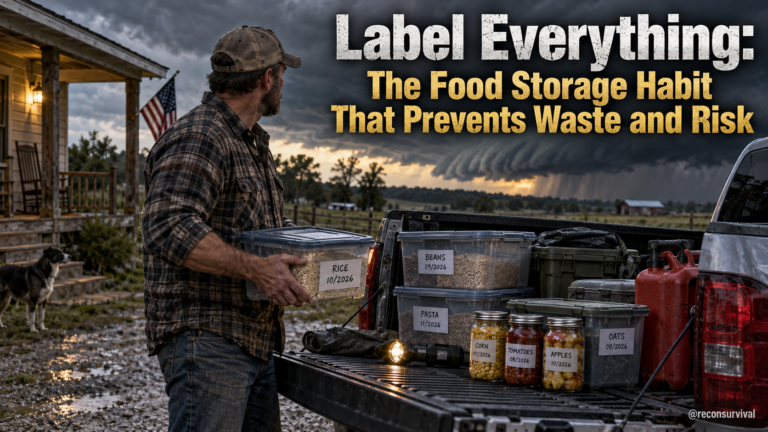
For the refrigerator, use masking tape and a marker to write the date and contents on every container. Place items with the earliest dates at the front and top, where they are easiest to see and remove. This method reduces the time spent searching during an outage. When the lights go out, you do not need to guess what has been stored the longest; you see the oldest item first.
Outage Handling and Safe Food Rules
When the power goes out, the refrigerator retains cold air for a limited time if the door stays closed. Every time you open the door, warm air enters and cold air escapes, raising the internal temperature.
Follow the manufacturer's instructions for your specific appliance. Most units provide guidance on how long food stays safe without power, but these times vary by model, ambient temperature, and how full the unit is. Do not rely on a single number for all situations. If the power returns before the door has been opened, the food inside is likely still safe. If the door has been opened frequently or the outage lasts hours, the safety of the food becomes uncertain.
Use water for drinking and cooking before using it for dishes. If the outage lasts more than a day, consider boiling or chemically treating water if the local authority advises it. Check your local fire department guidance for cooking safety during extended outages, especially if you plan to use a portable generator or outdoor grill indoors or in a garage. Carbon monoxide from combustion engines is odorless and deadly; always use these devices outdoors and away from vents.
Recon Survival Principle
Holiday food safety is about managing crowded refrigeration, leftovers, outage risk, and safe handling in a calm, realistic way. The most reliable action is a physical check of your oldest items before the power ever fails. This keeps your pantry organized, your food fresh, and your family safe.
Do Today: The Holiday Safety Sweep
- Pull the oldest dated can to the front of the pantry shelf and inspect the label and rim.
- Write the date and contents on every container in the refrigerator and place the oldest items at the front.
- Check your carbon monoxide alarms and ensure any portable heating or cooking equipment is used only outdoors.
- Review the manufacturer's instructions for your refrigerator and freezer regarding power outages.
- Plan one meal using items that are nearing their best-by dates.