
!
As an Amazon Associate, I earn from qualifying purchases.
The First Hour After a Hurricane: What Actually Spoils, What Turns Unsafe, and What You Can Eat Tonight
The can of beans you saved for "an emergency" is the first thing to fail, not the power grid. When the storm hits, the immediate threat isn't a lack of fuel; it's the silent rot of forgotten staples and the terrifying realization that your "five-day menu" was just a collection of dry goods in a pantry with no rotation system.
You don't need a new grocery list. You need a triage of what you already have. Most people panic about buying more food they won't eat. The real failure is assuming that a full pantry equals a prepared home. A pantry is not a plan unless the food becomes actual meals.
1. The Immediate Hazard: Water and Perishables
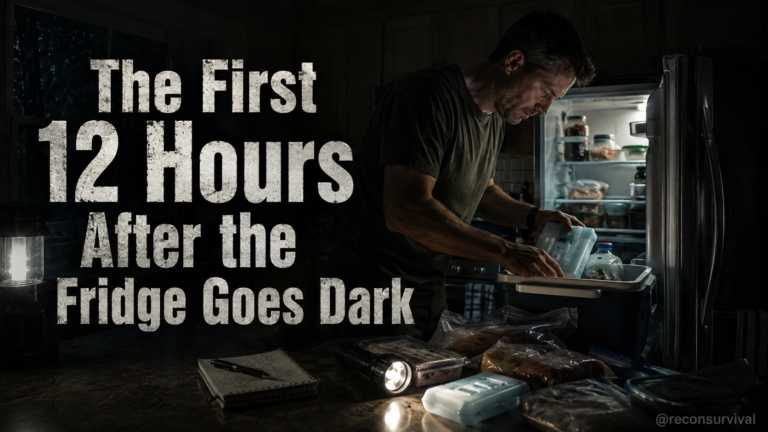
Before you worry about long-term rationing, you must assess the danger zone. If the power has been out for more than four hours, the first items to go unsafe are the water supply and any refrigerated or frozen goods.
- The Four-Hour Rule: Do not taste-test to see if food is "okay." If perishables have been above 40°F (4°C) for more than two hours, or if frozen food still contains ice crystals but has been warm for four hours, discard it. The risk of botulism and salmonella is not worth a saved can of soup.
- Water Potability: Check your stored water containers first. If you stored tap water, check for algae growth or container swelling. If you rely on well water, do not drink it until boiled or treated.
- The "Open" Factor: Any jar or container opened before the storm is now high-risk. Sealants are compromised.
Triage Ladder: First Hour
- Secure Water: Test stored water; boil tap water if necessary immediately.
- Isolate Unsafe Food: Move all thawed frozen goods and opened containers to a "discard" box.
- Light Check: Locate non-perishable items in the dark using a flashlight; do not turn on electricity if gas lines might be leaking.
2. The Pantry Rotation Failure: What You Already Have
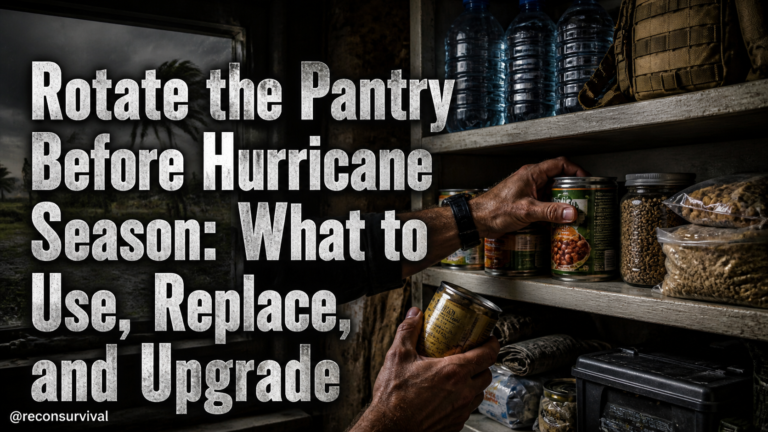
Once safety is established, you must address the inventory. The common mistake is staring at a full pantry and not knowing how to build a menu from it. The solution is to treat your pantry as a living system, not a warehouse.
You need to identify items that are prone to spoilage due to humidity or heat damage, which often happen during hurricane season. * The "Use It First" Bin: Pull out items that are already opened or nearing expiration. These are your first meals. * The Rotation Gap: If your canned goods are older than two years or your grains are in unsealed bags, they are your "next meal" candidates, but not your "tonight" candidates.
Triage Ladder: Same Day
- Audit the "Ready" Shelf: Gather all unopened, high-calorie, low-prep items (canned beans, tuna, rice, oats). 2. Identify Cross-Links: Find items that complement each other. Do you have pasta sauce but no pasta? Use rice or potatoes. Do you have crackers but no spread? Use peanut butter. 3. Map the 5-Day Menu: Create a simple list of three meals a day using only these items. No new shopping required.
3. The Low-Waste Storm Menu
A practical guide to turn existing pantry items into a practical storm menu with low waste, tied to the seasonal risks and systems that matter for Recon Survival readers. The goal is not to eat fancy, but to eat efficiently.
The 5-Day Hurricane Menu That Uses What You Already Store
- Day 1 (The Triage): Canned beans, rice (or pasta), and a vegetable. Boil the beans to make a stew. Use the cooking water for the rice. * Day 2 (The Rotation): Peanut butter and crackers, with a side of canned fruit. High energy, zero prep. * Day 3 (The Mix): Canned soup (boiled) mixed with uncooked noodles or oatmeal for bulk. Add salt and pepper. * Day 4 (The Protein): Tuna or chicken salad (made with mayonnaise from your stash) on a hardtack or cracker base. * Day 5 (The Reset): A "clean out the pantry" meal. Mix any remaining dry grains with any remaining dried fruit or nuts.
This system relies on the principle that you do not need a complex inventory system to survive; you need a system that uses what you store now. The theme is not "buying more," it is "using what you already have."
The Recon Survival Principle
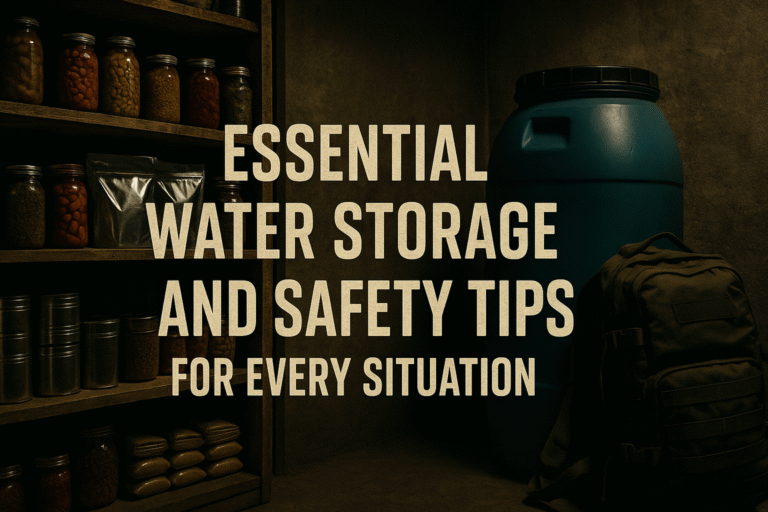
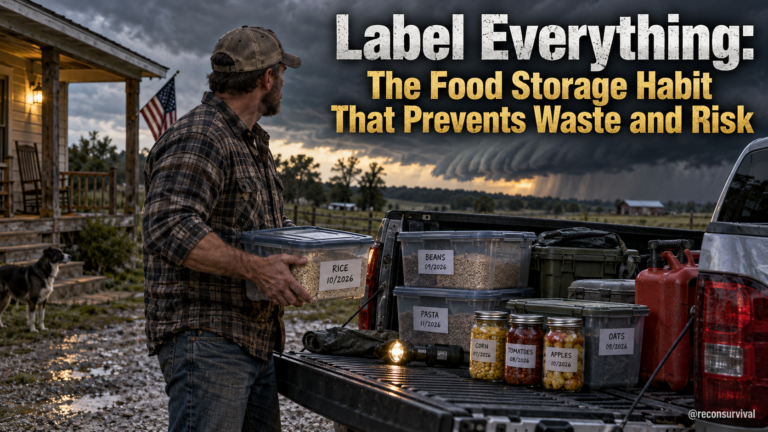
The 5-Day Hurricane Menu That Uses What You Already Store is not just a recipe list; it is a behavioral reset. A clean pantry and water storage scene with labeled containers, meal planning notes, and rotation system is the visual proof that you are ready. The principle is simple: Your pantry is a plan only when the food becomes actual meals.
You do not survive a storm by hoping the power comes back on in two days. You survive by executing the triage of what is safe, using what you have, and rotating your inventory so that the "emergency" food is never the "emergency" food of last resort.
Do Today
- Execute the Triage: Check your water and perishables. Discard anything unsafe immediately. 2. Build the 5-Day Map: Write down three meals a day for the next five days using only your current pantry inventory. 3. Label and Rotate: If you have a container of rice or beans, label it with the date you opened it. If it's older than a year, move it to the "Eat First" bin. 4. Test the Menu: Cook one of your planned meals tonight. If you realize you can't make it because you lack a can opener or water, fix that gap now.
This is not about fear; it is about the competence to turn a chaotic situation into a structured, low-waste survival plan.