Mid-to-late November brings guests, deliveries, and travel that shift the rhythm of a home. The house still has a door, a lock, and a light, but the habits that kept it secure change when the schedule fills up. Security starts with boring habits most people skip: checking what is visible, managing what comes in, and ensuring the routine stays consistent. When a family leaves for Thanksgiving or hosts a crowded dinner, the patterns that signal an empty house also signal an easy target. A stack of uncollected packages, a guest's car in the driveway while the homeowners are away, or lights that turn on at different times each night create gaps. These gaps are not about high-tech alarms or expensive cameras. They are about visibility, timing, and the small choices that tell a stranger whether a home is occupied. The most common mistake is waiting until the last minute to fix these gaps. Buying a new security camera or smart lock is not the first step if the porch light is out, the trash can is left by the curb, and the schedule changes without a plan. Gear helps, but it cannot fix a visible pattern that changes every hour. If the house looks different on a Tuesday than it does on a Wednesday, an observer notices the shift before the homeowner even leaves. <p class="rs-affiliate-disclosure"><em>As an Amazon Associate, I earn from qualifying purchases.</em></p>
The Entry Path and Exterior Lighting
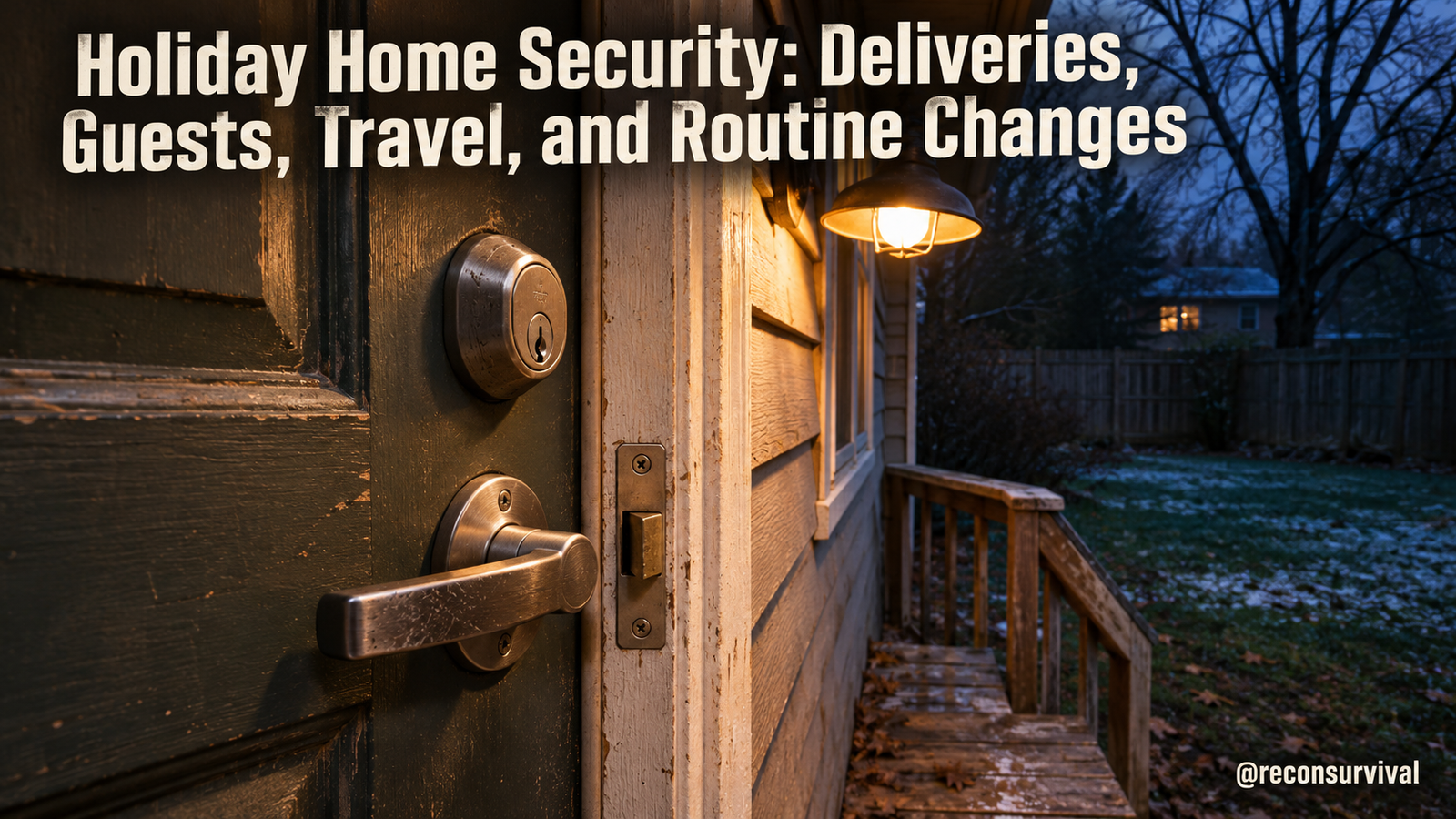
The first place to look is the path from the front door to the driveway. This is the approach a visitor, a delivery driver, or a stranger uses to get close enough to see inside. A first physical check of the exterior light beats a generic reminder. Walk the path from the entry door to the driveway at night. Notice if the bulbs are working, if the motion sensors activate correctly, and if the light covers the area where packages are left. A bulb that has burned out creates a shadow where a figure can stand unseen. A motion sensor that ignores the driveway forces a person to walk into the light, which can be a trap if the light is the only security feature. Delivery and Package Management
Packages are the most visible sign that a house is occupied and that people are away. A pile of cardboard boxes on the porch suggests the homeowner is not there to check them. It also suggests that valuable items are inside. The practical system for deliveries is simple: do not let packages accumulate. If a delivery driver leaves a box on the porch, take it inside immediately. If you know you will be away, ask the delivery company to hold the package at a nearby location or require a signature for delivery. This prevents the visual cue of a full porch from appearing. Some households use a lockbox or a secured drop-off point near the front door. This is a household choice, not a universal requirement. If you have one, ensure it is visible to the delivery driver and that the homeowner can access it. The key is consistency. A box left on the porch for three days is a signal. A box taken inside within an hour is a signal that the house is being watched. Guest and Visitor Routines
When the household leaves, the visible patterns change. Lights that turn on at random times, mail piling up, and no one answering the door are signs of an empty house. These signs are what a potential intruder looks for. The most effective way to manage absence is to keep the house looking like it is occupied. Use a timer or a smart plug to turn lights on and off at regular intervals. This mimics the normal routine of the household. If the family usually has the kitchen light on from 6 PM to 9 PM, set the timer to match that schedule. Do not rely on a single light turning on and off. A house with one light on and off every hour looks automated and suspicious. A house with multiple lights on and off at different times looks lived in. The tradeoff is the cost of electricity versus the security benefit. The benefit is that a potential intruder is less likely to target a house that looks like it has people inside. Household Checklist for Holiday Security
- Walk the path from the entry door to the driveway and check the exterior light. – Ensure all outdoor lights are working and cover the approach to the door. – Clear the driveway and walkway of any debris or clutter that could hide someone. Delivery Management
- Check for any uncollected packages and bring them inside immediately. – Arrange for delivery holds or signature requirements if traveling. – Remove any cardboard boxes from the porch after opening. Guest and Visitor Control
- Ensure no vehicle remains in the driveway while the household is away. – Keep the front door locked when guests are inside the house. – Maintain a consistent lighting schedule that matches normal habits. Absence and Routine
- Set timers for lights to turn on and off at regular intervals. – Arrange for a neighbor or friend to check the house regularly. – Do not leave the house unsecured during the day if you are away. Communication and Awareness
- Inform a trusted neighbor or friend when you will be away. – Keep a log of when deliveries are expected and when they are received. – Know the location of the main electrical panel and how to turn off lights quickly. The Recon Survival takeaway is that security is not about buying the latest gadget. It is about maintaining a routine that makes the house look occupied and predictable. A well-lit porch, a clear driveway, and a consistent schedule are more effective than any alarm system that is not properly set up. Do Today
Walk the path from the entry door to the driveway and check the exterior light. If the light is out, replace the bulb or clean the fixture. This single action removes the first gap in security before the holiday rush begins.