The forecast cone just shifted and your gas gauge reads half. You can keep scrolling or you can wake the house, stage bins by the door, and roll before the bridges choke. That's the difference between a clean exit and a night stuck on an on-ramp while the wind rises.
As an Amazon Associate, I earn from qualifying purchases.
The Apartment Door and the Map on the Fridge
Hurricane decisions go bad when they live in your head. Put them on paper, on the fridge, where the whole household can see. Tape up a county evacuation zone map, your two route options in thick marker, and a short list of if/then triggers tied to actions. Add names next to each action.
Why this matters: evacuation lanes gridlock on timing, not on gear. Families who leave on a clear trigger at the kitchen clock usually beat the surge of cars. Families who "wait one more update" end up burning fuel in place. If you're going to bug-in, the same clock discipline locks in shutters, water, and room setup before the first gusts hit.
Practical setup on the fridge:
- Print your zone map and write your zone letter or number at the top.
- List two routes by road name and mile markers. Circle one fuel stop and one backup per route. – Write three hard triggers and actions. Example: "If Zone A mandatory evacuation is announced, then we depart within 60 minutes using Route West. Sam drives. Jo handles pets."
- Clip a Sharpie to the fridge handle. When a trigger hits, someone writes the time and starts the clock.
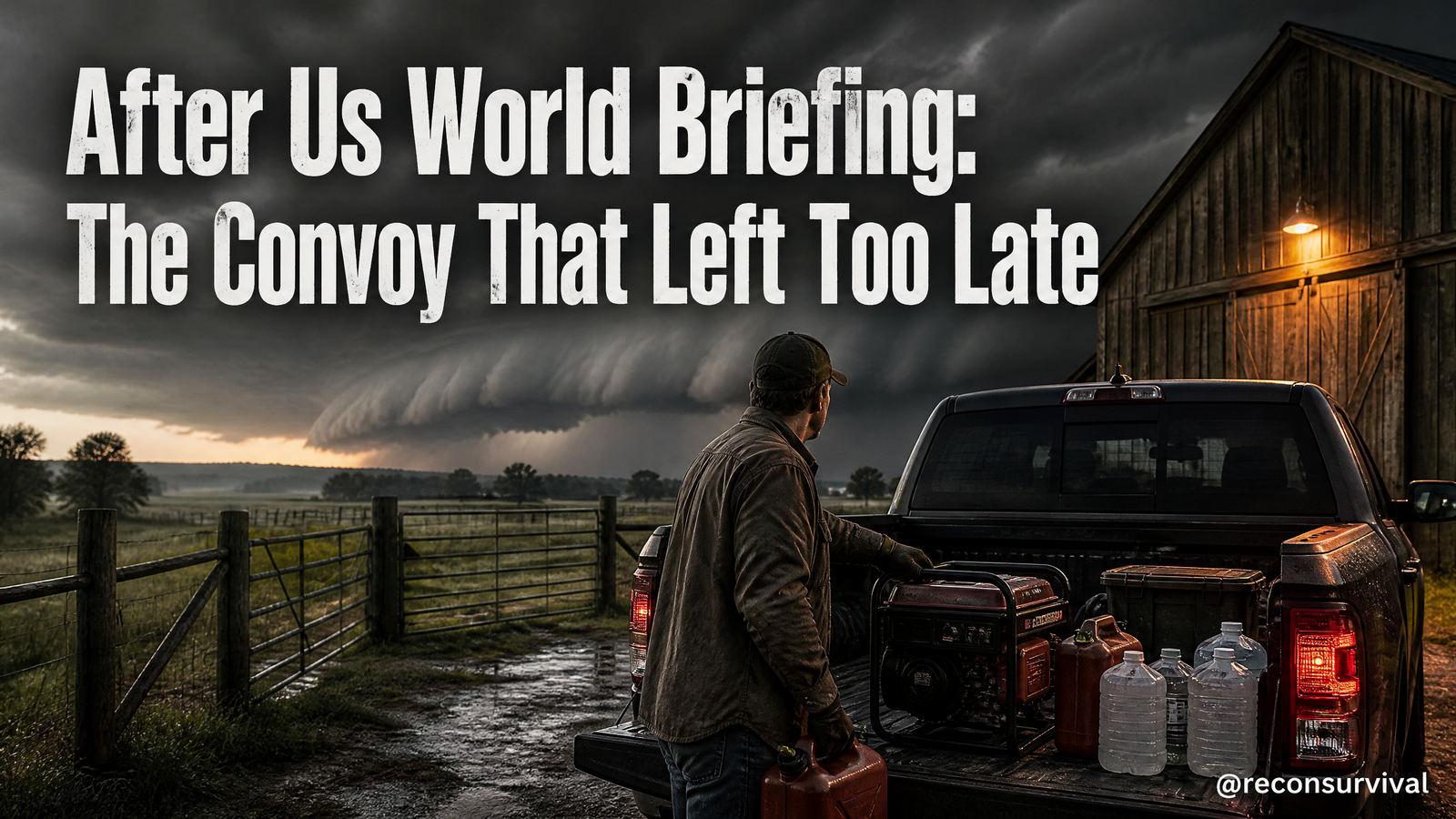
Recovered Brief: The Convoy That Left Too Late
After Us archival: excerpt from a homeowner association convoy debrief labeled "Edgewater Cluster, Storm K-19."
- 0530: Group text: "We'll leave together after breakfast. Forecast uncertain. Top off later."
- 0915: First gas stop off Exit 14. Lines 40 minutes. Two cars skip topping to stay with the group.
- 1120: County pushes voluntary evac to recommended. One driver says, "Let's wait for mandatory."
- 1300: Second gas stop. Station out of regular. One vehicle down to 1/4 tank. Traffic thickening.
- 1505: Mandatory announced for coastal zones. Convoy decides to "roll after the 5 pm update."
- 1700: On-ramp crawl. Family with pets pulls over to soothe a child. Convoy splits.
- 1840: Bridge advisories escalate. Wind picking up. Lane closures near causeway.
- 2010: Two cars U-turn to return home; roads slow, light rain. One car runs on fumes and stops at shoulder.
- 2130: Remaining vehicles reach inland motel lobby packed. "No vacancy" sign taped to a chair.
- 2315: Power flickers. The last car parks under a petrol canopy with strangers as the outer bands arrive.
Archer's field note, scribbled on a weathered map: "Hesitation isn't neutral. It converts gasoline into stress without changing the destination."
What the Convoy Missed: Clocks, Fuel, Bridges
The convoy treated "mandatory" as a green light instead of a late warning. They let a social schedule, last meals, and "one more update" tie their laces together. Fuel discipline failed early. Bridges and causeways became the choke points, as they often do.
Carry-over lessons you can use right now:
- The best departure window is before everyone else believes it's time. That usually means acting on recommended evacuations or your own pre-set triggers, not waiting for mandatory.
- A caravan is only as fast as its least prepared vehicle. Avoid "convoys" unless every car is already fueled, aired, and staged. Better: set a window and rally at a destination, not a start line. – Fuel equals options. At 1/2 tank in slow traffic, you might have two hours of crawling. At 3/4 to full, you can cross two counties and choose motels with vacancies. – Bridges may close or restrict once winds escalate. Don't aim to be on or near a span late in the day. Put your route on paper with inland alternates and note which segments you'll avoid once advisories tighten. Check local sources for how your area handles bridges; write those notes next to your map.
Quick transfer checklist:
- Count how many vehicles you'd move. Write "full tank before 1st band" next to each.
- Date your routes. Print and stash in glove box with a pen and small bills. – Mark one motel cluster and one friend's address inland. Call to confirm you're welcome before you need it. – Write the latest time you'll depart to avoid evening bridge advisories. Set a phone alarm for 90 minutes earlier.
Trigger Cards on the Fridge: If/Then Rules
Make hesitation expensive and clear. Your trigger cards convert noisy forecasts into action steps a normal household can follow. Use simple language and attach a role and a clock to each move.
Examples to copy and adapt:
- If our zone shifts to recommended evacuation, then we depart within 2 hours on Route North. Driver: Lee. Pets: Ana. Fuel now. Text family on the way.
- If hurricane track shows probable landfall within 150 miles and arrival of strong winds in roughly 48 hours, then we stage bins at the door, fill the car, and pre-book lodging inland. Cancel optional plans. – If our primary bridge posts advisories or lane restrictions, then we switch to Route West immediately, no additional stops. – If gas lines exceed 15 minutes at the nearest station, then we skip topping off and use the next station on our printed route. Fuel must remain above 3/4 before we pass the bypass. – If school district announces closures and our employer goes remote, then we execute early departure window by 3 pm the same day. – If a shelter-in-place looks likely based on official updates and traffic maps show red on both routes, then we pivot to bug-in hardening by 6 pm: shutters on, water filled, interior room staged. – If we miss our departure window by more than 60 minutes, then we do not "try anyway" at dusk; we commit to bug-in and safety checks.
Keep them visible:
- Write these on an index card and magnet it to the fridge.
- Duplicate a card in each glove box. – Add the emergency FM/AM frequencies for your county on the bottom edge.
Owners and Timing: Who Moves What, When
Good triggers fail if no one owns the moves. Assign roles and time windows as if you were running a small team. Post the roles next to the trigger cards.
Suggested roles and timed tasks:
- Driver: Fuels, checks tire pressure, loads pets. By T-36 hours from strong winds, top off the tank. By T-24, confirm spare tire, jack, and inflator in trunk.
- Comms lead: Calls inland contact, confirms motel cluster, prints route. At trigger, sends one text to family thread: "Departing now via Route North. ETA 3 hours."
- Quartermaster: Stages bins at the front door: 3 days of water at 1 gallon per person per day, no-cook food, meds, pet food, hygiene kit. Labels each lid with a piece of tape and a Sharpie. Loads in trunk left to right: water, food, soft goods.
- Docs lead: Photographs IDs and insurance cards, places originals in a zipper folder in the glove box, copies in a separate pouch in a backpack. Keeps small bills ($40-80) and coins for tolls in center console. – House closer: Shuts windows, locks doors, moves electronics off the floor, unplugs small appliances, raises furniture on blocks if flood risk, sandbags if you have them. Leaves a paper note inside: "Evacuated on [date/time] to [destination]." Turns fridge to colder setting and leaves ice packs inside.
Time anchors:
- T-72 hours (early watch): Check vehicle, print maps, refill prescriptions if low, laundry for travel clothes.
- T-48 hours (watch tightening): Top off fuel, pre-stage bins at door, call your inland contact. – T-36 hours: Pre-book lodging if using motels. Walk the route on your map with a finger, note the bridge and bypass decisions. – T-24 hours: Execute departure window if any two triggers hit, even if skies are blue.
Car, Fuel, and Route Staging
Your trunk, glove box, and driver's door pocket decide if your exit is smooth. Set the car up like a small, mobile room you can live in for 12 hours without stopping.
In the trunk, staged:
- Two clear jugs totaling at least 2 gallons of water, capped tight and upright.
- One soft bin with 12 ready-to-eat items (bars, nuts, pouches) and a manual can opener if you pack cans. – Blankets or a small sleeping bag, two ponchos, and a compact umbrella. – Headlamps with fresh batteries, two reflective vests, and a roll of duct tape. – Compact tire inflator, jumper cables, and a can of tire sealant. Check spare tire air with a gauge at the gas station when you fuel.
In the cabin:
- Glove box: printed route, county map, motel list, small bills, pen, photocopies of IDs, insurance.
- Center console: phone charger cable, 12V adapter, battery bank at 80-100 percent. – Door pocket: flashlight, folded bandana, travel tissues, hand sanitizer. – Floorboard: pet carrier or harness clipped to seatbelt, poop bags, zip-top bag of pet food and collapsible bowl.
Fuel notes:
- Maintain at least half a tank during storm weeks. Make full a trigger, not an errand.
- If you carry extra fuel, follow local laws and safety: use approved containers, keep them upright and secured, and never inside the passenger space. Store at home in a cool, ventilated area away from living areas. If unsure, skip extra cans and prioritize early departure and route fuel stops.
Route discipline:
- Name two routes in writing. Example: Route North via County 12 to State 5 (bypass at Mile 8) and Route West via Farm Road 3 to Interstate Spur (avoid causeway).
- Mark a decision point on each route where you will not press on if traffic redlines. Example: "If we're not past Mile 18 by 4 pm, we divert to Motel Cluster B or return to bug-in plan."
- Take photos of the printed route and send to your inland contact before you leave.
If You Bug-In: The Hard Gate Checks
Sometimes the road isn't the move. If traffic is already red across both routes, if fueling is broken across your area, or if you care for someone who can't handle a long car stretch, pivot to a tight bug-in plan early and do the work while the house is calm.
Set the house before the wind:
- Shutters and windows: close, latch, and lock. Move patio items inside. Park the car in the garage or on higher ground away from trees.
- Water: store at least 1 gallon per person per day for 3 days as a floor. Fill sinks and a clean tub with water for washing and flushing when the track firms up for your area. – Power and light: charge battery banks, place one flashlight in each bedroom nightstand, and a lantern on the kitchen counter. Check carbon monoxide alarms. If you have a generator, place it outside away from windows and test under a clear load per the manual before the weather. – Food: set out a counter bin with ready-to-eat food for 48 hours so you're not opening the fridge. Turn the fridge to a colder setting and minimize door openings. – Safe room: pick an interior room or hallway. Stage helmets for kids, shoes, a whistle, and a mattress you can pull over as cover.
Bug-in triggers and actions:
- If both evacuation routes are gridlocked for more than 60 minutes and winds are forecast to strengthen through the evening, then lock in the bug-in plan by late afternoon and stop trying to leave.
- If local officials recommend shelter-in-place and you are outside mandatory zones, then focus on window protection, water, and interior room staging immediately. – If you lose power and your phone battery drops below 40 percent, then switch to battery bank and turn on the weather radio with fresh batteries. Conserve battery for check-ins.
Recon Survival Principle
Hesitation drains fuel and time. Clear household triggers, owners, and clocks turn a swirling forecast into a set of moves that preserve options. Put your decisions on paper where you can point to them, tie each to a person and a deadline, and act in daylight. The story of the convoy that left too late isn't about bravery or luck. It's about letting the day slip fifteen minutes at a time until the bridge says no.
Do Today
- Print your county evacuation zone map, circle your zone, and tape it to the fridge.
- Write three if/then trigger cards with actions and owners. Magnet them next to the map.
- Name and print two evacuation routes with one fuel stop and one backup each. Put copies in the glove box and your wallet.
- Top off your vehicle and check tire pressure. Confirm spare, jack, and inflator are present.
- Stage a trunk kit: 2 gallons of water, 12 no-cook items, headlamp, reflective vests, and a small cash envelope ($40-80).
- Assign roles: Driver, Comms, Quartermaster, Docs, House closer. Write names next to each on the fridge.
- Call or text one inland contact. Confirm you can land there. Write the address on your printed route.
- Place one flashlight in each bedroom and a lantern on the kitchen counter. Check batteries.
- Fill prescriptions that are within a week of running out. Pack a small meds pouch labeled with names and doses.
- Set two phone alarms for your departure window: one at the trigger time and one 90 minutes earlier to start staging.
Make the decision easy when it counts. Write it down, assign it, and move on the clock.