The frost doesn't announce itself with a siren; it arrives with the first hard freeze, turning wet soil into a cement-hard block that crushes winter roots and snapping wood into brittle dust. You can feel the system failing the moment the temperature dips below the threshold for your specific zone: the water in the troughs freezes, the coops lose their ventilation to condensation rot, and the garden beds that haven't been mulched become a lost cause for next spring. This is the first thing that breaks when a homestead faces winter without preparation – the sudden transition from a living garden to a frozen tomb.
As an Amazon Associate, I earn from qualifying purchases.
To survive this transition, you must act on the specific failures that compound when ignored. The sequence of failure is predictable: first, the soil freezes solid before crops can be stored or the ground can be worked for composting. Next, the structural integrity of animal housing degrades as water lines burst and ventilation fails. Finally, the supply chain of tools and feed collapses when storage areas flood or freeze, leaving you with rot and rust just when you need resilience most.
Recon Survival Principle
The core of a successful winter is not preventing the freeze, but engineering a system that absorbs the shock. A resilient homestead recognizes that the garden, the animals, and the tools are not separate silos but a single interconnected nervous system. If one part freezes, the others suffer. Therefore, the Reset is not a checklist of tasks but a synchronized triage of resources to ensure that when the snow falls, the system remains a fortress of food, warmth, and utility rather than a collection of broken, frozen liabilities.
Soil: The Frozen Foundation
If you wait until the ground is rock-hard to prepare your beds, you have already lost the battle for next spring. The primary failure here is biological: without organic matter and insulation, the soil microbiome dies, and the earth becomes a physical barrier to future growth. You must secure the soil while the ground is still workable.
The Triage Ladder for Soil:
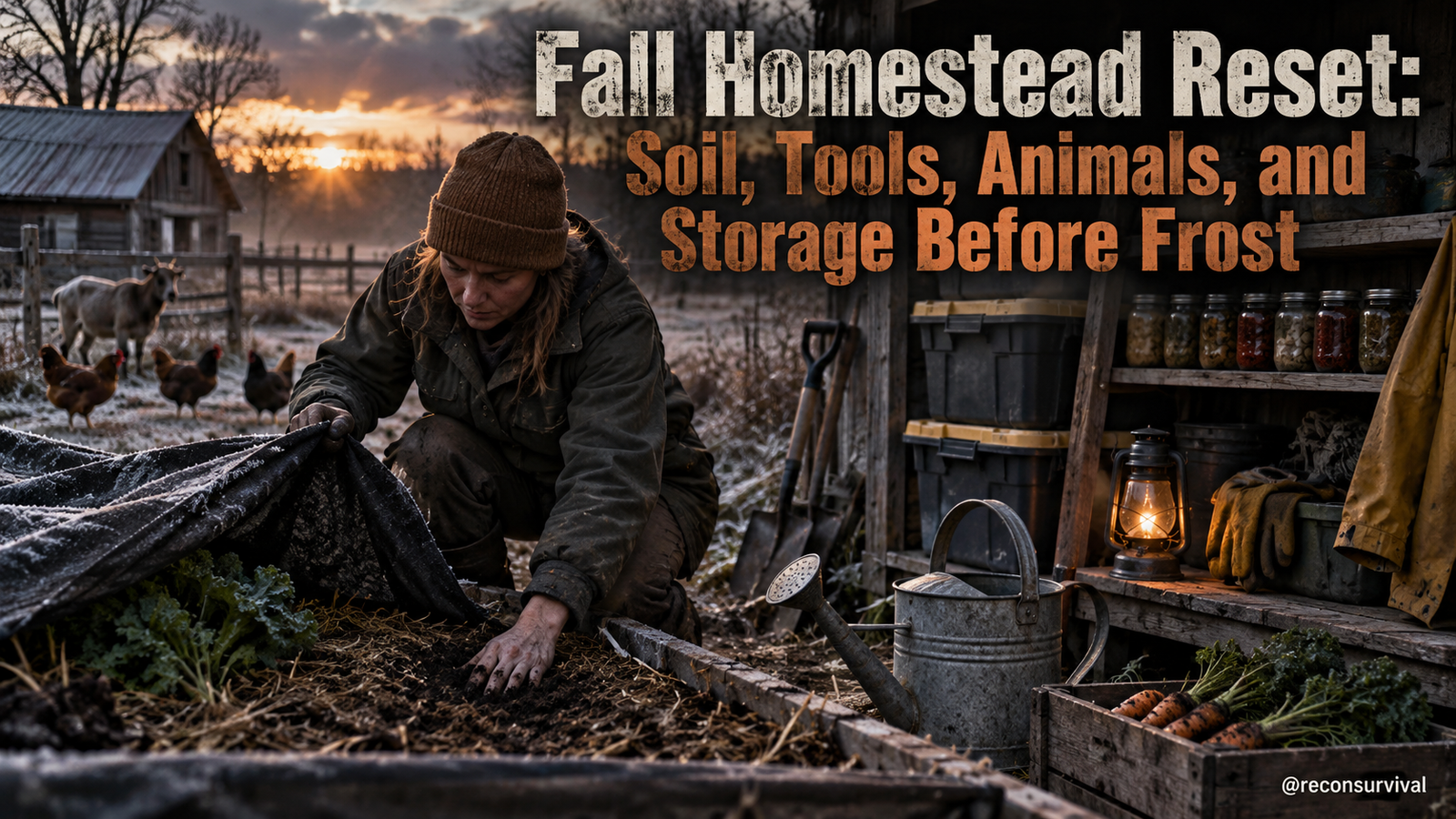
- First Hour (Immediate): Identify all exposed beds and cover them with a thick layer of straw or shredded leaves immediately. Do not wait for snow; the organic cover acts as an insulating blanket that keeps the soil temperature stable. * Same Day: Construct composting piles or cover existing ones. If the compost is active, pile it up to generate heat. If it is dormant, cover it tightly with a heavy tarp to prevent moisture loss and freeze-thaw cycles from destroying the texture. * Next Day: Apply any remaining mulch or cover crops to bare patches. If you are using "sheet mulching" for future no-dig beds, lay down cardboard and add a deep layer of leaf litter now. This layer will decompose over winter, feeding the soil without disturbing the frozen ground in spring.
Tool Triage: Rust, Rot, and Readiness
Tools are the second system to fail. Metal expands and contracts with temperature shifts, and untreated wood absorbs moisture that turns to ice, causing splits. A rusted saw or a cracked wooden handle is a direct threat to safety when you need to clear brush or repair fences in the snow.
The Triage Ladder for Tools:
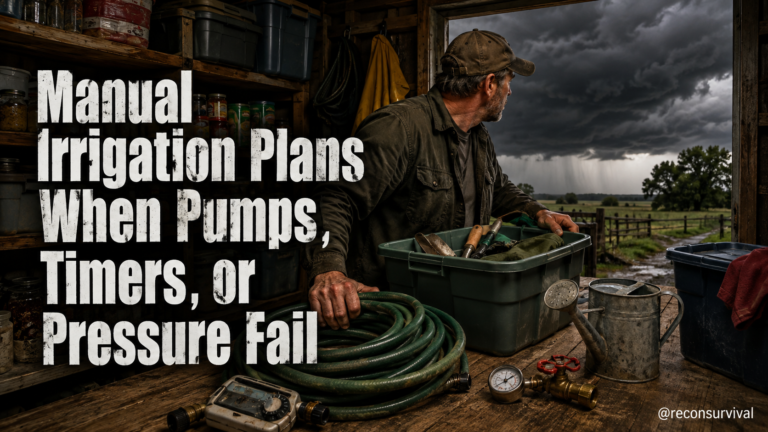
- First Hour: Bring all metal tools inside or under a waterproof shed. Wipe them down with a thin coat of oil or a silicone spray to create a barrier against the humid, salty air of winter. Check blade edges and sharpen anything that has dulled during the harvest season. * Same Day: Inspect wooden handles and frames. Look for cracks or splinters. Treat them with linseed oil or a dedicated wood preservative to repel moisture. Hang tools on racks to keep them off damp floors and allow air circulation. * Next Day: Review storage areas for water sources (hoses, spigots). Drain and disconnect all irrigation lines. Freeze any standing water in containers or drain them completely. Store hoses coiled and elevated off the concrete to prevent kinks and cracks from ice expansion.
Animal Shelter: The Living Line of Defense
The most critical risk to life and limb is the animal shelter. If coops are not sealed, condensation can rot the wood, and drafts can chill the livestock, making them susceptible to disease. A frozen water source can kill an animal in hours.
The Triage Ladder for Animals:
- First Hour: Inspect coops and barns for drafts. Seal gaps with caulk or weather stripping, but ensure adequate ventilation remains open near the roof line to prevent ammonia buildup. Secure all feed bags in rodent-proof, dry containers. * Same Day: Set up heated waterers or insulate water troughs with foam and covers to prevent freezing. Check bedding levels; deep litter methods can generate heat but require management to prevent freezing of the base layer. * Next Day: Verify feed supplies. Calculate the total amount of feed needed for the coldest three months plus a 20% buffer for weather disruptions. Move the bulk of this supply into a dry, warm storage area, away from the damp chill of the ground.
Storage and Supply: The Winter Vault
Finally, storage areas often become the weakest link when the weather turns. Moisture ingress, freezing temperatures, and pests can ruin months of work. The goal here is to create a "vault" where the cold cannot penetrate and the damp cannot set in.
The Triage Ladder for Storage:
- First Hour: Move all sensitive items (seeds, vitamins, electronics, and delicate tools) into a climate-controlled interior space. If a separate building is used, ensure it is sealed tight and the floor is elevated on pallets. * Same Day: Organize the cold storage area. Place items that can withstand freezing (like root vegetables) in a dedicated, ventilated space. Ensure that items like compost, which need to stay moist but not frozen, are covered with breathable but waterproof tarps. * Next Day: Conduct a final inventory check. Ensure that emergency supplies (flares, blankets, first aid kits) are accessible and not buried under heavy loads that shift in the snow.
Recon Survival Principle
A homestead does not survive the winter by luck; it survives because the system was designed to fail gracefully and recover quickly. The difference between a collapsed winter and a productive one is the speed at which you execute the triage of your resources. By treating soil, tools, animals, and storage as interdependent units, you ensure that when the frost hits, you are not scrambling to fix broken systems but maintaining a steady state of readiness.
Do Today
The single most effective action you can take today is to inspect and seal one water source (a trough, hose, or pipe) to prevent it from freezing, while simultaneously covering one garden bed with insulation material. This dual action protects both your animals and your future soil health in a single afternoon, breaking the cycle of waiting too long and allowing the first failure to snowball into a total system collapse.