If a storm cuts power and cell service tonight, would your household know how to handle it? Rural properties often lack the instant notifications that townhouses receive from sirens or municipal alerts. The difference between a manageable event and a crisis is usually not gear, but a system that combines radio, neighbors, routines, visual signs, and power backup. Most advice leaves this gap open, focusing on a single device or waiting until bad weather arrives. This approach matters because communication devices rely on battery life and clear signals, while cell towers can fail. Relying on a single source creates a single point of failure. A calm, layered system ensures you receive information through multiple channels, increasing the chance that you get it before the storm turns dangerous. The goal is not to predict the future, but to ensure your property stays informed regardless of which infrastructure holds. The most common mistake is waiting for the weather to turn before checking your systems. People assume a battery-powered radio is enough, or that a neighbor will call if something goes wrong. This leaves the property unaware until it is too late to prepare for a power outage, road closure, or high-wind event. By the time the storm hits, the only thing remaining is reaction, not planning.
As an Amazon Associate, I earn from qualifying purchases.
A Practical System for Rural Awareness
A functional rural alert system combines five elements: a battery-powered radio, a neighbor network, a daily routine, visual signs, and a power source. This system does not require expensive equipment or specialized training. It works by ensuring that if one path is blocked, another remains open. The first step is physical. Walk the path from the entry door to the driveway. Check the exterior light. Does it illuminate the walk and the mailbox? If the light is out, fix it now. A clear path is the first sign of awareness. If the path is dark, you cannot see a fallen branch, a broken fence, or a neighbor waving. This check confirms your property is visible to others and safe for you to move through during a storm.
Combining Radio and Neighbors
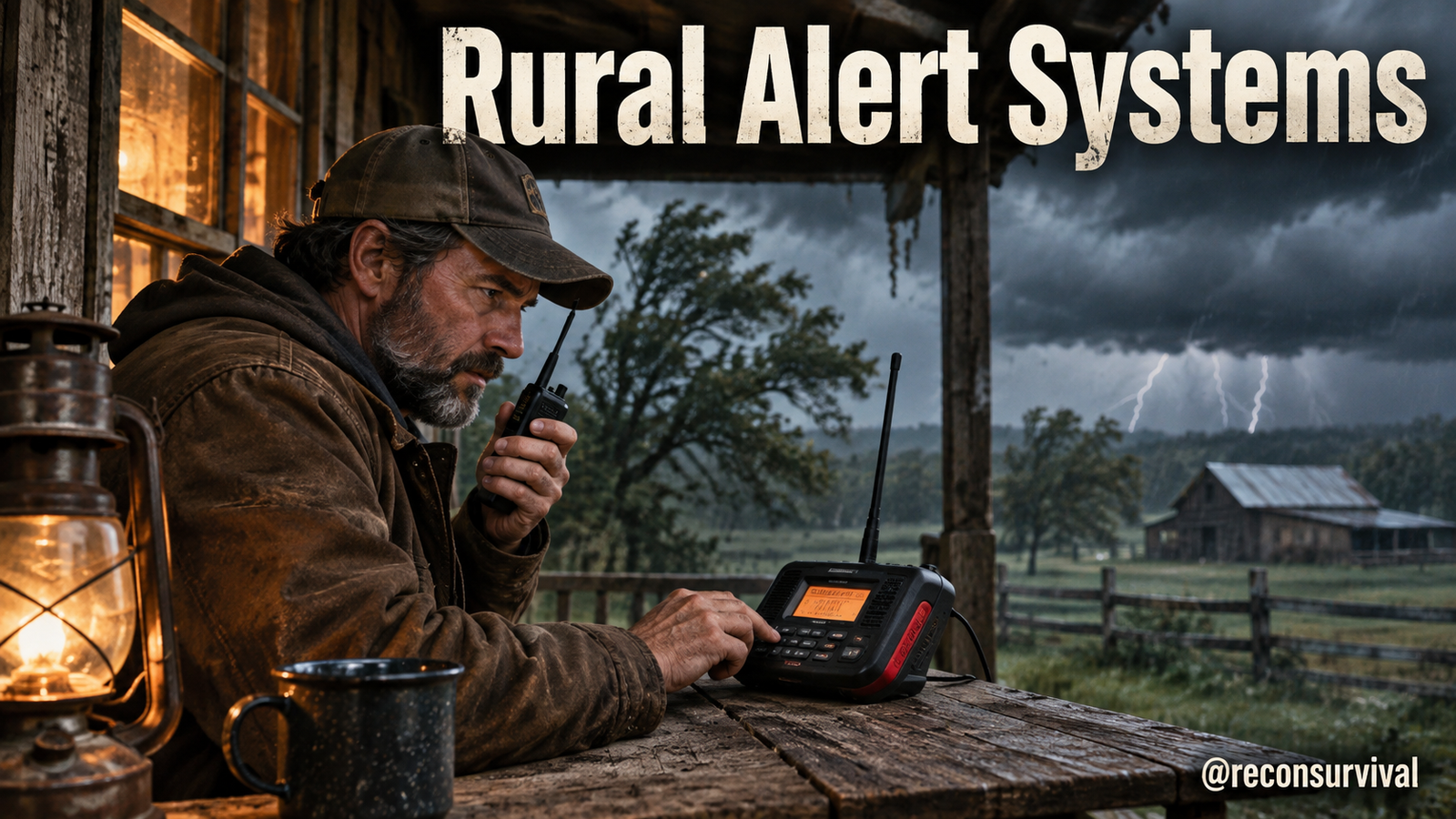
An emergency radio receives broadcast information directly from local monitoring stations. These radios operate on frequencies that function without internet or cell towers. They broadcast warnings and conditions during weather events. To make this reliable, the radio must have fresh batteries or a power source as specified by the manufacturer. Test the unit monthly by following the device's documented instructions: check the battery indicator, ensure the unit powers on, and verify that the audio functions correctly during a non-emergency time. However, a radio is a one-way street. It tells you what is happening, but it cannot tell you about a neighbor down the road who needs help, or a road that is impassable due to a fallen tree. Establish a neighbor network. Identify one or two trusted neighbors within a quarter-mile who also rely on non-electric communication. Agree on a meeting point or a check-in time. If power fails, a knock on the door or a pre-arranged signal is more immediate than waiting for a radio broadcast to mention a local blockage. This human layer fills the gaps that technology cannot.
Routines and Visual Signs
A routine is a repeated action that becomes automatic. In rural areas, the routine is often checking the weather yourself before leaving the house or returning to the property. Make a habit of checking the sky and the wind direction, not just the forecast on a phone app. If the air pressure drops or the clouds lower, act on that observation immediately. Visual signs are your external communication. If a neighbor needs to leave the house during a storm, they cannot always call. Use a standard, pre-agreed signal at the property line. A green flag on a pole might mean "all is well." A red flag or a specific arrangement of objects might mean "help needed." This system works even if the power is out and cell towers are down. It relies on line-of-sight and pre-agreed meaning, not technology.
Power Backup for Information
Information devices need power. A battery-powered radio requires batteries that are replaced before the storm season. For more robust needs, a small solar charger can keep a handheld radio or a smartphone in standby mode. However, do not rely on a solar charger as a primary power source without a backup battery. solar panels need sunlight, and cloudy days are common in bad weather. Connect the charger to a device that has a "power bank" mode. This allows the charger to store energy during the day and release it at night. Ensure the connection is secure; a loose cable will break the charging path and leave the device dead when you need it most. This setup is not a luxury; it is the difference between a phone that stays on for a call and a device that fails when the grid goes down.
For Small Backyards and Small Homesteads
This system scales down. On a small backyard homestead, the "driveway" becomes the garden gate or the shed door. The neighbor network includes the immediate adjacent properties. The visual sign might be a small flag on a clothesline or a lantern left on a windowsill. The goal is the same: ensure that if the storm hits, you know it, and the person next door knows it. A small property does not need a complex alert system, but it does need a clear, tested plan. The physical check of the path and light remains essential, regardless of the property size.
Low-Cost and Upgrade Paths
A low-cost starting point is a battery-powered emergency radio with fresh batteries and a pre-written neighbor agreement. This costs less than a meal and covers the most critical needs. It requires no installation and works immediately. A more durable upgrade path involves adding a solar-powered charger and a second, independent radio. This redundancy ensures that if one battery fails, the other remains. It also means you can monitor different frequencies or local conditions. The upgrade is about reliability, not just features.
The Recon Survival Takeaway
Awareness is not about having the most expensive gear. It is about having a system that works when the power is out and the phones are dead. By combining a radio, a neighbor network, a routine, visual signs, and power backup, you ensure your property stays informed. The best defense against a storm is knowing what is happening before it hits your door.
Action Plan
- Walk the path from the entry door to the driveway (or garden gate) and ensure the exterior light works. 2. Locate your emergency radio and verify the batteries are fresh and the unit turns on. 3. Text one trusted neighbor to agree on a check-in method or visual signal for the next storm. 4. Place a small, visible sign (like a colored flag or lantern) at the property entrance to signal status to passersby.