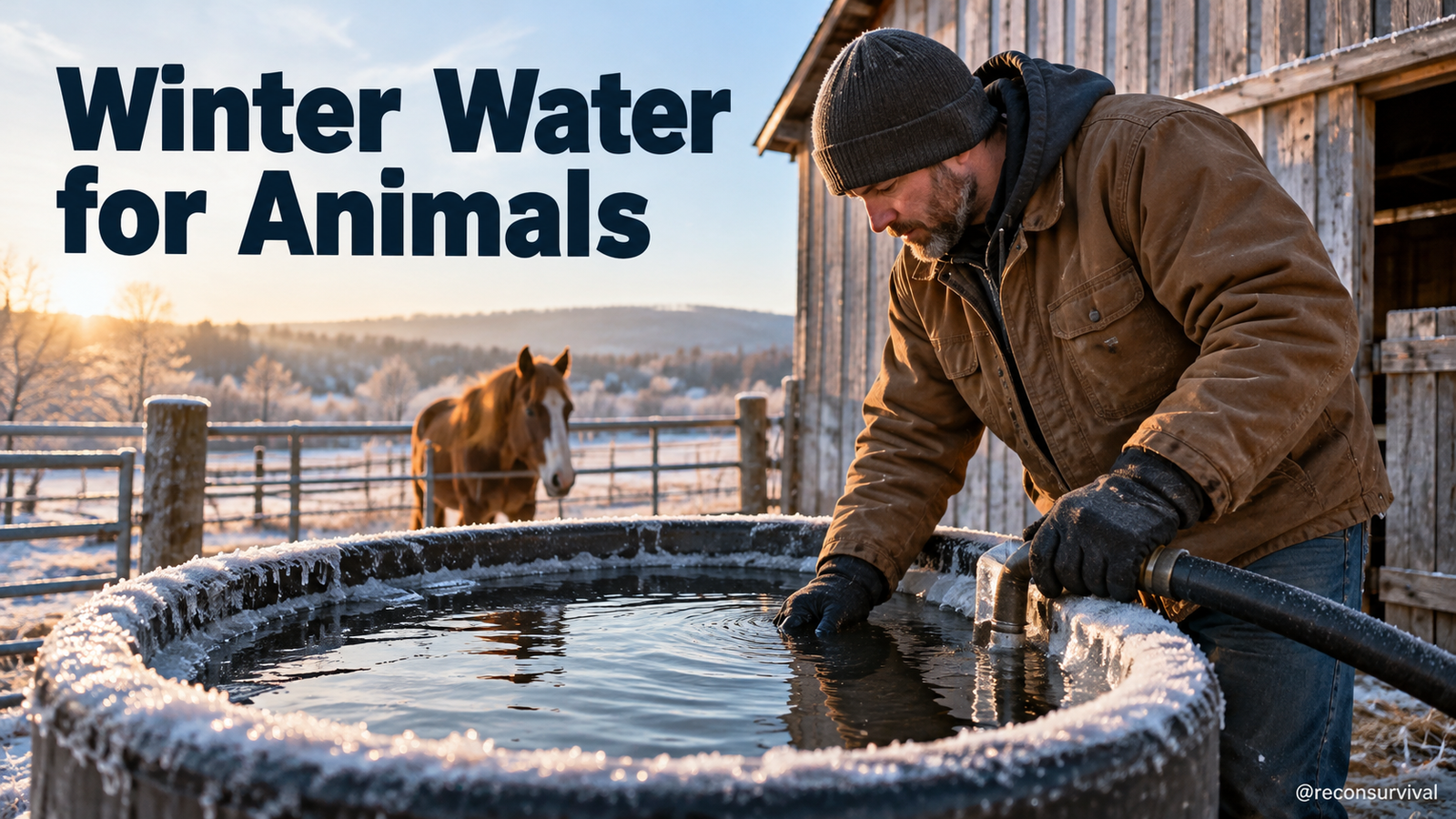
Most people stockpile food first, but water is usually the real limiting factor when winter sets in. You can survive a week without a full belly, but livestock and poultry need liquid water every single day. When the temperature drops, that water can turn to ice, cutting off supply and stressing animals quickly. The real problem isn't that freezing happens; it's that the standard advice for preventing it is often too generic, relies on expensive gear, or arrives after the first hard freeze has already locked up your lines. Waiting until the weather turns makes the work harder and the decisions more urgent. You need a system that stops water failures before the stress of the cold takes over. The most common mistake people make is waiting for the first freeze to check their setup. By then, the pipes are already vulnerable, and the waterer is often already compromised. A frozen pipe or a solid block of ice in a trough is not a minor inconvenience; it is an immediate emergency that requires manual labor to fix. The best time to prevent this is when the air is still crisp but the ground isn't hard yet. Here is a practical system to prevent animal water failures during freezing weather. It focuses on detection and redundancy rather than complex automation. <p class="rs-affiliate-disclosure"><em>As an Amazon Associate, I earn from qualifying purchases.</em></p>
As an Amazon Associate, I earn from qualifying purchases.
1. The Immediate Check: The Paper Towel Test
Start by placing a dry paper towel under the water container. Check it again later. This step confirms whether water is moving or if the container is leaking. If the towel is wet, you have a slow leak that can freeze around the base and lock the container in place. If the towel stays dry, you at least know where the water level is without guessing. ## 2. Insulate the Base, Not Just the Top Water freezes from the bottom up, especially in metal or plastic tubs placed directly on cold ground. Heat rises from the earth, but if the container sits on frozen soil, the bottom layer freezes first. This creates a seal that stops the rest of the water from melting. Insulate the bottom by setting the trough or bucket on a layer of straw, wood pallets, or a thick foam mat. This breaks the direct thermal bridge between the water and the frozen earth. ## 3. Protect the hoses and Pipes If you use a hose or a gravity-fed pipe, the water inside can freeze and expand. This expansion can burst the pipe or tear a fitting loose, leaving you with a dry trough and a flood on the ground when the thaw comes. * Constraint: Do not rely on wrapping a hose alone if it is exposed to wind. Wind chill removes heat faster than insulation can hold it. If you use a gravity line, ensure the pipe has a slight downward slope toward a drain valve that you can access. * Follow-up: If a pipe is buried, ensure the depth is below the local frost line. Local requirements vary, so check your specific depth needs. Do not guess on depth; a shallow pipe is a guaranteed freeze point. ## 4. Low-Cost vs. Durable Upgrades You do not need expensive heated systems to have a reliable water source. * Low-Cost Option: Use a large, dark-colored barrel or bucket in a sheltered spot. Paint the outside black if it is light-colored to absorb solar heat during the day. The thermal mass of the water will stay warmer than the air for a few hours longer than a thin plastic bucket. Insulate the sides with straw bales. * Durable Upgrade: A submersible heater or heated base is more reliable but requires electricity. If you use one, it must be a model specifically rated for livestock and designed to be chew-proof. Verify the rating on your equipment label before plugging it in. If power fails, these units stop working immediately, making them a single point of failure. ## 5. The Backup Plan Your system must have a secondary method if the primary one fails. * Scenario: If a heater breaks or power goes out, you need a way to break the ice quickly without harming the animal. * Action: Keep a plastic bucket or a large ladle and a source of warm (not boiling) water nearby. Pouring warm water over a thick ice sheet can help break it up so animals can drink. Do not use boiling water, which can crack a frozen plastic bucket or burn the animal's nose. * Constraint: If the trough is completely frozen solid, you may need to break the ice with a tool like a hammer or hatchet. Do this carefully to avoid splashing sharp shards into the water or injuring the animal. ## 6. Daily Verification
- Today: Perform the paper towel test under your water container. Note any moisture accumulation. * This Weekend: Clear snow and ice from around the waterer. Place straw, pallets, or a foam mat under the container to insulate it from the ground. * Before the Deep Freeze: Disconnect and store all hoses. Check that any heated units are functioning and rated for outdoor use. Keep a backup bucket and a warm water source ready. * Daily: Check the water surface and temperature. Break any ice that forms before the animals need to drink. claimidsused: ["claim001", "claim003", "claim004", "claim005", "claim006", "claim007", "claim008", "claim009", "claim010", "claim011", "claim012", "claim013", "claim016", "claim017", "claim018", "claim019", "claim_020"]