Most people prepare by buying more food, yet water systems are usually the real limiting factor when a house sits empty. A burst pipe or a security breach in the dark can turn a quiet week into a major repair bill within hours. The problem isn't a lack of gear; it's that the most critical checks often happen too late. Water pipes expand as they freeze, and that expansion cracks them. Once a crack forms, water flows until someone shuts the supply off. If the main shutoff is behind a locked door, buried under a furnace, or missing its label, the time to react may be gone. Security risks follow the same pattern. An empty home signals opportunity. A lack of visible presence makes that signal stronger, drawing attention to doors and windows that might have been secure otherwise. The most common mistake is waiting for the weather forecast to turn cold before doing anything. By the time temperatures drop, you may already be traveling, or the cold snap may have arrived unexpectedly overnight. Relying on "later" is the gap between a managed situation and a flooded basement or a forced entry. <p class="rs-affiliate-disclosure"><em>As an Amazon Associate, I earn from qualifying purchases.</em></p>
As an Amazon Associate, I earn from qualifying purchases.
1. Locate and Mark the Main Shutoff
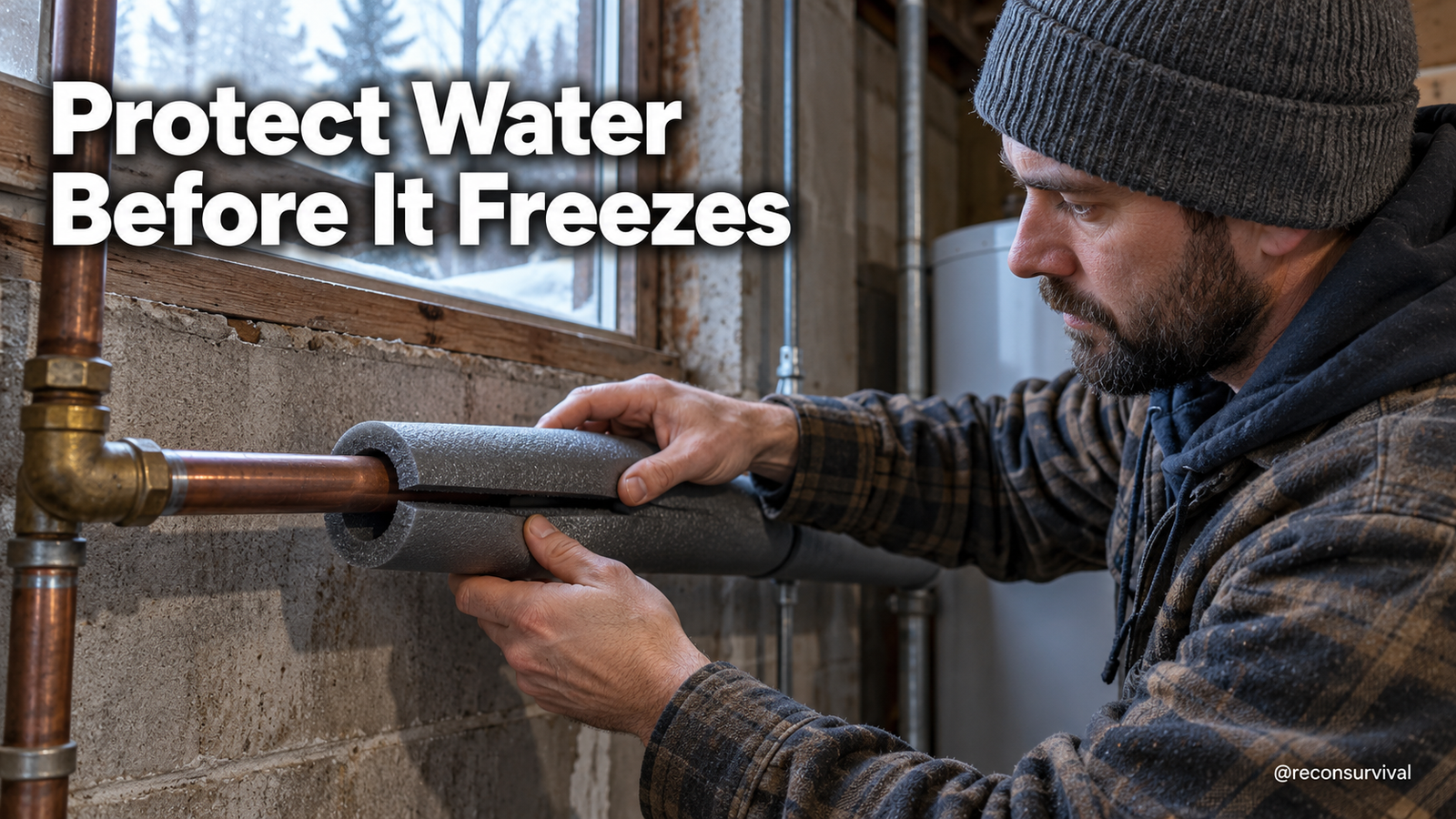
Start with the most direct way to stop water damage: finding the main shutoff valve. This valve controls water flow to the entire house. Walk through the garage, basement, or utility closet. Look for a pipe coming in from the street. Follow it to where it enters the house or connects to the water heater. The valve is usually a wheel handle or a long lever. If you find it, test it. Turn it clockwise to close it and counter-clockwise to open it. If it feels stuck, do not force it. A frozen or corroded valve can break under pressure. Mark the location. Tape a piece of bright tape or a label next to the valve. Write "MAIN SHUTOFF" clearly. If the valve is hidden behind boxes, move the boxes. If the valve is in a dark crawlspace, tape a reflective sticker to the access panel so a flashlight beam finds it instantly in a power outage. ## 2. Check Exposed Pipes and Drain Points Walk the exterior of the house and the interior where pipes might be exposed, such as an unheated garage or a crawl space. Look for insulation wrapping around the pipes. If the insulation is missing, cracked, or missing in spots, water is more likely to freeze. You do not need to wrap every pipe in a home. Focus on the sections where air can touch the pipe directly. If the water heater has an exterior drain, that is a critical point. In a cold climate, leaving the water heater full when the house is empty increases the risk of freezing. The tradeoff here is convenience versus risk. Draining the system takes effort and requires you to open all faucets later to refill it. However, a drained system cannot burst. Follow the manufacturer's instructions for your specific heater to drain it safely. Do not force valves open if they are rusted shut. ## 3. Control Visibility and Access An empty house is a target. The first step is to deny easy entry without creating a fortress that draws attention. Keep the exterior lights functional. Burned-out bulbs signal that no one is home. Replace bulbs and ensure the timers or smart switches work. A simple, low-cost habit is better than a complex system. If you leave the house, set a few lights on different timers to turn on and off at random intervals. This mimics someone moving through the house. Do not leave lights on all night; that wastes energy and makes the pattern predictable. Check the locks. Deadbolts on exterior doors should slide into the frame with a solid click. If a lock is loose or the door sags, it is easier to force open. Lubricate the hinges and the lock mechanism with a dry lubricant, not oil, which can gum up in the cold. ## 4. Communication and Maintenance If you are leaving for an extended period, arrange for a trusted neighbor or friend to check the property. Ask them to look for mail piling up, snow accumulation on the driveway, or any signs of forced entry. Give them a spare key or code if needed, but only after you have secured the property yourself. Communication also means knowing who to call. Keep a list of local emergency contacts, including a plumber and a locksmith, posted on the refrigerator. If a pipe bursts while you are away, you need to call someone immediately, not search for a number later. This step prioritizes human presence over mechanical solutions. A neighbor walking the perimeter is more effective than a camera that no one watches. ## Defensive Household Checklist Before you leave for the cold season, run through this list. It covers the essentials without requiring specialized equipment. * [ ] Main Shutoff: Found and labeled with a bright tag. * [ ] Exposed Pipes: Insulation checked and gaps sealed; drain points identified. * [ ] Water Heater: Drained if the house will be unheated or empty for a long period. * [ ] Exterior Lighting: Bulbs replaced and timers or smart switches tested. * [ ] Locks: All exterior door locks engage securely; hinges lubricated. * [ ] Access: Pathways to the main shutoff and utility room cleared of storage. * [ ] Communication: Trusted contact informed and given access if necessary. * [ ] Emergency Contacts: Phone numbers for plumbers and local services posted visibly. ## The Recon Survival Takeaway Protection for an empty home during cold weather is not about buying the latest alarm system or expensive flood sensors. It is about knowing where the water goes and how to stop it. It is about making the house look lived-in without drawing attention. The difference between a minor repair and a disaster is often how quickly you can shut off the water or spot an entry point. ## One Action to Take Today Walk to your main water shutoff valve now. Locate it, test it, and mark it with a label. If you cannot find it, check with a local plumber or your home's building plans before the cold weather arrives.