A practical way to protect food, water, medicine, and batteries from heat damage and spoilage, but most advice is either too generic, too gear-focused, or too late.
As an Amazon Associate, I earn from qualifying purchases.
If you cannot cook a single meal from your pantry when the grid goes down, your food storage is simply a collection of cans that have already spoiled.
Why Heat Changes Your Survival Equation
By mid-June, the ambient temperature outdoors is often rising, but the real danger for your household lies in what happens inside when normal cooling fails. This article focuses on a specific, high-probability scenario: you are out of power. When your air conditioning stops and your refrigerator turns off, the environment inside your home changes rapidly. This shift creates a risk for every perishable item you keep, from your emergency water reserves to your stored medications and batteries.
Heat readiness does not require you to live in a bunker or expect the end of the world. It simply means understanding that your home is not an isolated, temperature-controlled zone during a heat wave or grid outage. Without active cooling, your indoor temperature will eventually equilibrate with the hottest part of your home, and that is where your supplies are. If your food spoils, your water becomes unsafe, or your batteries degrade, your ability to sustain yourself and your family decreases immediately. The goal here is to maintain your readiness through practical adjustments to how you store essential items, ensuring that your supplies remain functional when the environment turns hostile.
The Hidden Heat Trap in Your Pantry
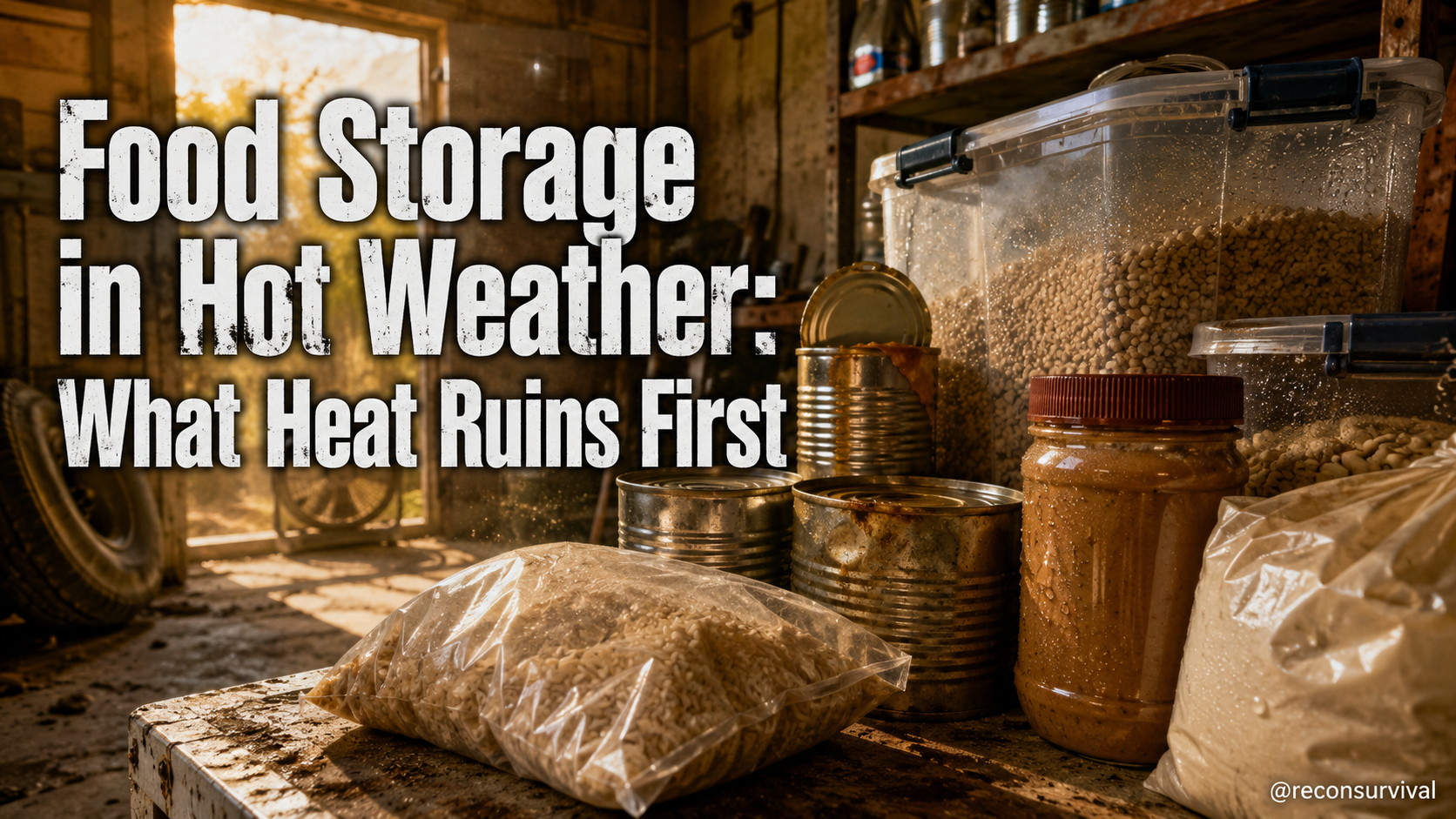
The most common mistake people make regarding food storage is assuming that their pantry is always safe because it is inside a house. While this may be true during cooler months, the reality of extreme heat conditions changes that baseline. Many households store dry goods and canned foods in the same cabinets that house cooking appliances or where direct sunlight falls through a window. This creates a "hidden heat trap."
Sunlight passing through a window can raise cabinet temperatures by ten to twenty degrees above the room average. Furthermore, storing food near heat sources like ovens or water heaters is a frequent error. These items radiate heat continuously, effectively baking the air around them. When you store items in these locations, you are exposing them to temperatures that may exceed safe storage limits for specific food types. The mistake is not just in what you store, but where you store it. Neglecting to separate heat-generating appliances from your food storage zones creates a blind spot in your readiness plan that leads to waste and potential safety hazards.
The Recon Survival Heat Protection System
To protect your food, water, medicine, and batteries from heat damage and spoilage, you must implement a system that isolates and manages thermal loads. This approach moves away from generic "store in a cool place" advice and focuses on active management of your storage environment.
The system relies on three core principles: thermal separation, moisture control, and rotation based on degradation. You need to identify high-risk items that require specific conditions and ensure they are kept away from external heat sources. For example, batteries stored in a hot car or near a window can lose significant capacity permanently in just a few hours of extreme heat. Medications, particularly those for blood pressure or thyroid issues, can lose potency or cause adverse reactions if exposed to heat even for a short period. Your water storage must be protected from sunlight to prevent algae growth and chemical reactions in the plastic containers.
By treating your storage areas as active zones that require management, you prevent the slow degradation of your supplies. This method ensures that when you do need to use an item, it is still in its intended condition. You are not just stacking boxes; you are maintaining the integrity of your resources against the variable conditions of a changing climate.
Step-by-Step Implementation for Normal Households
You can implement this system immediately using the steps below. These are practical actions any normal household can take without purchasing expensive specialized equipment.
- Identify the Heat Zones: Walk through your kitchen and utility areas. Identify where the sun enters directly. Note where heat-generating appliances like the oven, dishwasher, and water heater are located. Mark the items currently stored in these spots.
- Relocate High-Risk Items: Move perishable dry goods, medicine, and batteries away from identified heat traps. Use interior walls that are farthest from windows as your primary storage zones. If your cabinets are near a window, consider moving the contents to a different room or creating a barrier like a reflective curtain to block direct sunlight.
- Audit Your Medicine: Check all stored medications against manufacturer instructions. If a label states "store at room temperature," ensure your specific environment does not exceed 75°F (24°C). If you are unsure, consult official guidance from the FDA or CDC regarding storage requirements. Do not store heat-sensitive medicine in a bathroom cabinet or near a sink where humidity rises.
- Inspect water containers: Ensure your water storage containers are opaque or kept in the dark. If you use plastic barrels, clean them thoroughly and ensure they are sealed to prevent evaporation and chemical leaching caused by heat. Do not store water in containers that have been exposed to direct sunlight for long periods.
- Rotate Your Batteries: Check the charge levels and condition of stored batteries. Remove any batteries that show signs of swelling or leakage. Store batteries in a cool, dry place away from direct sunlight. Do not mix old and new batteries during storage, as this can lead to cross-contamination and reduced performance.
Connecting Supplies to Meals and Usage
Having the supplies is not enough if you cannot connect them to actual meals and daily needs. Your food storage must be organized so that you can pull items for immediate use without compromising the integrity of the rest of the stock.
Connect your dry goods to a meal rotation schedule. Use clear labeling to track when you opened a package or can. This allows you to move older items to the front of your supply. If a package has been exposed to high heat for an extended period, do not use it for long-term rationing. Instead, assess whether it is safe for immediate consumption or if it needs to be discarded. This assessment prevents waste and ensures that your household does not consume food that has degraded.
For water, link your storage levels to your daily usage habits. If you are storing water for emergencies, ensure that the container capacity matches your family's needs for a defined period. If a container is compromised by heat, replace it immediately with a clean, certified container. Your water use should be tracked to ensure that you do not rely on stored water until it becomes unsafe.
Pantry and Water Safety Checklist
Use this checklist to reduce waste and ensure safety. These actions help you manage your resources effectively.
- Check Cabinet Locations: Ensure no food is stored within 12 inches of an oven or water heater.
- Block Sunlight: Close blinds or curtains on windows facing south and west to reduce cabinet temperatures.
- Inspect Medicine: Verify that all stored medications are in their original packaging and have not been exposed to extreme heat for more than a few days recently.
- Test Water Containers: Check for cracks or cloudiness in plastic water containers. Discard any containers that are damaged or show signs of degradation.
- Rotate Dry Goods: Move items that are past their "best by" date to the front of your shelf or use them in recipes. Discard any items that smell off or have visible signs of insect activity.
- Monitor Battery Charge: Test stored batteries periodically. Replace any that fail to hold a charge after being removed from storage.
- Clear Ventilation: Ensure that your pantry and utility areas are not being used as a dumping ground for items that generate heat or moisture.
Recon Survival Principle
Your readiness depends on the condition of your supplies, not just the quantity you own. Heat acts as a silent adversary that degrades materials and spoils food over time. By managing your storage environment, you extend the life of your supplies and ensure that they remain available when you need them most. This principle is about maintaining the functional value of your inventory. If you treat your supplies as living assets that require care, you build a more resilient household.
Do Today
Start your heat readiness routine with these concrete actions. These steps address the core issue of protecting your supplies without needing complex gear or advanced planning.
- Relocate Heat-Sensitive Items: Move all medicine and perishable food out of any cabinet that receives direct sunlight or is located near a heat-generating appliance.
- Clear Your Ventilation Paths: Ensure that your kitchen cabinets and pantry doors are not obstructed by boxes or furniture that might trap heat.
- Inspect Water Storage: Check your water barrels for hairline cracks or signs of algae. If you find any, discard the water and replace the container.
- Label Your Batteries: Use a marker to write the date and voltage on any stored batteries. Move those stored for over six months to a cooler, more stable location.
- Create a Sun Block: Hang reflective curtains on windows that face the sun to reduce the ambient heat in your kitchen.
- Check Your Rotation Schedule: Review your "first in, first out" list. If items are near their expiration or show signs of heat exposure, prioritize them for use or replacement.
- Verify Storage Conditions: Ensure that your storage area is dry and well-ventilated. Open a window if needed to allow fresh air to circulate, especially in the afternoon when heat peaks.
By addressing these points, you ensure that your supplies are ready for the challenges ahead. Your family's safety and your family's ability to survive depend on the condition of your inventory, not the volume of your pile. Focus on the quality of your storage conditions to protect the essentials that keep you going. This approach provides a practical, actionable path to a more prepared and resilient household.