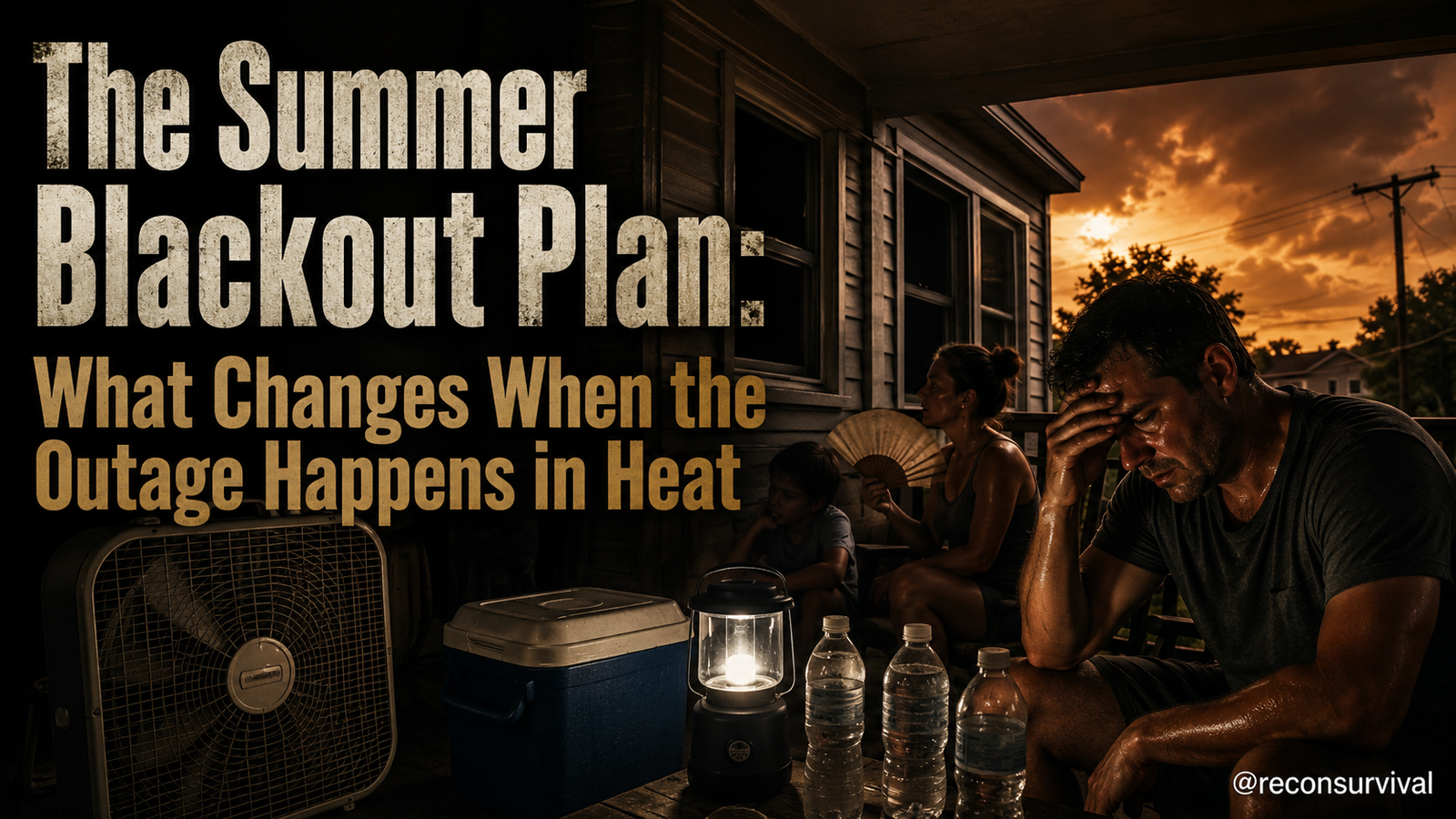
A practical way to adapt blackout planning for heat, food spoilage, medical needs, water use, and cooling, but most advice is either too generic, too gear-focused, or too late.
As an Amazon Associate, I earn from qualifying purchases.
When the thermostat is cranking and the storm front is moving in, a power outage isn't just an inconvenience; it becomes an immediate threat to your health. Most guides tell you to grab a radio and find a candle. They miss the critical shift: heat changes everything. It changes how your food spoils, how your medicine works, how your water is stored, and how you stay cool without electricity. This article provides the practical system to adapt your blackout plan for the specific stressors of summer, ensuring you remain safe and calm when the grid fails.
Why Summer Grid Stress Demands a Different Plan
Summer grid stress is a real phenomenon driven by peak air conditioning demand and increased storm activity. When temperatures rise and storms roll in simultaneously, the electrical system faces a higher risk of failure. It is not about fearmongering; it is about physics. High humidity slows evaporation, which is how our cooling systems work. Without power, that mechanism stops instantly. Furthermore, the grid is more vulnerable to surges during storms.
The Common Mistake of Waiting Until It Is Too Late
The most common mistake people make with this topic is treating blackout planning as a one-time event that happens during a holiday season. Many families wait until a blizzard is forecast in December to stock up on food or review their plans. By then, the season is over.
When preparing for summer, the mistake is waiting until the heatwave to address cooling and water conservation. By the time the power actually fails in July or August, it is often too late to move heavy furniture to block windows or to boil enough water for the duration of the outage. Another mistake is assuming that a standard cooler keeps food safe indefinitely. In heat, a cooler full of ice may only keep food safe for a few hours without a specific thermal barrier. If you do not adapt your planning for these specific summer variables now, you are relying on luck when the storm hits.
The Recon Survival Summer Adaptation System
The Recon Survival practical system focuses on adapting your baseline preparedness to the specific demands of heat, food spoilage, medical needs, water use, and cooling. The core promise of this approach is calm action. We do not stockpile in panic; we stockpile in stages. We do not assume the grid will hold; we assume the grid might fail and we have options.
This system breaks the adaptation into five pillars. First is thermal management. You must plan for heat loss from the home and maintain internal temperature using passive methods. Second is food preservation. You need a strategy for moving food from the fridge to a cooler before the grid fails. Third is medical continuity. Heat exacerbates certain conditions, requiring specific hydration and medication storage strategies. Fourth is water management. In high heat, water consumption increases, and boiling for safety must be prioritized. Finally, cooling. You need to know how to ventilate without drawing heat and how to use evaporative cooling effectively.
Step-by-Step Implementation for a Normal Household
To implement this system, start with a room-by-room assessment of your home. Identify the rooms that will remain habitable when the power is out. Ideally, the kitchen and living area should be accessible without electricity. Move heavy furniture to seal doors and windows if necessary, but ensure ventilation for cooking and sleeping is possible.
Next, assess your kitchen storage. Take an inventory of items that are already close to spoilage. If you have dairy or meat in the back of the fridge that has been there for over a week, move them to a cooler now. Do not wait for a storm. Use block ice rather than cubed ice to maximize melting time. Line the cooler with towels to reflect heat and keep the temperature stable.
For medical needs, review any medications that require refrigeration. Check the manufacturer instructions for storage temperatures. If the power is out, do not open the fridge unless necessary. Use cold packs wrapped in towels to maintain temperature in the fridge for the first few hours. For heat-sensitive medical conditions, ensure you have a backup plan for hydration that does not rely on store-bought electrolytes that may spoil.
Water use requires a simple shift in habit. In a hot summer blackout, boiling water for drinking or for cooling food is essential. Locate your primary water container and ensure it is easily accessible. If you have a water heater that requires electricity or gas pilot light, understand how to shut it down safely to prevent gas leaks or fire hazards if the line is compromised.
Finally, establish a cooling routine. Identify the fewest number of rooms you need to cool. Close curtains to block solar gain. Use a fan to create airflow over wet sheets for evaporative cooling, but ensure it is positioned to draw air through an open window to the outside, not just circulating hot air within a closed room.
Decision Triggers and Readiness Checklist
A prepared household operates on decision triggers, not just general alarms. Use the following checklist to evaluate your readiness when conditions change. This checklist helps you determine when to take action before an outage occurs.
- Fridge Status: Is the fridge fully stocked with ice? Do you have a backup cooler ready and lined with towels?
- Food Safety: Have you moved any perishable items near the expiration date to the cooler?
- Medical: Are all refrigerated medications checked, and are alternative administration methods prepared?
- Water: Is your primary water storage accessible? Is the water safe and stored in a cool place?
- Cooling: Are the heaviest curtains drawn? Is the evaporative cooling setup tested?
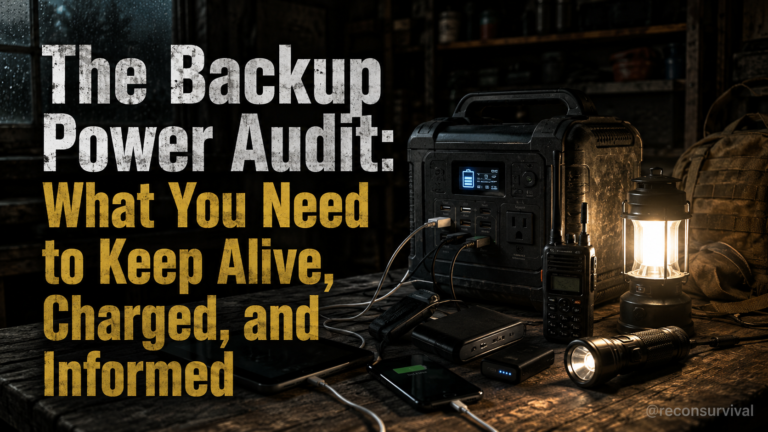
- Lighting: Do you have flashlights fully charged? Do you have chemical light sticks available that do not require batteries?
- Communication: Is your weather radio set to the local emergency frequency? Is it tested?
If you can answer "yes" to these questions, you are ready for the immediate onset of an outage. If you find gaps, address them now. The goal is to remove the need for difficult decisions later.
Recon Survival Principle
The Recon Survival Principle for summer grid stress is early warning, signal awareness, and decision triggers. We do not claim to predict events, but we prepare for the known variables that cause stress. The early warning is the rising heat index and the forecast of severe weather. The signal awareness is the knowledge that demand peaks correlate with grid vulnerability. The decision triggers are the specific items on your checklist. Calm household action is the result of having these triggers in place before the crisis arrives. This principle applies to any mission where the environment degrades faster than the resources. If you wait for the grid to fail, you are reacting. If you adapt your planning for heat and spoilage in advance, you are operating from a position of strength.
Action Plan for Today, This Week, and Later This Season
What should you do right now? Start by evaluating your current storage. Take a look at your fridge contents today. If you have perishables that do not belong there, discard them. If you have items that are borderline, move them to your backup cooler. Line your cooler with towels and block ice.
This week, review your medical supplies. Check the labels on your refrigerated medications. Read the storage guidelines. If you have specific needs, contact your healthcare provider for guidance. Test your water containers. Ensure they are clean and full. Check the batteries in your weather radio.
Later this season, as the heat index climbs, revisit your cooling strategy. Practice setting up your evaporative cooling systems. Ensure your family knows how to operate them without electricity. If you have a water heater that requires electricity, understand the steps to shut it down safely.
By the time the storm front arrives in late June, you will have a system that adapts to the specific stressors of heat. You will not be scrambling to find batteries or freezing food. You will have a plan that accounts for the reality of summer blackouts.
Do Today
Use this checklist to adapt your blackout planning for heat, food spoilage, medical needs, water use, and cooling. These are the concrete actions to take immediately.
- Inspect Food: Check your refrigerator for any items that are close to expiration. Move these items to a backup cooler lined with towels and block ice immediately.
- Prepare the Cooler: Assemble a backup cooler with block ice. If you do not have one, purchase a high-capacity model with a thick wall. Place it in a garage or shaded area, not inside the hot kitchen.
- Medical Review: Review the storage requirements for your refrigerated medications. Contact your healthcare provider if you have questions about maintaining temperature without power.
- Water Check: Inspect your primary water storage. Ensure it is clean, sealed, and stored in a cool, dark place away from direct sunlight.
- Cooling Setup: Gather materials for evaporative cooling. This includes wet sheets, a fan, and a plan for airflow. Test the setup in your bedroom or living area.
- Communication: Set your weather radio to the local emergency frequency. Test the speaker volume. Ensure it is accessible from the main living area.
- Lighting: Verify that all flashlights and chemical light sticks are functional. Check the batteries. Replace any that are old or corroded.
- Ventilation: Inspect your windows and doors. Ensure that you can close curtains to block solar gain. Identify the most critical rooms to seal.
- Water Heater: If you have an electric water heater, note the location of the shut-off switch. If you have a gas water heater, ensure the pilot light is functional and that you know how to shut off the gas supply.
- Family Briefing: Explain the plan to your household. Assign roles for moving food, administering medication, and managing water distribution.
Conclusion
Summer grid stress requires a different approach than winter planning. The rate of heat transfer, the speed of food spoilage, and the physiological strain on the body all change with the season. By adapting your planning now, you ensure that your family remains calm and safe when the power goes out. The Recon Survival practical system provides the tools and strategies you need to handle these specific stressors. Focus on early warning, signal awareness, and decision triggers. Prepare for the worst but plan for the best. With these steps, you are ready to face the summer storms with confidence.