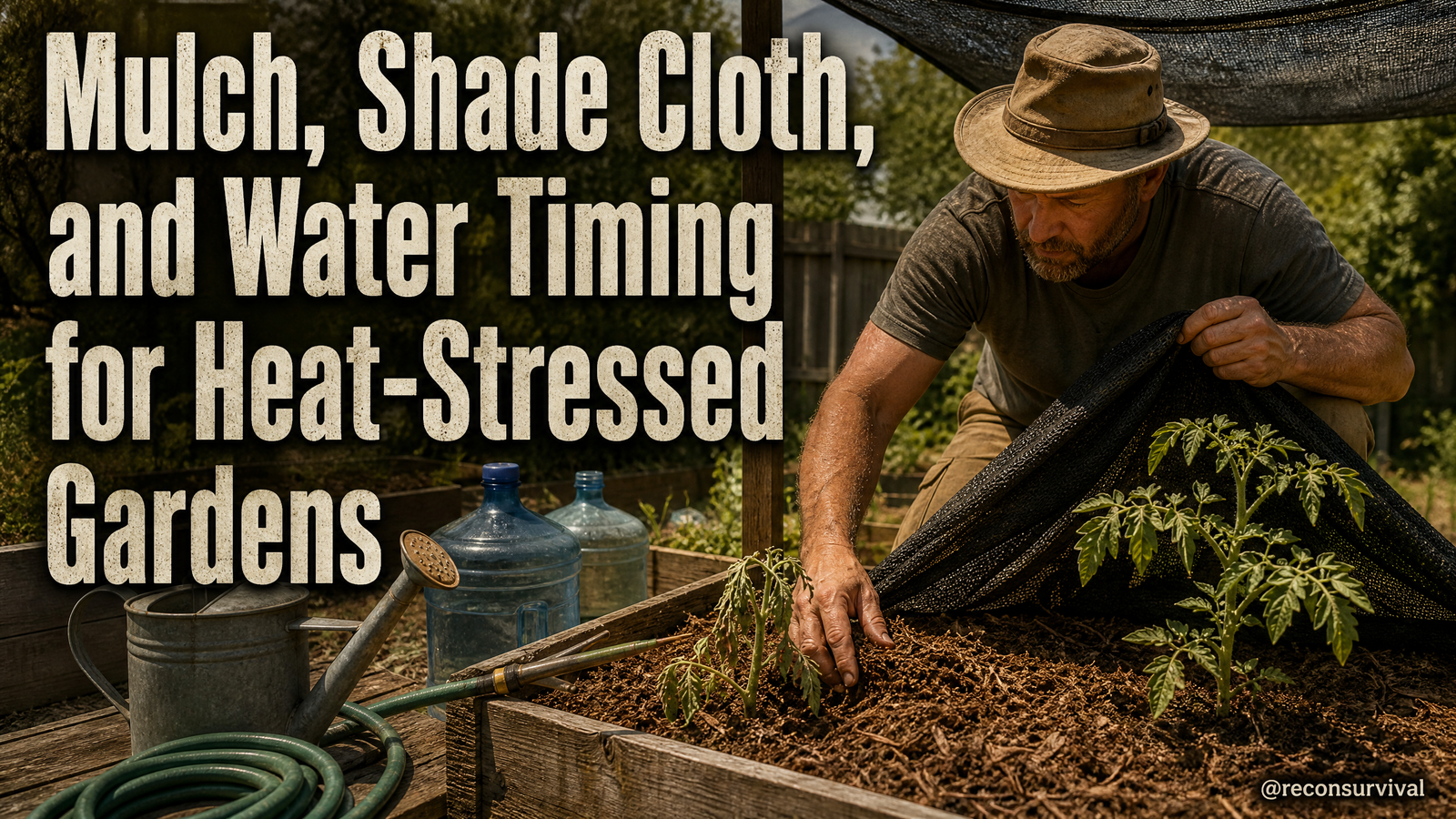
Your first tomato plant wilts faster than the second week of a drought. The water bucket in the corner looks half-full, but the soil under the shade cloth is dry as dust. You are watching the first signs of collapse in your garden system, not the second or third. This article solves the problem of keeping that first plant alive without wasting your limited water supply on a failed strategy.
As an Amazon Associate, I earn from qualifying purchases.
The First Point of Failure
When the sun beats down, the first thing that fails is the root zone moisture content. In off-grid scenarios, water is the limiting factor that dictates whether a crop survives or dies. Without grid power, you cannot run a central air conditioner to cool a greenhouse or a basement root cellar. You must rely on passive methods to keep the internal environment stable.
This is not about fear of the future. It is about the immediate physics of evaporation. When air temperature hits 90 degrees or higher, transpiration rates double. If you are relying on a manual bucket or a small rain barrel, you are at a disadvantage against the ambient conditions. The garden does not know that you are trying to save money or wait for rain. It responds to heat. If the soil dries out, the plant shuts down. This creates a cascade where a minor heat event becomes a permanent loss of food production.
You need a practical approach to cooling and water management that works without a grid. You must count your gallons, date your watering intervals, and adjust your expectations based on the heat index. There is no magic gadget that stops evaporation entirely. The only way to win is to reduce the rate at which the water leaves the soil while ensuring the plant receives what it needs.
The Most Common Mistake: Over-Watering Dry Soil
The most common mistake people make with this topic is believing that more water fixes the heat problem. Many readers reach for the hose and run it until they see runoff. This is a failure mode. When the soil is hot and dry, pouring large amounts of water into it causes rapid evaporation from the surface and rapid runoff from the edges. You are wasting water, not saving your garden.
This mistake creates a false sense of security. You walk into the garden, see a dark, damp spot where you just poured, and assume the plant is happy. Then you leave, and the water is gone in an hour. The root system never gets a chance to absorb the moisture because the top layer has already dried out. This is a weak point in your system that you must address immediately.
Instead of fighting the heat with volume, you must fight it with timing and coverage. You need to change your approach from volume-based watering to efficiency-based watering. This requires a shift in how you view your water storage and delivery methods.
The Recon Survival Practical System
The Recon Survival practical system for keeping garden systems alive during heat without wasting water relies on three variables: Mulch coverage, Shade cloth density, and Water timing. These are the field texture components that define your success. You must count your mulch layers, date your watering sessions, and test your shade cloth tension.
This system works for a small backyard or a small homestead where resources are tight. It does not require a solar pump or a complex irrigation network. It requires you to stage your supplies and move with the season. The system is built on the premise that you reduce demand and increase retention.
Step 1: Maximize Ground Cover
You must cover every exposed patch of soil. Bare soil is an open invitation for evaporation. You need to count your available materials and apply them to the beds. This includes wood chips, straw, hay, or cardboard.
You must stage these materials in a designated area, such as a shed or garage, and rotate them as you use them. Do not use fresh hay that might be treated with chemicals. You must check the labels on your supplies and ensure they are safe for your edible crops. You also need to check the local codes if you are using treated wood, though untreated organic mulch is generally safer.
The thickness of your mulch matters. You need a layer at least three inches deep. Anything thinner will dry out in a day. Anything too thick can suffocate the roots. You must measure your mulch piles and date when you applied them. Reapply as needed if animals scatter it or if the wind blows it away.
Step 2: Implement Strategic Shading
Sunlight is the enemy of water retention. You need to stage shade cloth to protect your most vulnerable crops. Tomatoes, peppers, and cucumbers suffer the most from direct overhead sun during July heat waves.
You must test the tension on your shade cloth. Loose cloth flaps in the wind and lets light through. Tight cloth blocks the sun and cools the air underneath. You should count the number of square feet of shade you can afford and prioritize the highest-value crops first.
For a low-cost option, use recycled black plastic or heavy-duty shade cloth from a discount store. These materials are effective but may degrade in UV exposure. You must mark your tools and containers with a date to track how long you keep them.
For a more durable upgrade path, invest in woven polyethylene shade cloth. This material has a lifespan of several years and is breathable. It allows air circulation while blocking the worst of the UV radiation. You must label your rolls and store them in a dry place to prevent mold.
Step 3: Time Your Watering
You must change when you water. Morning watering is the standard advice, but in peak July heat, the water evaporates before the roots can drink it. You must test the soil moisture at different times of day.
In extreme heat, watering in the late afternoon or early evening can be more effective. The sun sets, the soil cools, and the water penetrates deeper. You must count your gallons and write down the timing on a calendar in your kitchen or on the fridge door. This helps you rotate through your stored water and prevent it from sitting in the sun and getting warm.
You must also check your water storage containers. Do not leave large buckets in the sun. They radiate heat. Store your water in the coolest part of the house or a shaded garage. Test the temperature of the water before you use it. Cold water helps cool the roots slightly and reduces the evaporation rate upon application.
Application to the Small Homestead
Applying this topic to a small backyard or small homestead means making choices about what to keep. You cannot save everything. You must prioritize.
Identify your most valuable crops. These are the ones that require the most attention. Mulch these beds first. Then apply your shade cloth. Finally, water only these specific areas.
If you have a raised bed, line the bottom with cardboard or heavy plastic to prevent moisture loss into the ground. This is a low-cost option that adds a barrier. If you can afford a durable upgrade, install a liner with drainage holes or a gravel base. This adds a layer of complexity but extends the life of your crops.
Check your irrigation tools. Drip tape is better than a soaker hose in heat because it delivers water directly to the root zone without wetting the leaves. Wet leaves encourage disease in hot, humid conditions. You must count your length of drip line and ensure the emitters are clogged-free. Run a test to see if the flow is consistent.
Label every water container. Write the date you filled it and the last time you used it. This helps you track your inventory and ensures you do not use old or contaminated water. You must also check your hose for leaks. A dripping faucet wastes gallons a day. Turn it off or cap it.
Recon Survival Principle: Preserve the Root Zone
The principle here is simple: protect the water where the plant needs it, not where it is convenient. Your survival depends on the efficiency of your resource usage. When the first tomato wilts, it is because the system failed to manage the environment. You must adapt the strategy to the heat.
You must check your soil moisture daily during heat waves. Dig down an inch or two with a probe or your finger. If it is dry, water immediately. If it is damp, wait and cool the soil first. This is a calibration exercise. You must learn how long it takes for your soil to dry at different times of day. This knowledge allows you to predict when you need to water next.
Do not guess. Measure. Record. Adjust. This is the only way to keep your garden alive without a grid.
Concrete Nouns from the Brief
The most critical items you need are a water bucket, a shade cloth roll, a mulch pile, a drip line, and a thermometer. These are the concrete nouns that drive your plan.
You must have a thermometer to measure the soil temperature and the air temperature. This tells you when to act. A water bucket is your primary reservoir. You must keep it clean and covered. A shade cloth roll protects your crops. Mulch is your barrier. Drip line is your delivery system.
Each of these items has a role. They are not interchangeable. You must maintain each one. Check the mulch for dryness. Check the shade cloth for tears. Check the water for temperature and clarity. Check the drip line for flow and blockage.
This is the practical system. It works. It is field-ready. It requires no grid. It relies on your observation and your discipline.
Next-Day Checks and Long-Term Maintenance
You must check your garden the next day. Did the water hold? Did the mulch stay wet? Did the shade cloth stay in place? If the answer is no, you need to fix it. This is a triage step. You move from the immediate crisis to long-term maintenance.
Over the next few days, you must refine your routine. You will find the optimal time to water. You will learn which crops need the most shade. You will discover which areas dry out fastest. This data helps you plan for the rest of the season.
If you are using rain barrels, check them weekly. Clean the gutters. Remove debris. This prevents clogs and ensures you have a steady supply. You must also monitor your local weather forecast. If a heat wave is coming, prepare your garden in advance. Mulch more heavily. Shade the beds early. Water the day before.
This preparation saves your crops. It keeps your food supply secure. It is the difference between eating vegetables and buying expensive produce from the store. You have built a system that works when the grid goes down or the water rationing starts.
Do Today
Today, go outside and assess your garden. Look for the first signs of stress. Wilting leaves or cracked soil are warning signs.
Take action immediately.
- Cover bare soil. Grab your mulch and spread it over any exposed ground. Make sure the layer is at least three inches deep.
- Test your water. Check the temperature of your stored water. If it is warm, move the container to the shade.
- Inspect your shade. If you have shade cloth, ensure it is taut and covering your most vulnerable plants. If you do not have any, consider cutting a piece from an old tarp or plastic sheeting.
- Water strategically. Water in the evening if the heat is extreme. Use your drip line or soaker hose to target the roots.
- Record your actions. Write down what you did and when. This creates a log for future reference.
These steps are simple but effective. They build your resilience. They ensure that your garden survives the heat without wasting your precious water.
Your first tomato plant might wilt. That is okay. It is a lesson. Learn from it. Fix the system. Move on to the next plant. You are building a legacy of food security that does not depend on the grid. This is your job. This is your responsibility.
- Check every cap, container, shelf, and storage spot for leaks or heat exposure.
- Assign one person to refill, one to rotate, and one to recheck after the next alert.