
The hallway light flickers as a gust of wind rattles the frame of the front door. It's a normal Tuesday, or it would be, except the news is already buzzing about impending storm curfews and road closures. In that split second of shadow on the entryway floor, you realize the "bad lighting" and "weak routine" you've been putting off are now liabilities. Buying more gear while the foundation of your routine is still shaky is a trap; the real security fix happens right here, in the dim corners you usually ignore.
Before you order a new deadbolt or stockpile tactical gear, you need to see how your home currently behaves under pressure. A normal security walkthrough isn't about aggressive imagery or dramatic reenactments; it's a methodical inspection of lights, doors, windows, and locks. By organizing your defense around these physical locations, you move from passive worry to active preparation, aligning your home with the realities of peak season risks.
The Entryway: First Line of Defense Against the Storm
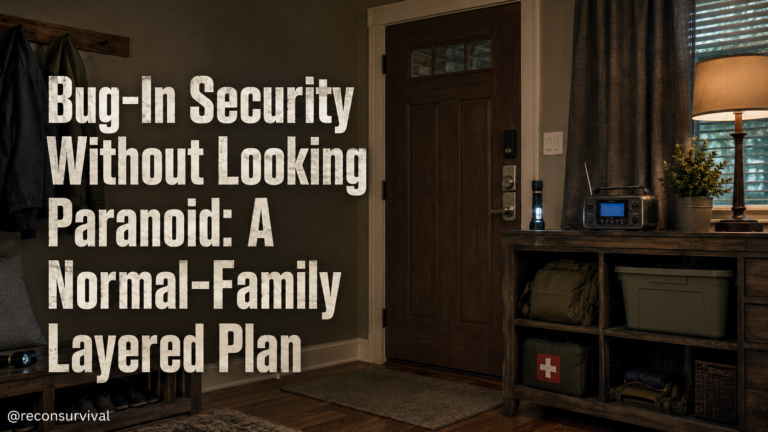
The entryway is where the storm hits first and where your routine often fails. It is the transition zone between the chaotic outside world and your safe interior. During a storm, curfews mean fewer patrols, and road closures mean emergency services might be delayed. This makes the entryway your most critical choke point.
Start by inspecting the door itself. Is the frame solid? Does the lock throw engage fully? Look at the lighting above the entry. During a storm, utility lines often fail or sags. If your motion sensor or porch light is dim or angled poorly, it creates a shadow pocket where an intruder – or a falling branch – can hide. A "weak routine" here often looks like leaving the door ajar to check a delivery or keeping the porch light on 24/7 when it should be motion-activated or paired with a backup battery.
Entryway Inspection Checklist:
- Lighting Angle: Walk outside at night. Does the light illuminate the lock and handle, or does it wash out the surrounding area while leaving the door frame in shadow? * Lock Integrity: Test the deadbolt with the door closed. Does it slide smoothly without jamming? * Routine Audit: When you enter, do you lock the door behind you immediately, or does the storm weather make you hesitate to step out? * Visibility: Are shrubs near the door trimmed back, or do they provide cover for someone to bypass the light and pick the lock?
If the lighting is bad and the routine is weak, no amount of "new gear" will fix the vulnerability. You must first restore the basic flow of entry: light the path, secure the lock, and close the door firmly.
Windows and Locks: The Silent Perimeter
Once the entry is secured, your attention shifts to the perimeter. During peak storm seasons, road closures can cut off quick access to the streets, making your windows the primary visual connection to the outside world. A storm can also cause power outages, plunging windows into total darkness, turning a home into a silhouette against a lit sky.
Inspect every window for its locking mechanism. Are the sash locks tight? Do they require excessive force to open? In a rush to secure the house before a storm hits, it's easy to skip checking these small levers. The "Recon Survival" approach demands you treat every window as a potential breach point, not just a view of the rain.
Windows and Locks Inspection Checklist:
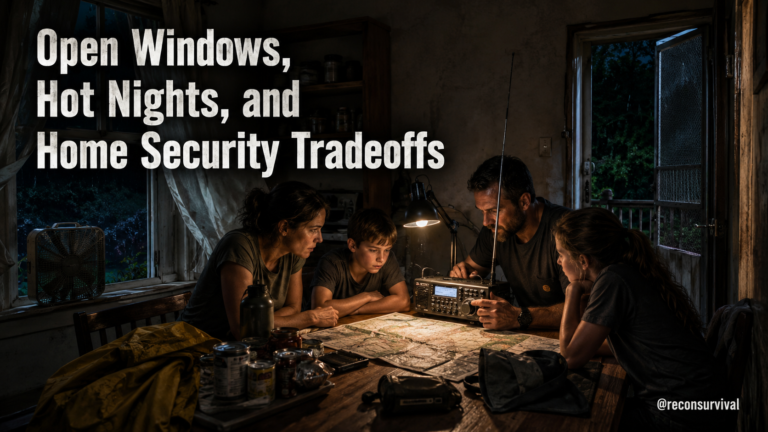
- Sash Locks: Try to wiggle each locked window from the outside. Does the sash move? If it does, the lock needs adjustment or replacement. * Glass Condition: Check for hairline cracks or loose frames that could shatter under high wind debris. * Nightly Routine: Do you close and lock all windows before sunset, or do you leave a few open for ventilation during the storm? * Blind Position: Ensure blinds or curtains are drawn at night. An open window in the dark is an invitation.
A practical guide to adapting movement and communication means recognizing that a locked window is the first line of defense when the road is closed. If you cannot verify the lock works, you cannot trust the window as a barrier.
Home Security Systems: Adapting to Local Storm Conditions
Your security system is only as good as its power source and its visibility. During a storm, local conditions change rapidly. Road closures mean you might not be able to get to a store to buy a backup battery. Local emergency management guidance often suggests having a plan for how to react when the grid fails.
The "Recon Survival" principle here is adaptation. If the storm knocks out power, does your alarm system have a battery backup? If the internet is down due to a storm surge, how does the system communicate? Do not rely on a single point of failure. The systems that matter are those that can continue to operate or alert you even when the local infrastructure is compromised.
Storm-Ready System Inspection Checklist:
- Power Source: Test your alarm panel battery. Does it hold a charge? Do you have a separate battery for your router or hub? * Backup Comms: If the internet is down, does the system have a cellular backup or a landline connection that is storm-proof? * Visibility: Are your security cameras or sensors covered in debris? Are they angled correctly, or are they blind spots? * Communication Plan: If the power is out, how will you know if the system is still active? Do you have a way to check status without a smartphone?
A practical guide to adapting to local storm conditions means ensuring your system doesn't just rely on the grid. It means having a backup plan for communication and alerting, ensuring you remain safe even when the world goes dark.
Recon Survival Principle: Adapt, Inspect, and Move
The core of Recon Survival during peak season is not about having the most expensive gear, but about the ability to adapt to changing conditions. Storm curfews and road closures create a unique environment where your home's security is tested by both weather and human activity. The principle is simple: Inspection drives adaptation.
You cannot adapt if you do not know your home's baseline. By walking through the entryway, checking the windows, and verifying your systems, you create a baseline of what is safe. When the storm hits, you don't have to guess; you execute the adaptations you've already planned. This turns a chaotic event into a manageable routine.
Do Today
The best time to secure your home is before the storm arrives. Don't wait for the wind to howl to check your locks.
- Walk the Entryway: Test the door lock and adjust the lighting angle to eliminate shadows.
- Inspect Windows: Tighten sash locks and ensure they are fully closed and locked.
- Check Your Systems: Test battery backups and verify your alarm panel's connectivity.
- Establish a Routine: Make it a habit to check all entry points before sunset, especially during storm season.
By following this path, you move from a state of vulnerability to one of preparedness. You aren't just buying gear; you are building a resilient, adaptable home ready for whatever the storm brings.