The entryway light stays on a solid ten minutes longer than the garage door closes. A single bedroom curtain remains drawn while the rest of the house settles into evening stillness. These small, deliberate signals tell a potential observer that life is continuing inside, even as the vehicle pulls away from the driveway and the road stretches out for the rest of the week.
As an Amazon Associate, I earn from qualifying purchases.
When the family leaves for a late-summer road trip, the house becomes a static target. The routine of morning coffee, the noise of a television in the living room, and the movement of vehicles create a rhythm that neighbors and passersby memorize. Removing that rhythm for more than forty-eight hours invites scrutiny. The goal is not to build a fortress or install military-grade surveillance, but to simulate the normal ebb and flow of a living household through lighting, neighbor coordination, delivery handling, and visibility management.
Why Routine Disruption Creates Vulnerability
A home in a state of normal activity is the most secure home because it blends into the background. When you depart for a vacation, the absence of human presence breaks that camouflage. The lights never turn on. The trash bins sit full for a week. The lawn grows unchecked. These visual cues are low-cost signals that require zero effort to detect, making them the primary way opportunistic observers identify an unoccupied property.
The security risk is not usually a sophisticated breach requiring specialized tools. It is a window of opportunity created by predictability. If your household leaves on Thursday evening and returns the following Sunday, the pattern is clear. A house with no activity for three days stands out from the neighborhood where lights flick on at dusk and off in the morning.
This is not about creating a false sense of fear regarding criminal networks. It is about understanding that visibility and routine are your first line of defense. By breaking the visual cues of emptiness, you reduce the probability of a targeted entry. The strategy relies on simple observations that anyone can make, not on complex technology that can fail or be disabled.
The Light Switch Trap
The most common mistake people make is relying on automated timers to simulate occupancy. While a timer turning a lamp on and off sounds efficient, it is often too predictable. A light that turns on at exactly 6:00 PM every night, only to turn off at 6:30 PM regardless of the day, creates a pattern that stands out against a normal household where lights might turn on at 6:15 PM or stay on for two hours.
Furthermore, a single timer-controlled light does not account for the natural variability of a family's evening. A house that lights up the kitchen for dinner, the living room for a movie, and the hallway for a bedtime story follows a dynamic rhythm. A static, looping timer lacks this nuance. It can look like a programmed sequence rather than a human presence.
Instead of relying on a single timer, use a combination of controlled variables. This includes mixing manual intervention with automation, varying the duration of light usage, and ensuring that the lights turned on correspond to different rooms at different times. The objective is to replicate the irregularity of a real life, not the precision of a machine.
The Neighbor Handoff Protocol
The most effective way to maintain the appearance of occupancy is to engage the people who live around you. A neighbor is a human sensor that can observe and report anomalies that a camera might miss, or an automatic light cannot simulate.
Begin the handoff three days before departure. Do not simply ask a neighbor to "watch the house." Provide them with specific, low-burden tasks that fit their schedule. For example, ask them to collect mail and newspaper deliveries daily. Ask them to pull a garbage bin to the curb on the evening of the scheduled pickup.
Create a written list of these tasks. Place it in a weatherproof envelope with your contact information and a clear deadline for when the tasks should stop. Include instructions for what to do if they see a car parked in the driveway that looks unfamiliar or if the lights stay off for an unusually long period.
This protocol transforms your neighbors from passive observers into active participants in your security. It creates a layer of "human surveillance" that is far more difficult for an intruder to bypass than a deadbolt. Ensure you have a two-way communication channel set up, such as a text thread, so they can report an issue immediately if one arises.
Managing Deliveries and Visibility
Packages are a beacon for opportunistic theft. When you are away, a stack of boxes on the porch signals that the house is unoccupied and valuable items are inside. The most effective approach is to stop deliveries entirely while you are gone.
Contact carriers a week in advance to place a hold on all incoming packages. If that is not possible, arrange for a neighbor to collect the mail and small packages daily. Do not leave newspapers or flyers accumulating; they are a classic sign of an empty house.
Inside the house, adjust your visibility. Close the blinds on the ground floor windows that face the street, but leave them partially open on the upper floors or in backyards where no one is looking. This allows some light to enter during the day, simulating the presence of someone moving through the house, while still protecting the interior from direct view from the street.
Rotate the positions of objects like magazines on the coffee table or a television remote. If a camera or a passerby gets a clear view of the same items in the same position for days, it suggests a lack of activity. A small change in the arrangement of household items adds a layer of authenticity to the occupied appearance.
The Lighting Simulation System
Lighting is the primary tool for simulating presence. To make this effective, you must move beyond a single timer and create a layered system that mimics the natural progression of a household.
Start with a "dusk" trigger. Use a smart bulb or a photoelectric sensor in the entryway and the kitchen. These should turn on as the sun sets, providing a warm, welcoming glow. This is the first signal that someone is home.
Next, introduce a "dinner" routine. In the living room or dining area, use a different timer or smart bulb that turns on later in the evening, perhaps an hour after the entryway lights. This suggests a family gathering. Vary the duration. Sometimes the light might be on for an hour, sometimes for two. The inconsistency is key.
Finally, create a "bedtime" sequence. The hallway and bathroom lights should turn off a few minutes after the main living lights. This mimics the natural wind-down of a family going to sleep.
If you do not have smart home devices, use plug-in timer sockets with incandescent bulbs. These are inexpensive and reliable. You can also use a "vacation mode" on older timers that randomizes the on and off times within a set window, making the pattern less predictable.
A Defensive Household Checklist
Before leaving, walk through the house with a fresh set of eyes, checking for weak points that could give away your absence.
Entry and Perimeter
- Ensure the front and back doors are locked and the deadbolts are engaged.
- Check the garage door to ensure it is locked and the interior door is secure.
- Trim any overhanging branches near windows or doors that could provide a hiding spot.
- Secure all gates and fences to prevent unauthorized access to the backyard.
Lighting and Timers
- Program entry and living room lights to turn on at dusk.
- Set up a "dinner" light in the living or dining room for late evening.
- Ensure bedroom lights turn off first, followed by hallway lights.
- Verify that all timers are functioning correctly and have fresh batteries.
Mail and Deliveries
- Place a hold on all mail and packages.
- Arrange for a neighbor to collect mail and newspapers daily.
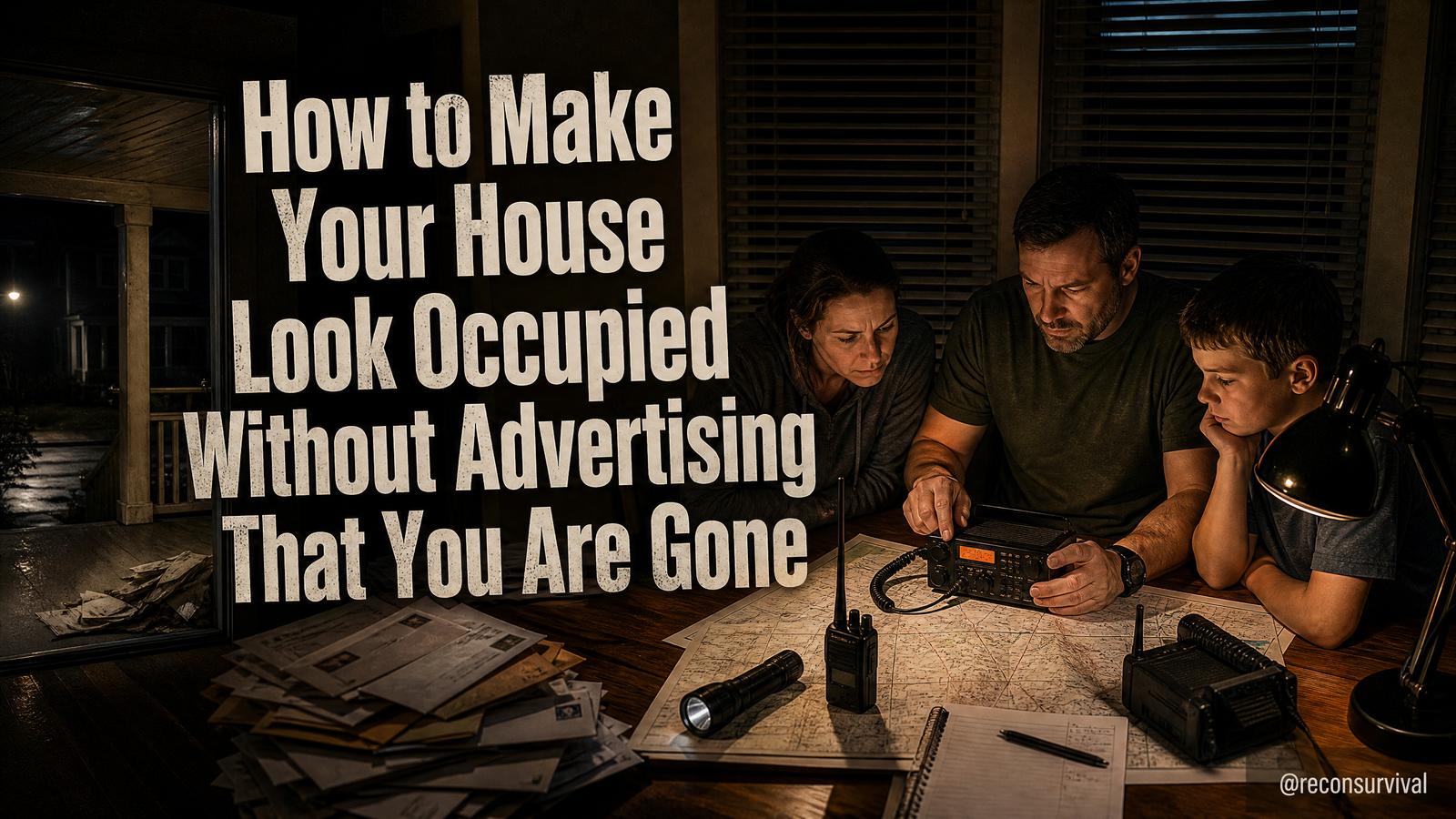
- Remove any flyers or advertising mail left on the porch.
Visibility and Privacy
- Close blinds on ground-floor windows facing the street.
- Adjust the positions of magazines and remotes to look natural.
- Ensure the lawn is mowed before you leave or arrange for a neighbor to cut it.
Communication
- Provide your neighbor with a written list of tasks and your contact information.
- Share your travel itinerary with a trusted family member or friend who is not on the trip.
The Recon Survival Principle
Security is not a product you buy; it is a process you maintain. The most effective security measure is not the most expensive alarm system or the heaviest door lock. It is the ability to simulate normalcy when you are not there. A house that looks lived-in, with lights flickering in the evening and mail being collected daily, is a house that does not attract attention.
This principle applies to every aspect of your preparation. It is not about building a fortress, but about blending in. The goal is to make your absence indistinguishable from a busy week where you are just working late, or a weekend where you are too tired to turn on the lights until 8:00 PM. By focusing on the details of routine – light, mail, visibility, and neighbor involvement – you create a defense that is both practical and effective.
The most vulnerable time for a home is not when you are there, but when you are not. The transition from occupied to unoccupied is where the risk lies. By carefully managing this transition, you ensure that your home remains a target of last resort, not first choice.
Recon Survival Principle
Recon Survival is not about waiting for stress to make the decision. It is about turning weak signals into household action while the fix is still small. Use lighting, neighbors, deliveries, routines, and visibility to reduce travel-related risk.
Do Today
Take action now to prepare your home for departure. Do not wait until the morning of your trip to figure out the lighting or ask a neighbor for help.
Start by setting up your lighting timers. Test them to ensure they are working correctly. Adjust the schedule to mimic the irregular patterns of a real household. If you have smart home devices, program the "vacation mode" or "away" routine immediately.
Next, talk to your neighbors. Ask if they are willing to collect your mail and pull the bins. Provide them with the written list of tasks and your contact information. Ensure they know what to look for and when to call you.
Finally, check your visibility. Close the blinds on the ground floor and adjust the interior items to look natural. Remove any mail or packages from your porch. These small steps will make a significant difference in the security of your home while you are away.
By taking these measures today, you ensure that your home remains secure and that you can enjoy your trip without worrying about what is happening back at the house. The difference between a secure home and a vulnerable one is often just a few small, deliberate actions taken before you leave.
- Check every exterior door for full latch contact and smooth deadbolt travel.
- Replace loose or short strike-plate screws where the frame and hardware allow it.
- Open, close, and lock each ground-level window, then note any stuck latch or broken screen.
- Test motion lights at doors, walkways, driveway edges, and dark corners after sunset.
- Trim one visibility problem near a door, window, gate, or walkway.
- Put a working flashlight and charged battery bank where people sleep.
- Write the household contact plan on paper and place it with the radio or main flashlight.
- Assign one person to recheck the list after the next storm, outage, or heat alert.