
The Back Door Still Leaks: Where Your Preparation Cracks First
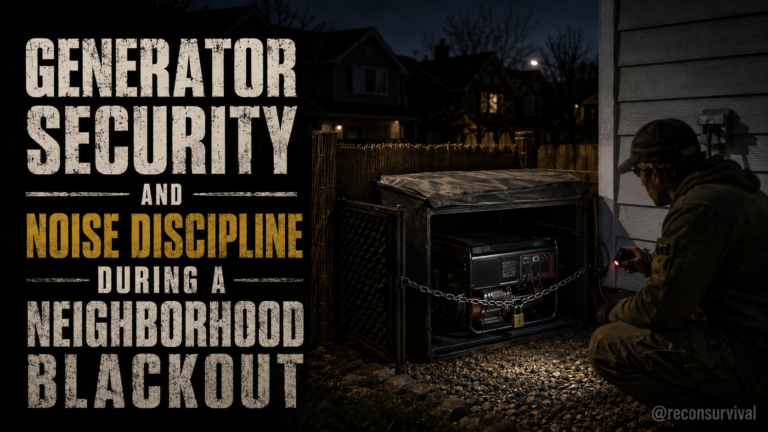
You bought the camera. You added the lock. You even checked the motion sensor. Yet, the back door still has bad lighting, the routine feels weak, and you are still buying gear while panic sets in. This is the first thing that fails: not the equipment itself, but the strategy of acquisition. You are reacting to empty shelves rather than building a resilient system.
As an Amazon Associate, I earn from qualifying purchases.
This is the moment where "Panic Buying" turns into a liability. When you see empty shelves, the instinct is to grab everything immediately, but this leads to hasty decisions, poor quality choices, and a lack of privacy in your preparations. The real failure is the delay in restocking gradually, privately, and responsibly until it's too late.
Before you buy another thing, we need to stop the cycle of reactivity. The following guide moves you from a state of fear-based purchasing to a "Quiet Restocking" methodology. This is not about buying more; it is about buying smarter, slower, and with a plan that keeps your security assets invisible to the wrong eyes.
Recon Survival Principle
True security is not a sprint triggered by fear; it is a quiet, consistent accumulation of capability.
The core principle of this approach is Quiet Restocking vs. Panic Buying. Panic buying draws attention to your vulnerabilities and often results in poor resource allocation. Quiet restocking involves gradual, private, and responsible acquisition that aligns with seasonal risks. By shifting your mindset from "reacting to empty shelves" to "maintaining a steady reserve," you ensure that your home security systems are reliable without making you a target for opportunistic behavior.
The Triage Ladder: What Breaks First
To fix a failing security setup, we must prioritize repairs and purchases based on urgency and risk. This is not a standard shopping list; it is a triage ladder for your home's defensive capabilities.
First Hour: The Critical Lighting & Entry Check
Immediate safety requires visibility. If your back door has bad lighting, it is an open invitation. This is the first failure point. * Action: Inspect the immediate perimeter. Is the light bulb working? Is it the right color temperature? Is it bright enough to deter an intruder? * Fix: Replace or upgrade the fixture immediately. Do not wait for a sale. A dark entryway is a high-risk variable.
Same Day: The Routine Audit
Once the light is fixed, the human element becomes the next vulnerability. A weak routine is the second thing to break. * Action: Walk through your entry points as if you were an intruder. Are doors locked? Are windows latched? Is the sequence of actions (locking, checking, disabling alarms) smooth and reliable? * Fix: Reinforce the physical actions. Add a simple, physical checklist near the door to ensure no step is skipped.
Next Day: The Gear & Inventory Inventory
Finally, address the "gear" issue. This is where panic buying happens. * Action: Review what you actually have versus what you think you need. Are you buying duplicate items? Are you buying expensive gear you cannot maintain? * Fix: Create a restocking plan that adds one item per week, focusing on privacy and utility, rather than hoarding in one weekend.
The Hidden Costs of "Panic Buying"
Why is the strategy of reacting to empty shelves so dangerous? Because it forces a "bad deal" mindset.
When shelves are empty, the scarcity principle kicks in. You feel forced to buy whatever is available, often at inflated prices, without verifying the quality or suitability. This leads to a situation where you have bought "more gear," but it is often the wrong gear. You might buy a complex security system that requires power or internet, only to find out later that it is useless during a power outage or that it requires a subscription you can't afford.
Furthermore, panic buying draws attention. When you see neighbors frantically stocking up, it signals that something is wrong or that resources are scarce. This visibility can make you a target. Quiet restocking, conversely, looks like normal, mundane maintenance. It is unremarkable, which is exactly what you want for a secure home.
Building the Quiet Restock System
The alternative to panic is a system designed for sustainability and privacy. This system relies on three pillars: Gradual, Private, and Responsible.
- Gradual Acquisition: Instead of buying a month's worth of supplies or gear in one day, commit to a "one-item-a-week" rule. This spreads the cost and the effort, reducing financial stress and the risk of buyer's remorse. It also allows you to learn how each piece of gear works in your specific environment before moving to the next.
- Private Operations: Conduct your shopping and storage activities discreetly. Do not leave new gear visible on your porch. Use secure storage solutions and consider purchasing online with unbranded packaging when possible. The goal is to maintain a "normal" appearance to the outside world.
- Responsible Consumption: Focus on quality over quantity. It is better to have one high-quality, reliable lock than ten cheap ones that fail. Read manuals, understand the limitations, and ensure you have the skills to use the gear. This is a long-term investment in safety, not a quick fix.
The Seasonal Risk Connection
Your restocking strategy must be tied to the risks that matter for the current season. A security plan is not static; it evolves.
- Winter: Focus on lighting and heating. Cold days mean fewer people outside, which can mask intruder activity. Ensure your entry points are well-lit and that your emergency power sources are tested.
- Summer: Focus on visibility and windows. Longer days mean more opportunity for observation. Check your blinds and ensure your security cameras are not creating blind spots in the bright sunlight.
- Transition Seasons: Focus on maintenance. As weather changes, doors and windows can warp or stick. This is the best time to audit your physical barriers.
Decision Points: What to Buy, When to Wait
Not every piece of gear needs to be bought today. You must make a decision on what is essential versus what is "nice to have."
- Buy Now: Items that directly address an immediate, verified vulnerability (e.g., a broken lock, a dead battery in a security camera, or a light that doesn't work).
- Wait: Items that are expensive, complex, or require a specific seasonal context. For example, don't buy a massive backup generator in August if you only need it for winter power outages.
- Re-evaluate: Items that you have bought but never used. If you have a backup plan that you have not tested, do not buy more gear. Instead, test your current setup.
Do Today
You do not need to overhaul your entire security setup in a week. You can start with one concrete action today that moves you from panic to plan.
Take a moment to walk your perimeter and fix one specific lighting issue. Go to your back door or any dark entry point. Check the bulb. If it's burnt out, replace it. If the fixture is broken, buy a simple, inexpensive replacement. Turn it on at night to ensure it works. This single act of fixing bad lighting is the first step in "Quiet Restocking." It addresses the most immediate risk without drawing attention, signaling to yourself and your home that you are prepared, and responsibly.
By starting with one small, visible fix, you build the habit of gradual, responsible preparation. This is how you stay ahead without drawing attention, turning "Panic Buying" into a strategy of sustained, readiness.