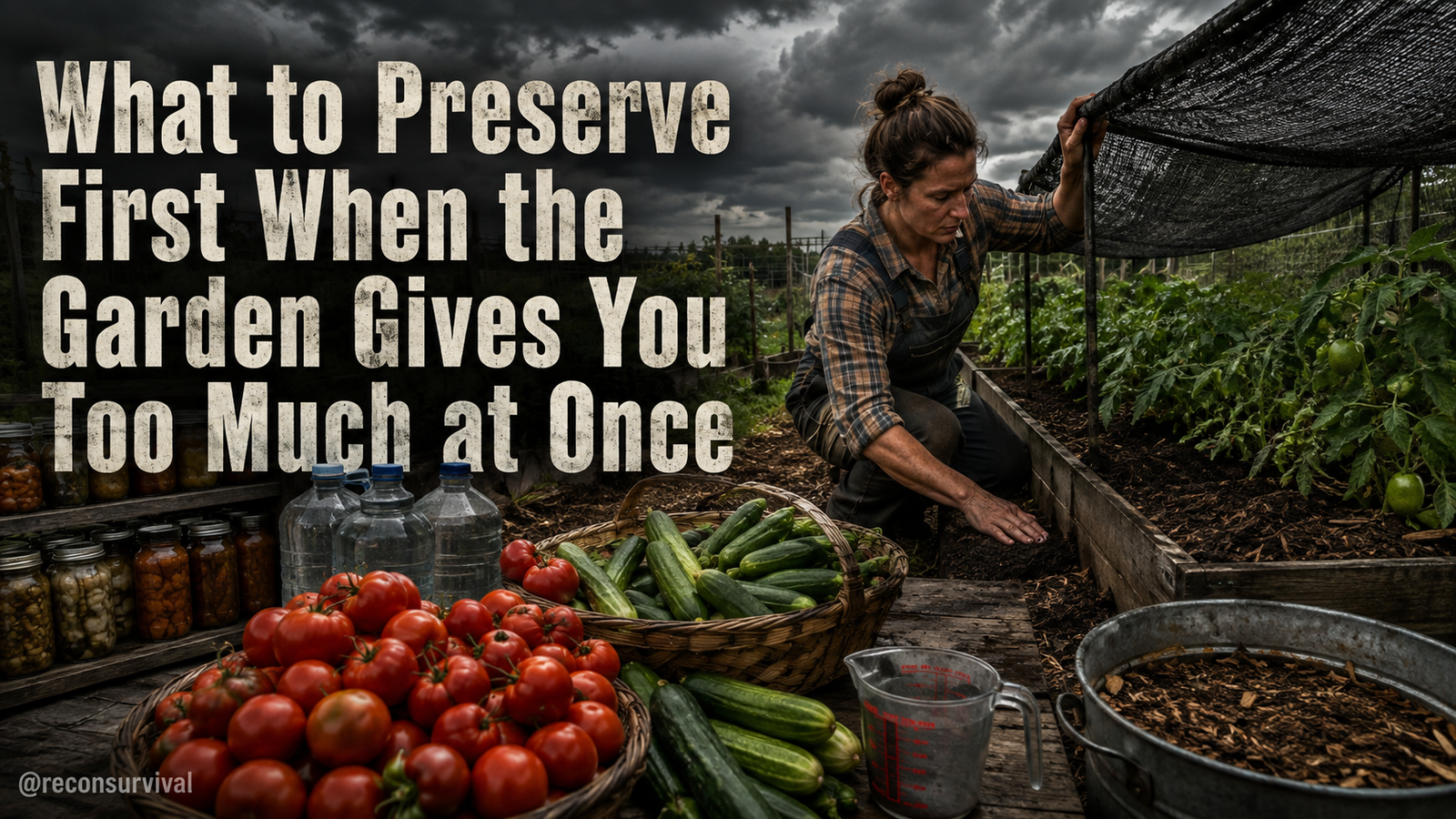
When a single night of high yields floods your counter with tomatoes, cucumbers, and peppers, the first failure point is almost always the window of time before those items rot. You do not need a new dehydrator, a bulk freeze-up, or a crisis plan to solve this. You need a method to decide what gets preserved now, what gets stored later, and what gets eaten immediately.
As an Amazon Associate, I earn from qualifying purchases.
The Spoilage Ladder: What Breaks First
In the heat of late summer, the timeline for edibility shrinks. The failure mode for a garden harvest is not lack of storage space; it is the speed of enzymatic degradation once the fruit is picked.
Rank your harvest by how quickly each item loses texture and flavor. Berries and soft-skinned peaches are the first to fail. They require immediate cooling or processing within hours of the morning harvest. Tomatoes, zucchini, and cucumbers follow quickly, often degrading within 24 to 48 hours if left in direct heat. Leafy greens are the final tier to rot completely, though they wilt and lose nutrients rapidly without refrigeration.
The Inventory Gap: Family Use vs. Preservation
The most common mistake in late summer preservation is over-processing crops that the family does not regularly eat. This happens when a household preserves a bulk harvest of kale, okra, or specific bean varieties because they look good in the jar, only for those jars to sit for months until the items go stale or are discarded.
You must cross-reference the harvest with your actual consumption patterns over the next year. A jar of peaches that no one eats in winter is a failed preservation effort, even if the canning was technically perfect.
Open your pantry and pull out the last few months of meal plans or inventory lists. If you do not have a written plan, look at your grocery receipts from the same season last year. If you bought tomatoes weekly but have five jars of tomato paste that you cannot imagine using, you have prioritized storage over utility.
The system requires you to ask: "Does this food appear in our actual dinner rotation?" If the answer is no, or if you are unsure, preserve a smaller portion or prioritize the item for immediate consumption and freezing rather than long-term jarred storage.
The Recon Survival Priority Framework
To handle a massive harvest without panic, use a four-axis decision matrix. Every item entering your preservation pipeline must score against these four variables before you commit to a method.
- Spoilage Speed: How many hours or days before the item is unsafe or inedible?
- Family Use: How often does the household consume this item? Is it a staple or an occasional treat?
- Nutritional Density: Does this item provide calories, protein, or essential vitamins that are scarce in your long-term storage? Leafy greens and berries have high micronutrient density that degrades in long-term storage; they offer unique value if processed fresh or quickly frozen.
- Storage Space: Do you have the dedicated freezer space, pantry shelf space, or shelf-stable canning supplies required for this specific item?
Apply this framework to a batch of heirloom tomatoes. They spoil fast (high priority) and are a staple (high priority). However, if your canning space is full and your freezer is at capacity, you must prioritize the ones you will eat this week or freeze immediately, rather than canning the rest.
The decision is not about the number of jars you can make. It is about the value the preserved food holds for the household once the season ends.
The Triage Ladder: Hours, Days, and Weeks
Implement a strict timeline for your harvest. This creates a rhythm for the week that prevents overwhelm and ensures the most perishable items are handled first.
First Hour Checks (The Immediate Window)
Walk through the garden and harvest the items identified as the most perishable. Sort them immediately by size and condition. Discard any items with active rot or insect damage to prevent cross-contamination. Begin washing or cooling these items within one hour of picking. If you are planning to freeze, portion them now into meal-sized batches. If you are canning, set up your boiling water bath and sterilize jars immediately. Do not let this batch sit on a counter.
Same Day Checks (The 24-Hour Window)
For items that are sturdy but beginning to soften, prioritize pickling, charring, or quick-freezing. These items can hold off longer than berries but still degrade if left in the heat. Move these items from the harvest bin to the processing station. Label the containers with the date and content. If you have a dehydrator, begin loading trays during this window.
Next Day Checks (The 48-72 Hour Window)
Items that are fully ripe and hardy can wait for the next stage of preservation. This includes root vegetables that have cooled down and harder squash. Use this time to review your inventory against your pantry space. Check the seal of jars from previous days. Ensure your freezer temperatures are holding steady. If a batch was not processed in the first two days, assess if it is still safe. If it has passed the window, prioritize it for immediate cooking and freezing or donating.
Matching Preservation to Conditions and Rotation
Preservation is not complete until the item is stored in a condition that matches its shelf-life requirements. A jar of peaches in a hot pantry degrades faster than one in a cool basement. Freezers that cycle temperature frequently damage the texture of berries.
Connect your preserved food to actual meal planning. When you label a jar of tomatoes, write down three potential meals where that jar fits. This ensures you rotate stock correctly. Do not bury a jar under a stack of cans from three years ago.
Rotation Triggers:
- First In, First Out: Always pull from the oldest stock first. If you add new jars, place them behind the older ones on the shelf.
- Storage Conditions: Check your pantry, cellar, or garage for heat spikes. Late August heat can penetrate storage areas. If a storage room exceeds 75°F, move canned goods to a cooler location immediately.
- Water Use: If you are canning, remember that the process consumes significant water. Ensure you have backup water supplies for cleaning and cooling jars if the local supply is compromised. Do not rely solely on the main line during high-heat events.
Pantry and Water Checklist
- Verify all jars are cool and sealed.
- Check freezer temperature (must be 0°F or lower).
- Confirm storage area is dry and cool.
- Label all containers with date and content.
- Move high-value nutrient items (greens, berries) to the most accessible storage spot.
- Inspect water storage containers for clarity and seal integrity.
The Harvest Reset: Preparing for the Long Term
As the season shifts from late summer abundance to autumn decline, the focus changes from rapid triage to maintenance. You are no longer fighting the clock; you are building a foundation for winter.
The Recon Survival Principle
The goal is not to preserve every pound of food you harvest, but to preserve the right pounds that ensure your family remains fed, safe, and healthy when supply chains or markets fail. Prioritize nutrient density and shelf stability over quantity.
The Final Haul
As you move from tomatoes to pumpkins and late apples, adjust your method. These items are designed to store longer. They do not require the same frantic first-hour processing as berries. You can use this time to organize your pantry, label your jars, and rotate stock.
Post-Season Review
After the harvest ends, do a final sweep. Count your jars. Check your freezer inventory. Note what worked and what did not. Did you can too much of a variety you do not eat? Did you leave a batch of vegetables to rot because you did not have time? Use these data points to refine your plan for next year.
Recon Survival Principle
Recon Survival is not about waiting for stress to make the decision. It is about turning weak signals into household action while the fix is still small. Prioritize preservation by spoilage speed, family use, nutrition, and storage space.
Do Today
The work for today is simple and direct. It does not require a full day of labor, but it does require immediate action on the most fragile items.
- Harvest and Sort: Go outside and gather the most perishable crops. Sort them into "Process Now" and "Cool and Wait."
- Clean and Cool: Wash and dry the "Process Now" batch. Place it in the coolest part of your home or freezer immediately.
- Plan the Meal: Write down one meal plan for the next three days that uses these fresh items.
- Label: Take one jar or one bag. Write the date and contents clearly.
- Check Seals: Inspect one sealed jar from a previous batch to ensure it is still airtight.
- Refill Water: Top off your emergency water storage containers if the level is low.
Do not wait for the perfect weather or the perfect moment. The harvest waits for no one. Start with the most fragile item and work your way through the list. This is the only way to secure the food you need for the months ahead.
- Assign one person to refill, one to rotate, and one to recheck after the next alert.