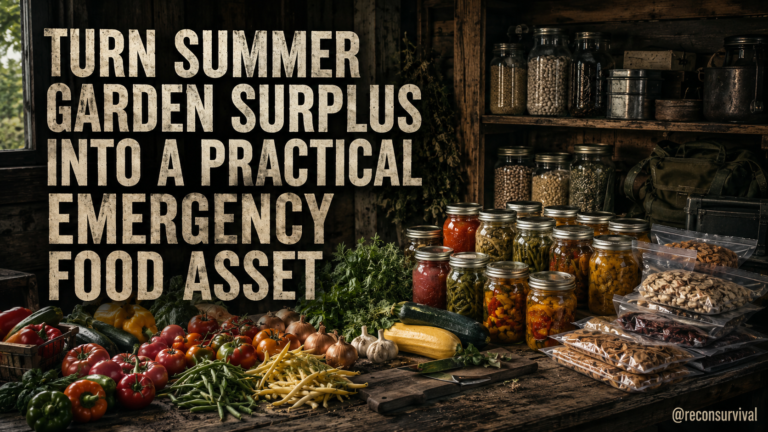
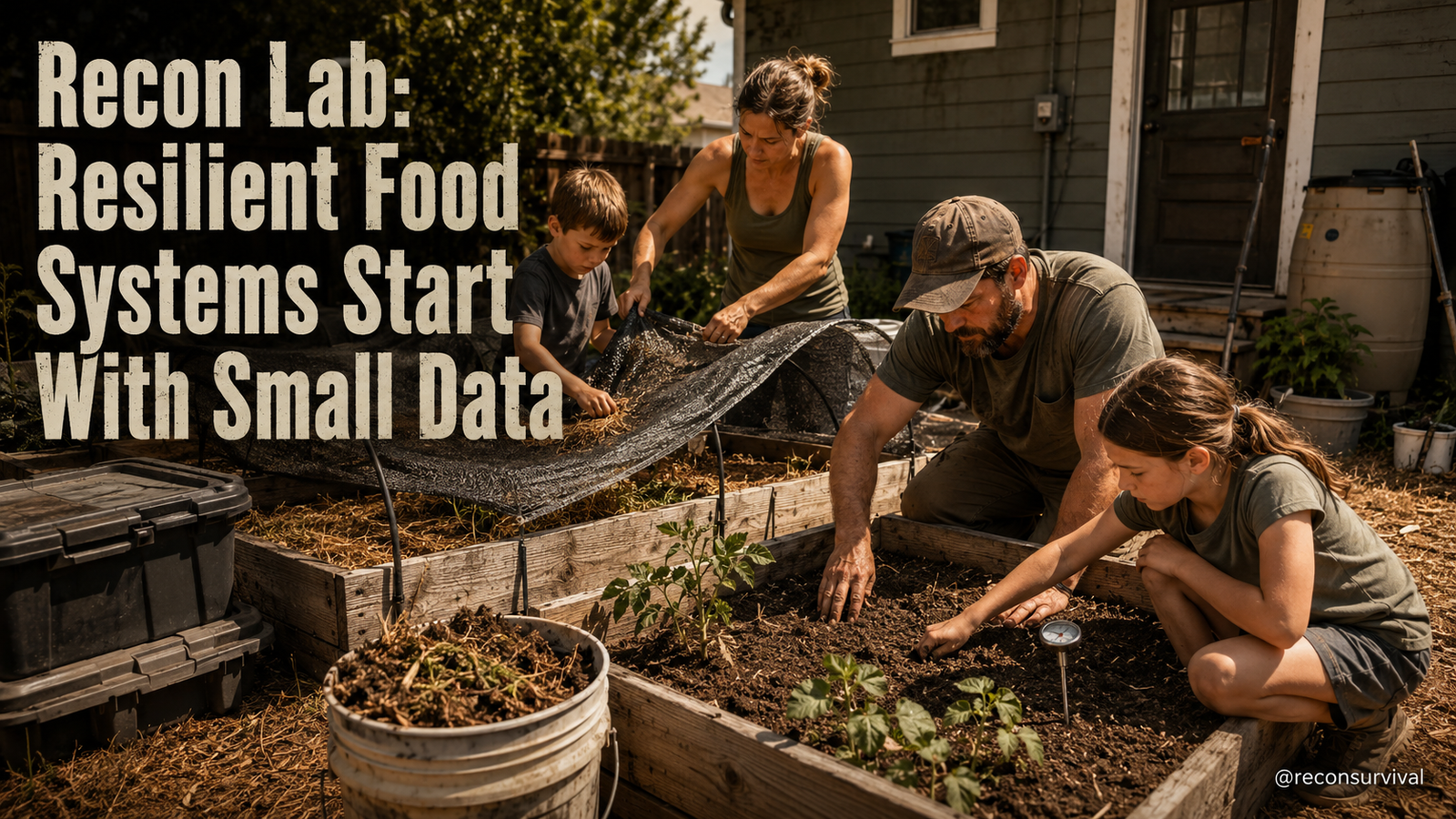
The garden stops being a source of abundance and becomes a test of preservation capacity. Many households reach this point with no organized data, relying on memory to decide what to harvest, how much to water, and what to preserve before rot sets in. This gap between the season's demands and the household's awareness is where food security slips away.
As an Amazon Associate, I earn from qualifying purchases.
Resilience in this window does not come from buying more gear or reacting to a crisis. It comes from the quiet accumulation of small data points that reveal the true state of your food system. When the weather turns, or a pest outbreak spreads, you need to know exactly how your crops are faring, how much water they are consuming, and what the harvest window actually looks like. Without this information, you are guessing. Guessing leads to waste, missed harvests, and an over-reliance on store-bought goods when the system is most vulnerable.
The most common mistake is treating the garden as a static asset rather than a dynamic system. Homeowners often check a plant once a week, assuming that the conditions of last Monday apply to today. This creates a dangerous lag time. A heatwave can dehydrate a tomato patch in three days. A pest swarm can strip a pepper plant overnight. If you are not tracking the micro-changes, you will miss the window to act, and the loss of food becomes a permanent reduction in your household's winter buffer.
Heat, Load, and Water Demand Signals
The most critical data stream right now is the relationship between environmental heat and the plant's water load. This is a simple causal chain that dictates daily survival priorities: rising temperatures increase evaporation, which spikes water demand, which forces a decision on irrigation priority before the soil dries out completely.
In the garden bed, the signal is visible in the soil and the leaves. Dark, dry soil that pulls away from the edge of a container or a plant bed indicates that the water retention has failed. If the top two inches are bone dry by 10 a.m., the load is too high for the current irrigation schedule. You need to move immediately from a weekly watering routine to a daily check. This is not about wetting the surface; it is about saturating the root zone before the midday heat locks the soil moisture out of the plant's reach.
Check the water gauge on your hose reel or the output of your rain barrels. If the flow rate has dropped or the level is critically low, you have a resource constraint. The signal here is a decision trigger: stop non-essential watering and focus entirely on high-value crops that are near harvest. Document this on a field log. Write the date, the temperature, and the visible leaf condition next to the plant bed number. This creates a baseline for how the garden handles stress. If you see the same pattern repeat over three days, you know the current irrigation method is insufficient for the coming heatwave.
Pest Timing and Harvest Notes
The second data stream involves the intersection of pest activity and harvest maturity. Late August is when aphids, beetles, and fungal issues often reach a crescendo before the first frost. The mistake is waiting for visible damage to notice a problem. By the time you see the holes in the leaves or the yellowing foliage, the plant has already lost significant energy.
You need to start a pest timing log. Walk the perimeter of the garden before the sun is fully up. This is when pests are most active and easiest to spot. Record the type of insect, the density on specific plants, and the time of day. Is the aphid population concentrated on the underside of bean leaves? Is there a cluster of beetles on the cucumbers? Note the date and the location on a printed sheet taped to your workbench.
Simultaneously, update your harvest notes. Look at the fruit that is ready. Is it too hot to pick? Is it too small? A harvest note is not just a list of what is ripe. It is a count of units and a weight estimate. Write down: "Tomatoes: 12 large, 5 small. Zucchini: 4 lb." This turns your garden into a quantifiable asset. When you later need to decide whether to can, freeze, or give away produce, you are working from numbers, not feelings. If your pest log shows a spike in damage on a specific crop that you have logged as "ready," you have an immediate decision point: harvest it early to save the crop, or apply a targeted treatment if the pest is manageable.
Weather Observations as Decision Triggers
Weather observation in the late summer phase is about forecasting the immediate impact on the garden, not just reading a forecast. The most useful data point is the wind direction and the forecasted overnight temperature. If a strong, hot wind is forecast for the next 48 hours, the garden's water demand will double. If the night is expected to drop significantly, you need to cover sensitive seedlings.
Keep a dedicated weather log on the back of your kitchen counter or a whiteboard in the garage. Record the daily high, low, and wind speed. Cross-reference this with your water usage log. If the temperature is above 90 degrees and the wind is over 10 mph, you must increase irrigation frequency. If the forecast calls for a freeze, even a light one, your harvest notes tell you exactly what can be salvaged in the next 24 hours.
This process turns the weather from a background variable into an active driver of your household actions. You are no longer reacting to a storm or a heatwave after it happens. You are staging your preservation efforts based on the data. This is the difference between a reactive household and a prepared one. The data tells you exactly what to move, what to cover, and what to preserve.
Recon Survival Principle: Early Warning and Signal Awareness
The Recon Survival Principle for this phase is that resilience is built on early warning, signal awareness, decision triggers, and calm household action. You do not need a perfect prediction of the future. You need a reliable system to detect when the present situation is shifting in a way that threatens your food security.
This principle applies to the entire household, not just the garden. It means having a clear chain of custody for your data. The person who checks the water gauge is the same person who updates the harvest log. The person who spots the pest swarm is the one who informs the family about the potential loss of that crop. This coordination ensures that when the decision trigger fires, the household acts in unison.
It is not about panic or preparing for the end of the world. It is about recognizing that the season is changing and the stakes are high. The goal is to use these signals to make calm, value-first decisions. If the data says the tomatoes are at risk, you harvest them. If the data says the water is low, you prioritize the root zone. This discipline is the foundation of a secure household.
Do Today
- Count stored water by person and day, then write the number where the household can see it.
- Date the oldest container and move it to the front of the rotation.
- Add extra water for pets, heat, illness, cooking, or anyone with higher needs.
- Stage the filter, clean pot, funnel, and water-moving container together.
- Write the no-power water sequence on paper: drink, cook, wash, flush, refill.
- Check every cap, container, shelf, and storage spot for leaks or heat exposure.
- Assign one person to refill, one to rotate, and one to recheck after the next alert.
1. Count the harvest inventory.
Walk through the garden and count every ready-to-pick fruit and vegetable. Weigh the total in pounds. Write the date and the specific count on a printed sheet. Label the sheet with the crop name and the condition of the plant (e.g., "healthy," "pest activity," "drying"). This creates an immediate, hard number for your preservation plan.
2. Test soil moisture levels.
Insert your finger or a moisture probe into the top six inches of soil at the base of key crops. Record the depth of dryness. If the soil is dry more than an inch down, mark the specific beds that need immediate watering. This tells you where the load is too high for the current system.
3. Walk the perimeter for pests.
Check the undersides of leaves on beans, squash, and cucumbers. Look for any signs of insect activity or fungal spots. Mark the location of any problems on a map of the garden. This is your early warning system.
4. Log the weather data.
Write down the forecasted high and low for the next three days. Note the wind speed and direction. Compare this to your current irrigation schedule. If the heat is rising, plan to water deeper and more frequently, but only to the beds that show the most stress.
5. Stage the preservation gear.
Open your canning jars, freeze bags, or dehydrator trays. Wash and dry them. Place them in a staging area near the kitchen or utility sink. This reduces friction when you decide to preserve the harvest. You are not starting from zero when the sun sets; you are ready to move.
6. Check the water sources.
Open your rain barrels, cisterns, or hose reels. Check the water level and the flow rate. If the level is low, plan to fill them tomorrow or find an alternative source. If the flow is weak, inspect the filters and hoses. This ensures you have the water you need to meet the demand.
7. Assign a family member to the log.
If you have help, assign one person to update the harvest log daily. Make sure they know exactly what to look for and how to record it. This spreads the load and ensures that the data is accurate and current.
8. Review the failure points.
Identify the weak point in your current system. Is it the irrigation timing? The pest control? The harvest schedule? Write down the specific failure point and the action you will take to fix it. This turns a problem into a plan.
9. Rotate the crops.
If you have space, plan the rotation for the next planting season. Remove the dying plants and prepare the soil. This ensures you do not lose ground when the current season ends.
10. Recheck the schedule.
Review your irrigation and harvesting schedule one last time. Adjust it based on the data you have collected today. This is the final step to ensure your household is aligned with the season's reality.
11. Trim the excess.
Remove any dead or dying plants that are draining energy from the healthy ones. This focuses your resources on the crops that matter most.
12. Charge the tools.
Ensure all battery-powered tools are fully charged. This is a simple step that prevents failure when you need to move quickly.
13. Write the next steps.
Finally, write down the specific actions you will take tomorrow. This creates a clear path forward and ensures you do not lose momentum.
14. Pair the logs.
If you have a separate pest log and harvest log, pair them together. This gives you a complete picture of the garden's health and helps you make better decisions about preservation and resource allocation.
15. Print the summary.
Print a one-page summary of your current status. Keep it with your tools and logs. This serves as a quick reference when the season changes or when you need to communicate the status to a partner or family member.