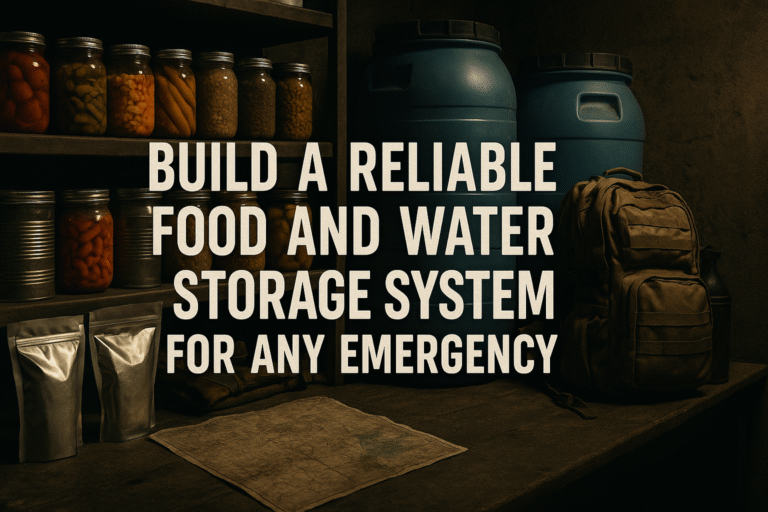
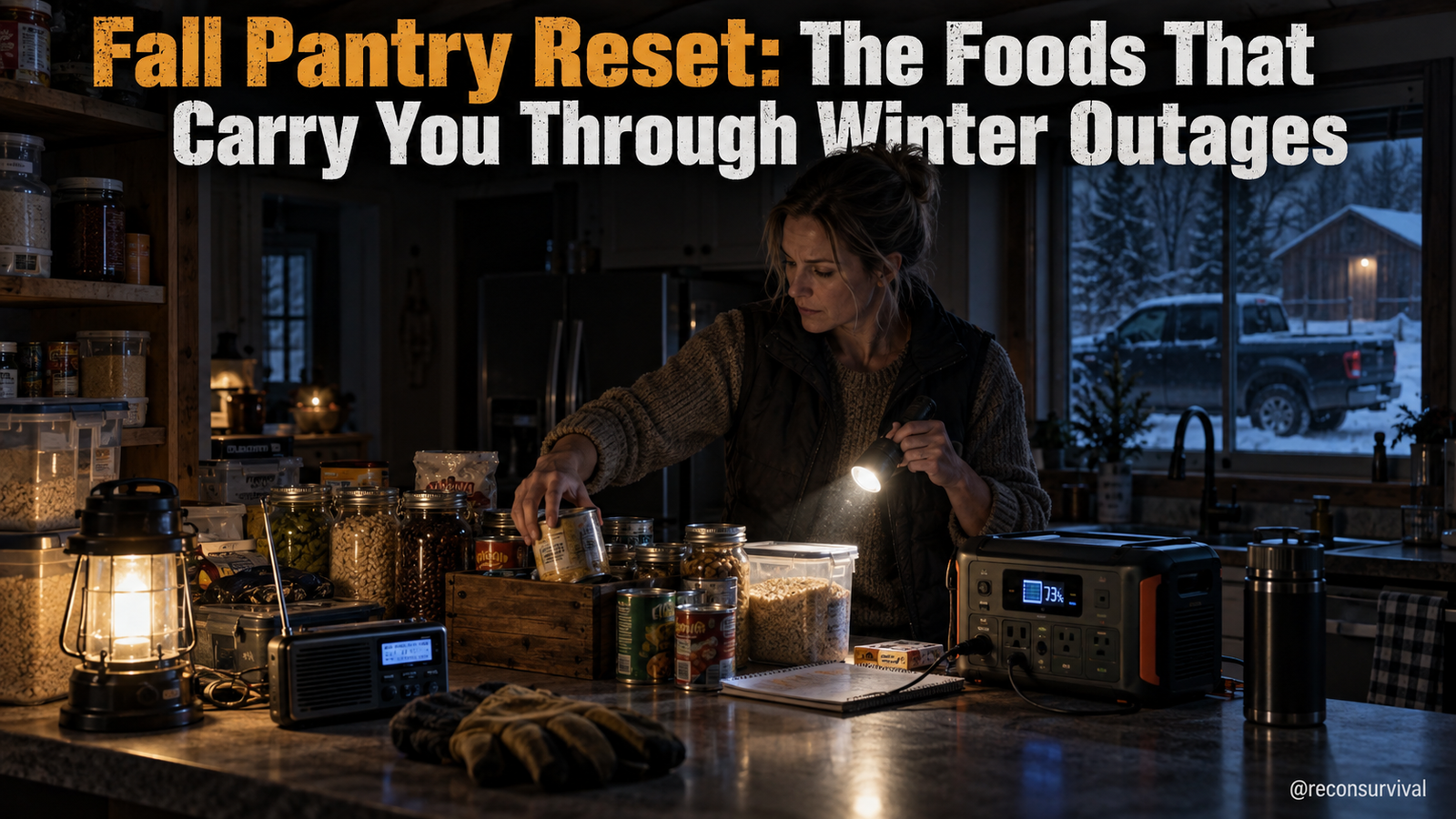
Pull the oldest dated can to the front of the pantry shelf. Read its preparation instructions and write the meal you would make with it if the stove were unavailable. That check connects food storage to the practical problem of feeding the household during a winter outage.
As an Amazon Associate, I earn from qualifying purchases.
A pantry reset should produce meals, not just an impressive count of containers. Include foods people eat, the tools needed to open them, drinking water, and a plan for what happens after a package is opened. Separate the meals that work without cooking from ingredients that depend on heat.
Start With the Shelf You Already Have
Remove items from a manageable section and inspect the packaging. Separate leaking, swollen, or seriously damaged containers from usable supplies. Follow official guidance for questionable food rather than tasting it to decide. Keep labels and handling instructions readable.
Group food by its role in a meal. Put ready-to-eat products together and keep ingredients that require cooking in a clearly identified group. Dry rice does not serve the same purpose as a ready-to-eat rice pouch; check the actual product instructions rather than relying on the name.
Bring older purchases forward where they can be used in ordinary meals. Read date labels and storage instructions without treating every date as the same kind of safety deadline. Keep a replacement list beside the pantry so purchases reflect what was used or found unsuitable.
Build Meal Combinations the Household Recognizes
Write combinations using the food people already like. Crackers, nut butter, canned fruit, or commercially prepared ready-to-eat products can help establish a no-cook meal. Adapt the selection to allergies, dietary needs, and the ability of each person to eat it.
Keep a separate list for meals that require heating. Note the preparation steps, water needs, cookware, and safe cooking location. Do not count a recipe as an outage option until those dependencies have been considered.
Use package sizes that fit a meal and follow the instructions for opened products. Shelf-stable storage before opening does not guarantee that leftovers can be kept without refrigeration. Choose combinations that reduce the amount of opened food left to manage.
Include Comfort Without Making Heat a Requirement
Familiar foods can make a disrupted evening easier to manage. Add foods people welcome in normal lunches and snacks rather than buying only unfamiliar emergency products. Trial the combinations before stocking more of them.
Keep hot drinks or soup in the cooking group if they require heat. They may be useful when a safe cooking method is available, but they should not be the only planned meal. The no-cook group remains the fallback when weather or equipment restrictions rule out cooking.
Avoid judging energy needs by the recipe name alone. A slow cooker still depends on a usable power supply. Check the actual appliance, instructions, and available source before treating it as a low-power backup.
Place the Tools Where the Food Is
Test a manual can opener on a can you will use for an ordinary meal. Clean it and give it a consistent location. Keep utensils, bowls, lighting, and cleanup supplies accessible without climbing onto furniture or searching through a dark storage room.
Read instructions on any backup cooking equipment. Keep outdoor fuel-burning equipment outdoors, and do not bring a grill or camp stove into the kitchen to warm a meal. If conditions prevent safe cooking, serve the no-cook option.
Write the cooking restrictions beside the meal list. A list that says which food needs heat should also say whether the household has a safe way to provide it. Keep unresolved equipment questions separate from the ready-to-use plan.
Match Water and Storage to the Plan
Store drinking water in suitable containers according to their instructions. Put it where the people who need it can reach and pour it safely. Account for drinking, meal preparation, and practical cleanup.
Read the preparation directions for dry ingredients before estimating their water needs. A shelf full of ingredients that require repeated boiling is a different plan from meals served directly from labeled packaging. Record those differences instead of using one generic assumption for everything.
Store food according to its label and protect it from moisture, pests, and avoidable heat exposure. Check for leaks near the shelf and keep cleaning chemicals separate from food supplies. For refrigerated food during an outage, use current official guidance and temperature information rather than smell or appearance. FDA's power-outage food guidance explains the relevant checks.
Do Today
- Pull older usable purchases forward and inspect their packaging.
- Write actual no-cook meal combinations.
- Mark the ingredients and meals that require heat.
- Test the can opener and gather serving tools.
- Check water access, storage instructions, and cleanup supplies.
- Eat a practice meal and replace what you use.
The reset is complete when the household can turn the pantry into dinner under the conditions it expects. Keep the meal list current as ordinary shopping and eating change what is on the shelf.