A water container develops a leak just as the forecast shifts from scattered showers to a named storm.
As an Amazon Associate, I earn from qualifying purchases.
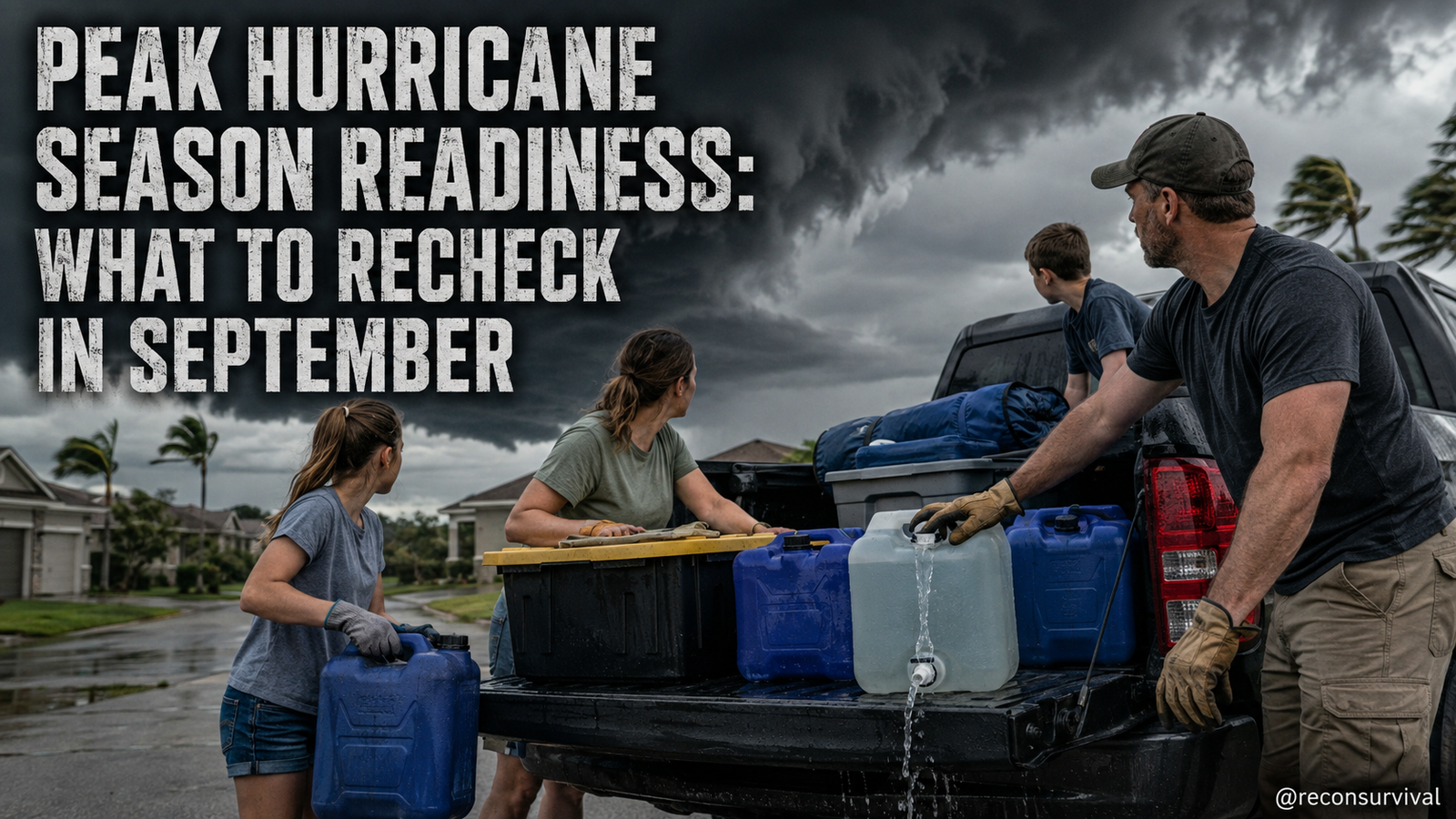
A water container develops a leak just as the forecast shifts from scattered showers to a named storm. A gas pump is empty when the power grid goes dark. A prescription bottle is expired, and the family member who knows where the backup documents are is currently at work. The gap between planning and reality isn't a gap in theory; it is a gap in maintenance. Late August and early September represent the critical transition where hurricane readiness must shift from a theoretical exercise to a daily operational reality. The threat of peak hurricane season does not require panic, but it does demand a rigorous recheck of the household's physical and procedural assets.
The Cost of Assumed Readiness
Many households operate under the false assumption that a plan created months ago remains viable without adjustment. In the context of a hurricane, the environment changes rapidly, and so do the conditions inside a home. The most common mistake is treating a preparedness list as a static document rather than a dynamic inventory. A supply cache that was full in June may have been depleted by summer cooking, pets, or children. A vehicle that was parked in a garage may now be blocked by a tree overgrown during the summer storms. A route that avoided flood zones in May might be impassable due to new construction or road closures.
Waiting until a storm is named to realize that the fuel tank is at a quarter full or that the first-aid kit lacks bandages turns a manageable situation into a crisis. The difference between a controlled evacuation and a frantic scramble is often the hours spent on routine maintenance. This recheck is not about buying new gear; it is about validating what already exists and ensuring every link in the chain of survival is intact.
The Maintenance Gap
The failure point for most prepared households is not the lack of resources, but the lack of verification. People assume that because a generator worked last year, it will start today. They assume that because they bought bottled water six months ago, the seals are still tight. They assume that because they memorized a route once, traffic patterns and road conditions haven't shifted.
Rechecking Physical Assets: Supplies, Fuel, and Medicine
The first layer of the recheck involves the tangible items that sustain life and mobility. Start with the supplies. Inspect food packaging and water containers without breaking intact seals. Keep commercially bottled water unopened until needed, and follow the label and storage instructions for food. See the CDC emergency water storage guidance. Check expiration dates. Rotate items that are nearing their limit. Look for signs of pest damage or seal failure in water jugs. Move heavy items on shelves to ensure the structure is stable.
Next, examine stored fuel and backup-power equipment. Inspect fuel cans for damage or leaks, and follow the equipment and fuel manufacturer instructions for maintenance, storage, disposal, suitable loads, test duration, and fill limits. A household load test alone does not establish that backup care is adequate; confirm arrangements for medically necessary equipment with the supplier or care team.
Generators produce carbon monoxide, a poisonous gas you cannot see or smell. Keep portable generators outdoors, farther than 20 feet from windows, doors, and vents. Never operate one in a house or garage, even with doors open. Use carbon monoxide detectors with battery backup. Review the CDC carbon monoxide guidance and CPSC generator safety guidance before any test. Turn a generator off and let it cool before refueling; keep stored fuel outside living areas and away from ignition sources.
For medicine, conduct a thorough audit. Check the expiration dates on all prescription and over-the-counter medications. Verify that the dosage is current for family members who may have grown or aged since the last inventory. Ensure that a seven-day supply is available in a grab-and-go bag, separate from the main home stock. Replace any expired items immediately.
Rechecking Routes and Documentation
A preparedness plan is only as good as the ability to execute it. Recheck the primary and secondary evacuation routes. Drive them if possible. Note new construction, seasonal road closures, or areas prone to flooding that may have worsened since the last assessment. Mark these routes on a physical map that does not rely on a phone or GPS signal.
Simultaneously, review the documents. Are the copies of passports, birth certificates, insurance policies, and medical records in a waterproof, fire-resistant container? Are the digital copies accessible on an offline drive or encrypted cloud account? Verify that the contact list includes current phone numbers for all family members, schools, and local emergency services. Print new copies if any information has changed.
Cash, Property, and Family Triggers
Cash is a critical resource when electronic payment systems fail due to power outages or network congestion. Ensure there is a sufficient amount of small bills in a secure, accessible location. Check that ATMs are not the only source of funds; physical cash allows for transactions at gas stations and stores that may not accept cards.
Inspect the property for vulnerabilities. Trim trees and shrubs that could damage siding or windows. Clear gutters and drains of summer debris to prevent water intrusion. Secure outdoor furniture and loose items that could become projectiles in high winds.
Finally, review household actions for official evacuation and shelter instructions. Know your evacuation zone, destinations, and recommended routes before a storm approaches. Follow local emergency instructions promptly; do not wait for a household wind-speed reading or a set depth of water in a basement. Never drive through flooded roads. Read the CDC hurricane preparation and evacuation guidance. Assign roles: who grabs the documents? Who secures the pets? Who handles the children? Assigning these tasks removes ambiguity during a high-stress event.
Recon Survival Principle
The Recon Survival Principle for this phase of readiness is early warning and signal awareness. The system is not about predicting the future, but about recognizing the signals that indicate a shift in the environment. A signal is not just a weather forecast; it is the status of your fuel, the integrity of your water, and the clarity of your family's action plan. By integrating signal awareness into your household routine, you transform a passive list into an active system. This mindset supports calm household action because it relies on verified data and pre-assigned roles rather than reacting to the chaos of the moment. For those who want to deepen this signal awareness, the Oracle AXIS platform serves as a mission for structured early warning and decision support, helping to organize the flow of information so that the household can act on reliable signals.
Today, This Week, and Later
The recheck process should be distributed to avoid overwhelming the household. Today, focus on the immediate physical items: water, fuel, and the grab-and-go bags. These are the items needed within hours of a threat.
This week, tackle the routes, documents, and property inspection. These tasks require more time and often a vehicle or a full house to inspect. If you find a gap, address it immediately with a specific replacement or a plan adjustment.
Later this season, conduct a full simulation. Run a drill where the family practices the evacuation routes and the decision triggers. For any generator exercise, follow the manufacturer instructions for allowed loads and test duration, and apply the carbon monoxide, electrical, and fuel precautions above. This builds muscle memory and validates the recheck process under simulated conditions.
Do Today
Complete the following seven actions to move from theoretical readiness to operational readiness immediately.
- Review the generator manual and carbon monoxide detector readiness before testing. Use the manufacturer procedure for suitable loads and test duration, with the precautions above.
- Rotate any water containers or food items that are nearing their expiration date, replacing them with fresh stock.
- Check vehicle fuel before a storm and follow vehicle and generator fill instructions; do not top off beyond the stated limit. Shut down a generator and allow it to cool before adding fuel. See the CPSC fuel precautions.
- Weigh the priority of documents and confirm they are stored in waterproof, fire-resistant containers.
- Trim tree branches within five feet of the house and clear all gutters of summer debris.
- Write a new family contact list and post it in the garage, kitchen, and on the dashboard of each vehicle.
- Pair family members for specific roles in an evacuation scenario and review the decision triggers for leaving.
These actions ground the household in physical reality. They ensure that when the pressure builds, the response is automatic and reliable. The goal is not perfection, but a state where the household can function without a single point of failure causing a collapse. By performing these checks now, you eliminate the variable of surprise, allowing the family to focus on safety rather than resource acquisition.
Correction — September 8, 2026: We corrected instructions about opening sealed supplies, household wind and water thresholds, and universal generator test and fuel-fill targets. Related generator references now point to equipment instructions and official safety guidance. Other article text is unchanged.