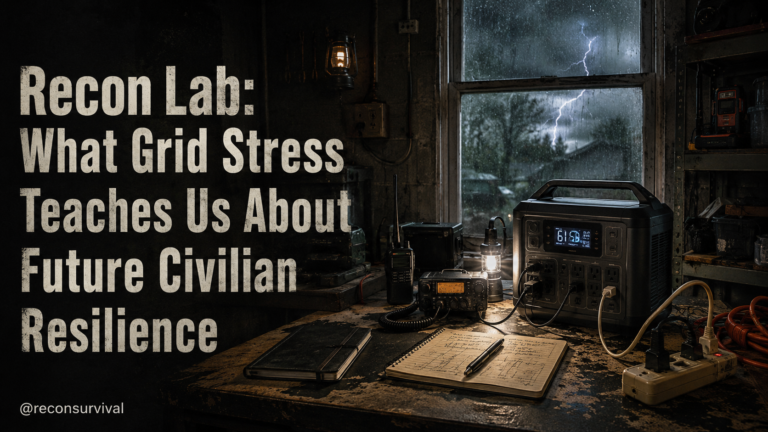

Why this matters for winter systems
A winter power outage is not just an inconvenience; it is a race against temperature and fuel. When the grid goes down, your backup systems must start immediately to keep living spaces above freezing and to keep communication channels open. If you discover a dead battery or a clogged fuel filter during a storm, the repair becomes dangerous and stressful. Testing before the cold sets in turns a potential emergency into a routine check. The goal is a calm, realistic, value-first approach where you verify your gear works without needing a crisis to justify the time. <p class="rs-affiliate-disclosure"><em>As an Amazon Associate, I earn from qualifying purchases.</em></p>
As an Amazon Associate, I earn from qualifying purchases.
The most common mistake
People wait too long to run a safe, short test of charging, lighting, battery runtime, and household routines. They assume "it will work" because they bought the equipment recently or because they checked it once a year. This assumption fails because batteries self-discharge, fuel degrades, and switches seize from disuse. By the time a winter storm arrives, a system that should have been ready is often silent. The mistake is not the lack of gear; it is the lack of a verified routine. ### The Recon Survival test system
The system here is straightforward: treat your backup power setup like a vehicle you run on a schedule. You do not wait for a breakdown to check the oil; you do not wait for a storm to check the generator. You run a short, safe simulation using your existing tools to confirm three things: the battery holds a charge, the light source functions as expected, and the household routine (like finding the switch or starting the generator) is familiar to everyone. ### How to run the test
Start with the first physical check that beats a generic reminder. Open the utility outage notice or the emergency contact list for your specific street and write down the restoration estimate provided for your area. This sets a realistic baseline for your testing window. You are not waiting for the utility to fail; you are preparing for the scenario where the local estimate is your only timeline. Once you have noted the local estimate, move to the practical steps. You can run this test during a normal evening when you are not rushing to bed. 1. Verify charging capacity. Unplug a device you rely on – like a phone, tablet, or a small radio – from the wall outlet. Connect it to your backup power source (a battery pack, power station, or solar generator). Observe the charge. Does the device show the battery level increasing steadily, or does it stall? Check the indicator light on your power source to confirm it is delivering power. If your system has a fuel gauge, verify the fuel level is adequate for the duration you need. Do not guess the fuel; check the gauge or measure it with a dipstick. 2. Test lighting runtime. Turn off all indoor electric lights. Turn on your backup light source (led lantern, battery-powered lamp, or headlamp). Time how long it stays on at a useful brightness level. A practical benchmark is seeing clearly in a dark room for a duration that matches the manufacturer's rated runtime. If the light dims significantly or fails sooner than the specifications indicate, the battery may be degraded, or the load may be too high for the source. 3. Simulate household routine. Walk through the steps you would take if the lights went out right now. Can you find the light switch for your generator? Do you know where the fuel is stored? Can you reach the battery without tripping in the dark? This step is about muscle memory. If you have to search for the keys to a fuel valve or the manual for your inverter, that is a gap to fill now, not later. ### A safe beginner practice drill
If you are new to this, start with a "power-down drill." Pick one hour in the evening when everyone is present. Turn off the main breaker for a single room or a specific circuit (only if you are certain this will not trip the main feed or damage sensitive electronics; otherwise, unplug that room's devices). Use battery-powered lights to navigate to the main breaker panel or generator location. Practice turning on your backup generator or activating your portable power station. If you are using a portable generator, you must follow the manufacturer's instructions for startup. Ensure the unit is outdoors or in a well-ventilated area, far from windows and doors. Carbon monoxide is an invisible, odorless killer that can enter a house within minutes of a generator running indoors. Do not attempt this test if you are unsure about ventilation; consult a qualified technician or your local fire department guidance if you have doubts about safety. ### Measuring if the skill is improving
You know the skill is improving when the time from "power off" to "powered on" shrinks, and the confusion decreases. In a first test, you might spend time looking for the fuel valve. In a second test, you find it much faster. You also look for failure signs: a battery that takes significantly longer to charge than it did previously, or a light that flickers. These are signs that components need replacement or cleaning. Improvement is measured by the reduction in hesitation and the confirmation that your backup system delivers power when asked. ### Recon Survival takeaway
The point of this exercise is not to simulate a disaster; it is to verify that your plan works before the stakes are high. A backup power system that has never been run is a promise, not a guarantee. By testing charging, lighting, battery runtime, and household routines now, you turn a potential emergency into a managed situation. The difference between panic and control is the knowledge that your gear works. ### Action checklist
To finish, run a safe, short test of charging, lighting, battery runtime, and household routines within the next week. * [ ] Check your local utility notice: Write down the estimated restoration time for your street so you know your timeline. * [ ] Charge test: Connect a primary device to your backup power source and confirm it charges at a steady rate. * [ ] Light test: Turn off house lights and run your backup light for a duration that confirms it meets your needs. * [ ] Routine drill: Walk the path to your backup system in the dark (using only backup lights) and verify you can start it or access the controls. * [ ] Safety check: Ensure all fuel is stored safely, ventilation is clear, and carbon monoxide alarms have fresh batteries. This sequence is a household example, not a universal channel assignment. Confirm the rating on your specific equipment label and follow the manufacturer's instructions for any fuel or battery handling. If you need local guidance on fire safety or emergency protocols, consult your local fire department or emergency management agency.