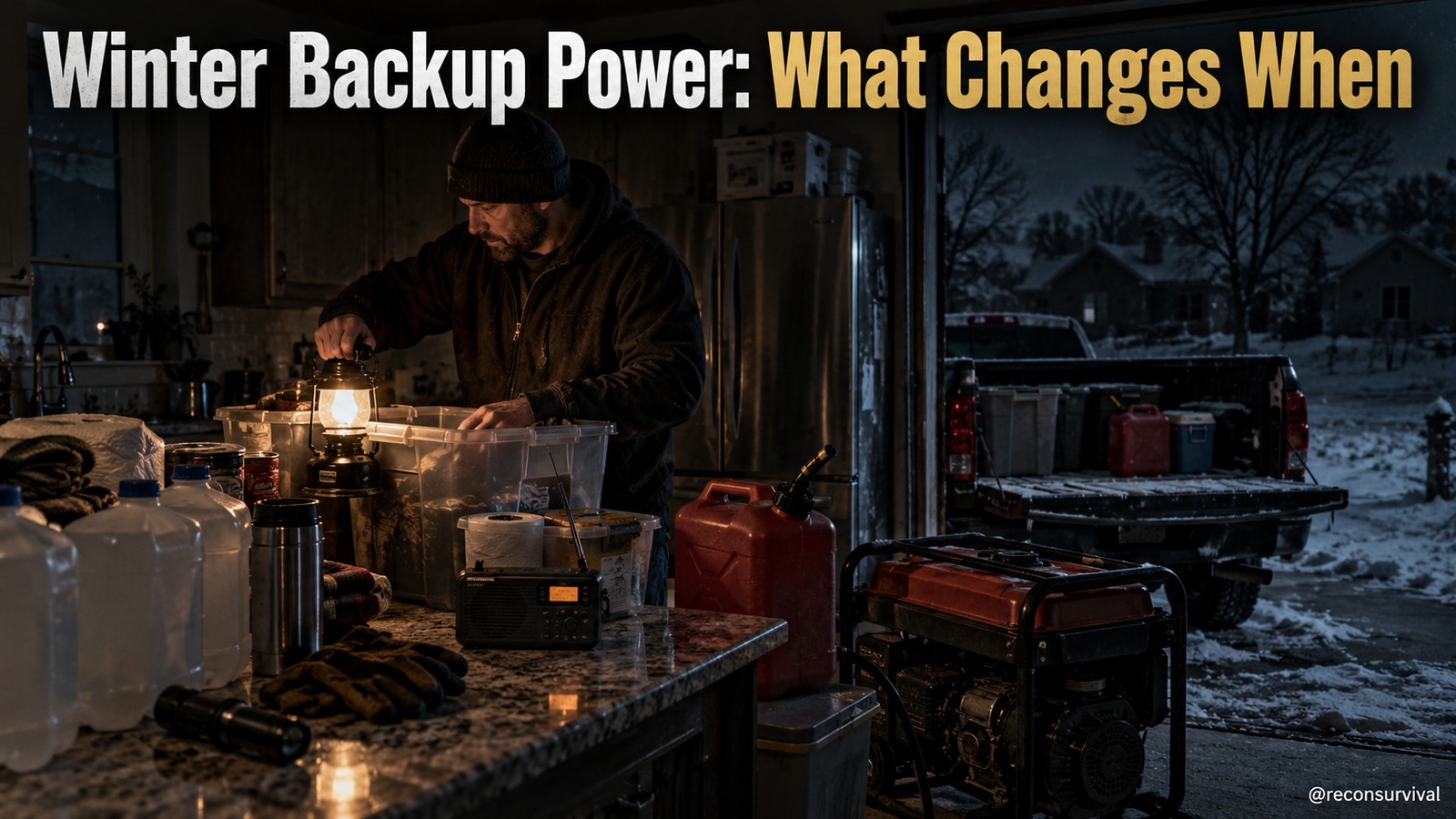
If the power goes out tonight, what would fail first in your house? In summer, an outage often means checking food in the fridge and waiting for the heat to drop. In winter, the same outage means checking your heat source, the water supply for frozen pipes, and the battery health of your communication devices. Most advice on backup power treats every season the same. It suggests buying a generator and filling a gas tank, then waiting to see what works when the lights go out. This approach is often too generic for winter. Cold temperatures change how your systems behave, how fast your supplies deplete, and which failures become dangerous quickly. The difference between a manageable winter outage and a crisis often comes down to planning priorities before the first deep freeze hits. Next: plan power priorities for heat, medical needs, communication, water, refrigeration, and battery performance before stress makes the decisions harder. The most common mistake households make is focusing entirely on the power source itself. People spend hours debating generator watts or battery capacity, assuming that once the electricity is back, everything else will be fine. This ignores the reality of winter. Even with a working generator, water pipes can freeze if the heat is off. Your phone battery might drain if the cold saps its capacity. Medical equipment might stop working if the voltage is unstable or the battery is too cold. Cold demands a different sequence of checks. You must plan for heat and water first, then medical needs, then communication, and finally the long-term survival of your other electronics. <p class="rs-affiliate-disclosure"><em>As an Amazon Associate, I earn from qualifying purchases.</em></p>
As an Amazon Associate, I earn from qualifying purchases.
A Practical System for Winter
A practical system for winter starts with a single household action: write a specific power priority list on a paper card and place it by the door. This physical check forces a decision while you are calm, rather than searching for batteries in the dark. ### Heat If your primary heat source is electric, a power outage means losing warmth immediately. Portable heaters that burn gas or kerosene require ventilation to prevent carbon monoxide buildup. Never use outdoor grills or camp stoves indoors unless the manufacturer explicitly states they are safe for indoor use, and even then, verify the ventilation path. If you have a backup generator, know that it must be placed outside, away from windows and vents, to exhaust fumes safely. Check your local fire department guidance for specific setback distances and your generator manual for load limits. ### Water Even a short outage can freeze pipes if the interior temperature drops too low. The goal is not just to keep water running but to prevent the water from becoming a structural hazard. If you cannot maintain a safe interior temperature, you may need to allow faucets to drip slightly to relieve pressure, but only if you have water availability and a functioning pump. If you have a sump pump, ensure it has a battery backup or a manual crank, as frozen water can clog drain lines. ### Medical Needs Medical needs often require immediate power. Devices like CPAP machines, oxygen concentrators, or insulin pumps may have battery backups that drain rapidly in the cold. Check the manufacturer's instructions for battery performance in low temperatures. Cold batteries hold less charge and may not charge fully if the device is too cold. Have a strategy ready to keep the device warm, such as wrapping it in an insulating blanket while it sits in a heated room, or having a manual backup method that does not rely on electricity. Do not assume a backup battery will last all night in freezing conditions; test it at the lowest temperature you expect. ### Communication A dead phone means you cannot call for help or get emergency instructions. Cold temperatures reduce the efficiency of lithium-ion batteries. Keep your communication devices warm. If you have a battery-powered radio, ensure you have spare batteries stored in a warm place, not in the cold garage or trunk. Test your devices now. A radio that works in August might fail in January due to battery chemistry or condensation. ### Refrigeration and Battery Performance Without power, your refrigerator stops cooling. Food safety guidelines suggest that a full freezer stays safe for about 24 hours if the door remains closed. However, this timeline can shorten depending on the specific unit and ambient conditions. Keep the door closed; do not open it unless necessary. For other electronics like laptops, tablets, or backup batteries, keep them in a warm environment. Cold can cause them to shut down unexpectedly or permanently lose capacity. Store them in an inner pocket or a thermos when moving between locations if necessary. ## Winter Power Priority Checklist
- Heat: Identify your primary heat source. If it is electric, verify your backup heat source (generator, wood stove) is fueled, tested, and has proper ventilation clearance per the manufacturer's instructions. Locate your carbon monoxide alarm and verify it has fresh batteries. * Water: Determine your risk of frozen pipes. Know how to shut off the main water valve. Identify where to drip faucets if temperatures drop below freezing and you cannot maintain indoor heat. * Medical: List all essential medical devices. Check their battery backup duration and how cold air affects them per the device manual. Verify you have manual alternatives or spare batteries stored in a warm location. * Communication: Test your battery-powered radio and emergency contacts. Move all spare batteries to an interior warm location. * Refrigeration: Decide which items to move to a cooler if the fridge fails. Plan to keep the freezer door closed to extend the safe time window. * Batteries: Move all spare lithium-ion batteries and portable power stations indoors to a room that stays above freezing. ### Action Plan by Timeline
- Today: Write the priority list on a paper card and place it by the door. Test your generators and battery backups in the cold if you can, or at least move all batteries indoors. * This Week: Verify your carbon monoxide detectors are working, check fuel levels for backup heating, and confirm your emergency contacts are up to date. * Later This Season: Before the hardest cold sets in, do a full system test. Turn off your primary heat and see how long it takes for the house to drop to a critical temperature. Check if your backup heat can keep up. The prepared version of you is the one checking the list while everyone else is searching for batteries. Winter power planning is not about fear; it is about having a clear sequence of actions when stress makes decisions harder. Action Step: Write your winter power priority list on a paper card and place it by the door. Ensure every household member knows where it is and what the first three steps are if the lights go out.