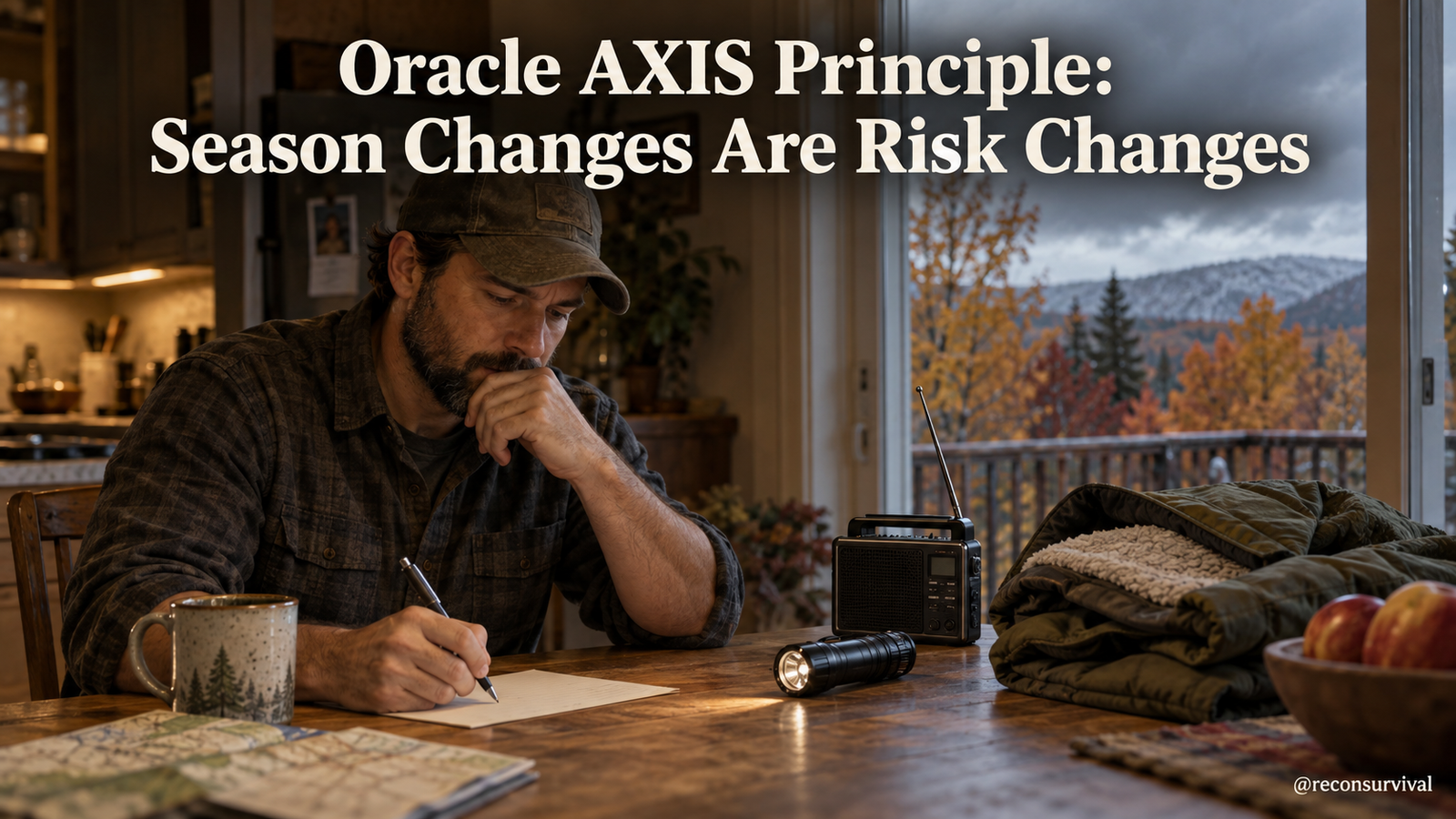
Write the weather alert and household departure trigger on a paper card. Then check whether that card still fits the season, the people at home, and the routes you expect to use. A decision rule can become outdated even when the equipment beside it has not changed.
The Oracle AXIS principle that season changes are risk changes is useful as a review prompt. It asks a practical question: which assumptions in the household plan no longer match the conditions outside? Use the answer to update actions, contacts, and dependencies rather than inventing a universal threshold for every family.
Start With What Changed
Put the existing plan on the kitchen table. List changes to work hours, school travel, daylight, weather exposure, vehicle availability, and household health needs. Include changes to the people who would carry out the plan.
An afternoon errand may now end after dark. The driver who usually checks the forecast may be away. A relative may need help moving supplies. These changes can matter more to a household decision than buying another item for the garage shelf.
Mark the assumptions that need checking. If the plan relies on a specific route, service, or destination, verify that it remains available before treating it as a fallback. Do not keep last season's answer merely because it is already written down.
Name the Information Source Beside the Action
Record where the household will obtain weather alerts, road notices, utility updates, and local emergency instructions. Keep contact details and alternate ways to get information accessible. Distinguish official instructions from general commentary or social posts.
Write the source beside the decision it informs. A road-closure notice affects travel differently from a warning about losing power. The card should say who checks the information and what they report to the rest of the household.
Review alerts in the context of current local conditions. Do not treat a forecast as certainty, and do not override official evacuation instructions with a personal checklist. The household card helps organize action; it does not replace emergency authorities.
Use Specific Household Triggers Without Inventing Universal Numbers
Choose conditions that can be observed and acted on. As a household example, a confirmed road closure could trigger use of a previously checked alternate route. Loss of safe heat with no usable backup could trigger a call to the planned warm destination. These are examples to adapt, not official rules for every home.
Write the action and the person responsible alongside the condition. Avoid a card that only says to watch the weather or stay ready. It should identify what happens next and which dependency must be confirmed first.
If a decision requires a technical limit, obtain it from the relevant manufacturer, local authority, or appropriate professional. Do not guess a temperature, travel deadline, or supply duration just to make the plan look precise. Mark the unresolved question and find the answer before relying on it.
Check Travel and Supplies Together
Walk to the vehicle and inspect what the household expects to carry. Make sure needed documents, ordinary medications, contact information, and appropriate clothing can be gathered without searching through unrelated storage.
Check the destination before treating departure as solved. Confirm access, the needs it can accommodate, and how everyone will stay in contact. A route and a destination belong together.
For supplies, write what is actually used and who can replace it. Review ordering and delivery arrangements when a season changes the household's routine. Buy according to a usable plan rather than interpreting every delay as a reason for indiscriminate stockpiling.
Rehearse the Decision at the Table
Read a household example aloud and ask each person to describe their next task. Keep this exercise safe and ordinary. The aim is to discover unclear responsibilities before a real event, not to simulate dangerous conditions.
If someone needs information only another person knows, add it to the card. If a task depends on power or connectivity, identify the backup. If the destination cannot accommodate a household member, fix that gap before the next review.
Replace outdated copies after making changes. Keep the current card where people can find it and explain the change to anyone affected. A hidden update in a phone app does not help the person using an old paper copy.
Do Today
- Write the weather alert and household departure trigger on a paper card.
- List the seasonal and household assumptions that changed.
- Verify the information source, route, and destination for each action.
- Assign who checks, who calls, and who helps.
- Resolve any technical limits through the appropriate source.
- Walk through a household example and replace outdated copies.
Seasonal readiness means keeping decisions attached to current conditions. The useful result is a household that knows its next action and the information needed to take it.