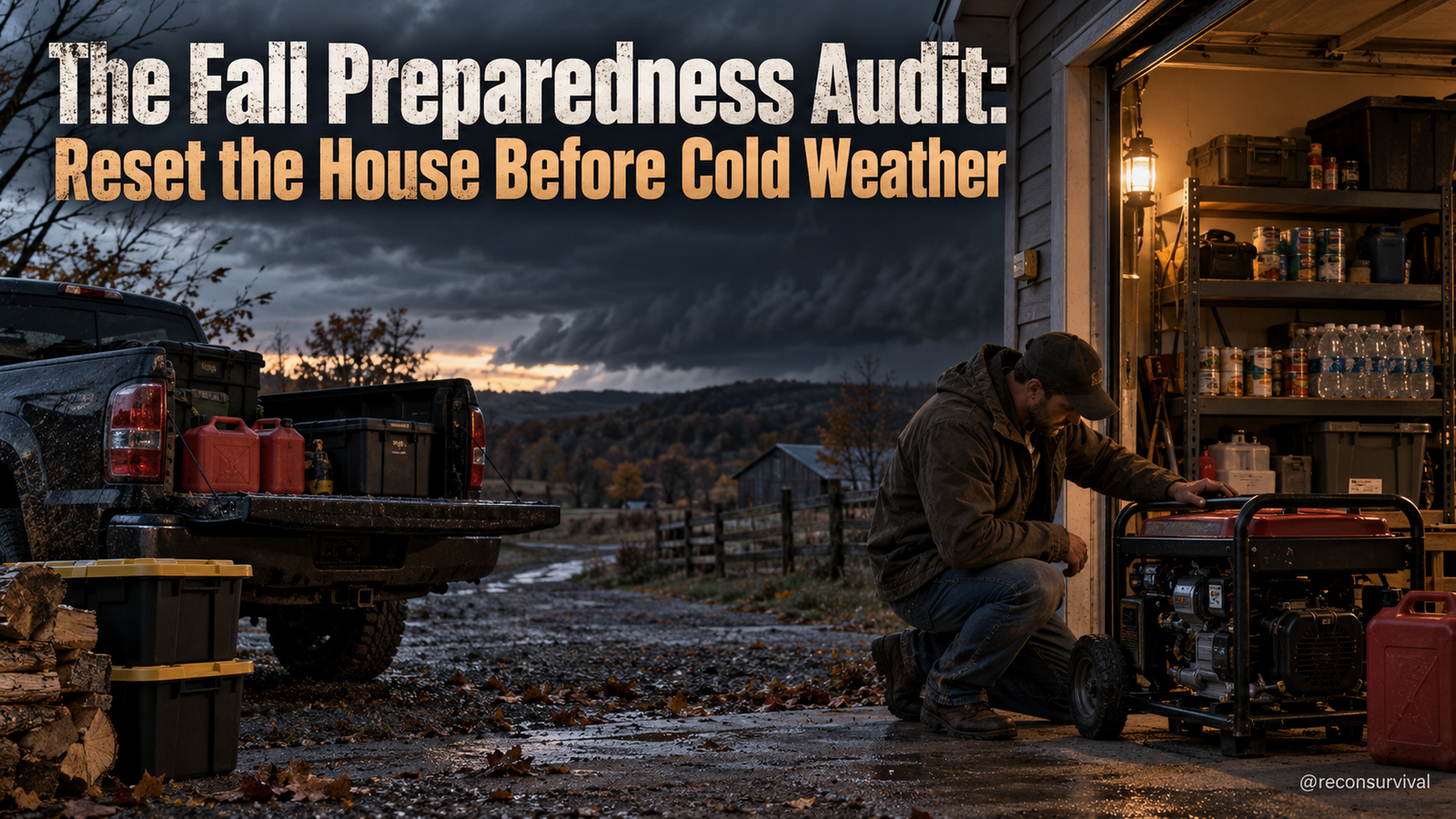
Recon Survival lesson: The Fall Preparedness Audit
Reset the House Before Cold Weather
The Garage: Your Winter Vehicle and Tool Station
Open the garage door and flip on the light. Before the first snowfall hits the pavement, the first thing to inspect isn't the weather outside, but the machine sitting inside. Your vehicle is the most critical piece of survival gear for a Recon Survival household, as it dictates your ability to evacuate or reach essential services when roads are blocked.
As an Amazon Associate, I earn from qualifying purchases.
Check the tires for tread depth and ensure the spare is mounted properly. Inspect the battery terminals for corrosion, a common failure point as temperatures drop and batteries lose cranking power. Verify that the windshield wipers are flexible and that your wiper fluid is rated for sub-freezing temperatures. This isn't just about comfort; it's about maintaining visibility when blizzard conditions reduce driving visibility to zero.
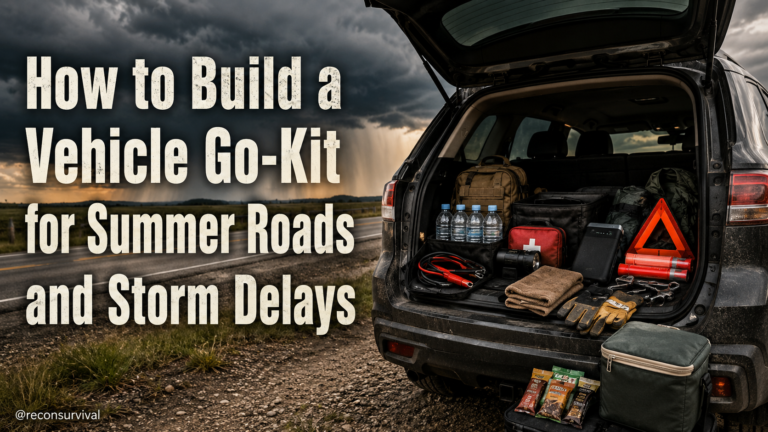
Next, verify your emergency kit is present and accessible. It should include a shovel, ice scraper, traction mats, blankets, non-perishable food, and a first-aid kit. Ensure these items are in the trunk or a dedicated bin, not buried under seasonal decorations. If your vehicle relies on a heating system that hasn't been serviced, the risk of being stranded increases exponentially. A quick visual check of the engine oil level and a test of the heater core will determine if you are ready to depart or if you are a sitting duck when the storm breaks.
Recon Survival Principle:
The system fails when the operator is unprepared for the specific environment of the breakdown. A vehicle is only a shelter if it is mobile and capable of starting. In winter, preparedness is a binary state: you can move, or you cannot.
The Entryway: The First Filter for Cold and Threats
Walk to the front door and open it. The entryway is the primary interface between the safe interior and the hostile exterior. This is where cold air, rain, and potential threats enter. In a Recon Survival context, the entryway is also a security choke point.
Inspect your door frames and weather stripping. If the seal is broken, the temperature inside the house will drop rapidly, forcing your heating system to work harder than it should. Check for drafts that could freeze pipes in the walls. Simultaneously, look at your deadbolts and locking mechanisms. As the days shorten, security threats can increase, and a compromised lock is a critical vulnerability.
Ensure your lighting is functional. Motion-sensor floodlights should trigger reliably, and porch lights should be bright enough to deter opportunistic intruders or help you navigate icy steps in the dark. Verify that you have a clear, snow-free path to the door and that you have a shovel or ice melt readily available within arm's reach. The goal is to maintain a dry, secure, and visible threshold that protects the integrity of the home.
Recon Survival Principle:
Control the entry point to deny the enemy (weather, intruder, or illness) free access. A house that leaks heat and admits threats is a compromised asset.
The Kitchen and Pantry: Sustaining the Mission
Move into the kitchen. This room is the logistical hub for your household's survival capabilities. During cold weather, the ability to maintain food supplies and generate heat without electricity is paramount.
Open the pantry and audit your stock. Check expiration dates on canned goods, dried beans, grains, and rice. Ensure you have a minimum two-week supply of non-perishable food and water. In the event of a prolonged power outage where heating is lost, these calories are essential for maintaining body temperature. Verify that you have a manual can opener, matches, and a portable cooking method (like a camp stove) that can be used safely indoors or outside.
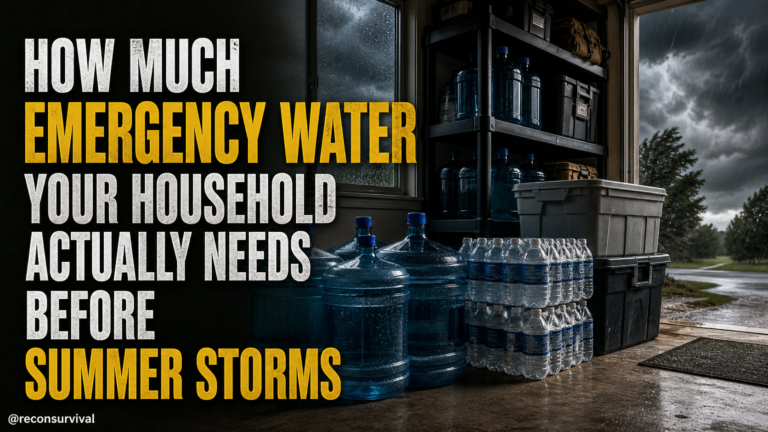
Check your water supply. If you rely on a well pump or municipal water, ensure you have stored drinking water in case pipes burst. Inspect your food storage containers for signs of pest infestation or moisture damage, which can compromise your supplies. A functional kitchen is not just about cooking; it is about maintaining the energy levels required for physical survival tasks.
The Living Area: The Heart of Home Systems
Step into the living area where your heating system controls the environment. This is the most common point of failure in winter. Inspect your furnace or heating unit for signs of wear. If you have a heat pump, check the outdoor unit for ice buildup or debris that could restrict airflow.
Locate your thermostat and ensure it is set correctly for winter. If you have a programmable thermostat, verify that the schedule is optimized to keep the house warm during the coldest hours without wasting energy. Check the air filter; a clogged filter reduces efficiency and can cause the system to fail.
Assess your fire safety. If you have a fireplace or wood stove, ensure the chimney is clean and the flue is open. Verify that carbon monoxide detectors and smoke alarms are functional with fresh batteries. In a Recon Survival scenario, maintaining a safe, warm living space is the highest priority to prevent hypothermia and carbon poisoning.
Recon Survival Principle:
Thermal integrity is the prerequisite for operational endurance. A home that cannot hold heat is a house that cannot sustain its occupants.
The Utility Room: The Pulse of Infrastructure
Move to the utility room where the critical systems of the house reside. This is where water, electricity, and gas converge. Here, you must verify the integrity of your plumbing and backup power.
Check your water shut-off valve to ensure it is accessible and functional. If a pipe bursts, you must be able to stop the flow immediately to prevent flooding and further freezing. Inspect the sump pump and its backup battery. In winter, frozen pipes and power outages are often linked; a working backup generator or battery-powered sump pump can save your foundation from hydrostatic pressure damage.
Examine your electrical panel and ensure you have surge protectors for sensitive electronics. Check your backup power sources, whether batteries or generators, and test them if you have a manual start system. Ensure you have enough fuel stored safely for your generator. These systems are the invisible backbone of your survival capability; if they fail, the house becomes uninhabitable.
The Family Routine: The Human Element
Finally, step back and consider the human element. A house is a system, but the people inside are the operators. Review your family routines for winter. Do everyone know where the emergency kit is located? Have you designated a meeting point in case the house becomes uninhabitable?
Discuss the plan for power outages. Who will check the heaters? Who will monitor the water? Ensure that children and other family members understand the protocols. Recon Survival is not just about gear; it is about the discipline of the team. Regular practice of these routines ensures that when the cold weather arrives, the response is automatic and effective.
Recon Survival Principle:
Preparedness is a shared responsibility, not a solitary task. A system is only as reliable as the people who know how to use it under stress.
The Final Walk-Through Sequence
To ensure nothing was missed, perform this specific sequence of stops before the first freeze:
- Garage: Check vehicle fluids, tires, and emergency kit.
- Entryway: Test weather stripping, door locks, and lighting.
- Kitchen: Verify pantry stock, water supply, and cooking methods.
- Living Area: Inspect heating systems, thermostats, and fire safety.
- Utility Room: Test water valves, sump pumps, and backup power.
This sequence covers the physical assets, the systems, and the human readiness required to survive the winter.
Do Today
- Start the garage audit: Check your car's battery, wipers, and emergency kit.
- Seal the entry: Test door seals and clear the walkway of ice hazards.
- Audit the pantry: Count your water and food supplies for a two-week buffer.
- Test the heat: Check your furnace, filters, and alarms.
- Review the plan: Walk through the emergency protocol with your family.
The Fall Preparedness Audit is not a one-time event; it is a reset of your household's defense against the cold. By systematically checking each area, you ensure that when the temperature drops, your house remains a fortress.