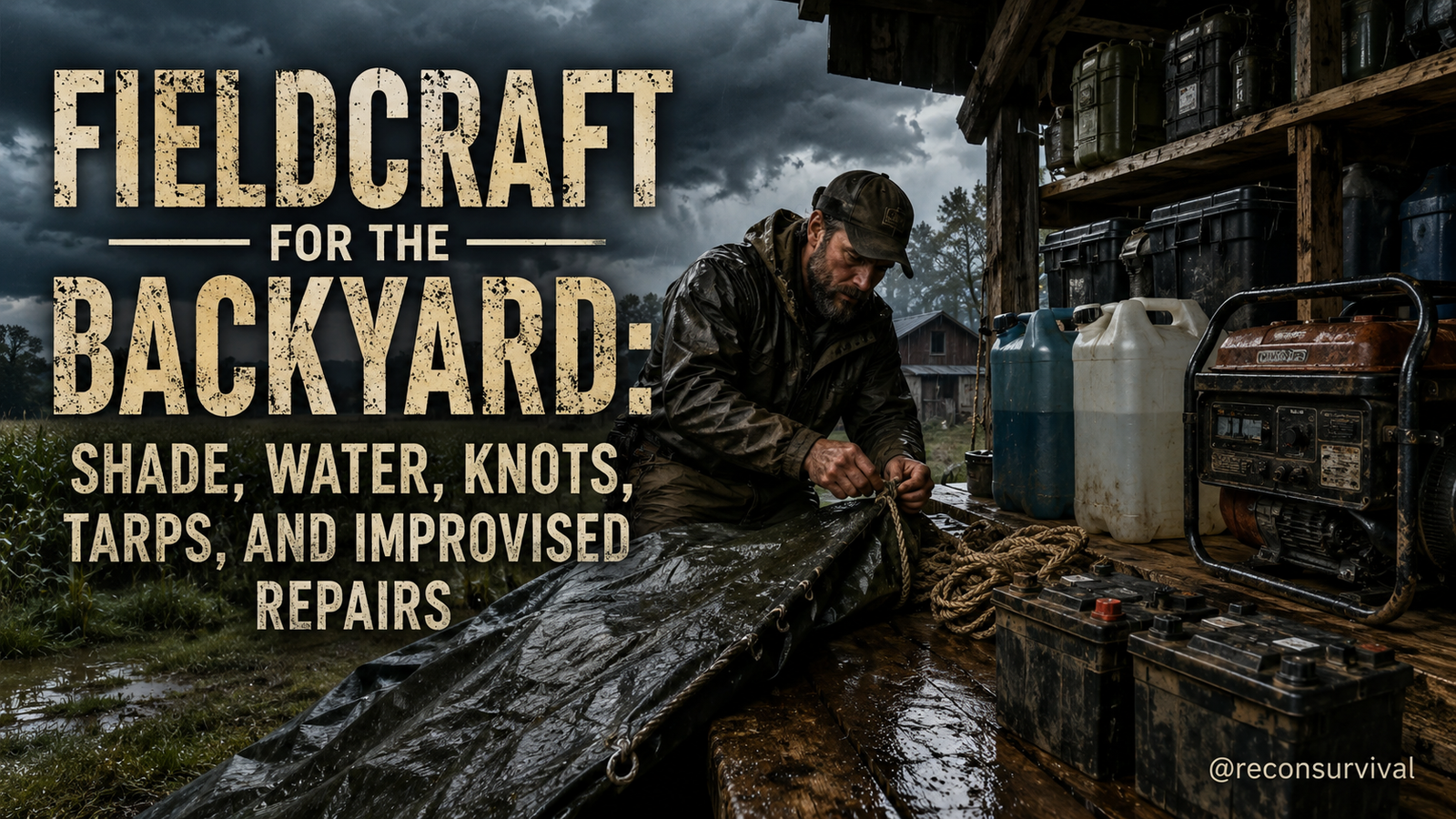
The first thing to fail in late August is rarely the crops; it is the water delivery to the seedlings or the integrity of the shade structure holding the heat at bay. When the temperature spikes and humidity drags, a single loose tarp tie or a cracked drip line can turn a productive garden into a dried-out failure zone within hours. The problem is not a lack of tools, but a reliance on static setups that cannot adapt to sudden afternoon stressors. This article provides a fieldcraft approach to stabilizing those backyard systems before the next heat wave hits.
As an Amazon Associate, I earn from qualifying purchases.
The Heat Failure Point
Late summer creates a unique pressure point for household resilience. The garden systems that were stable in June face a new environment where heat stress compounds with pest pressure and water scarcity. The goal is not to predict a disaster but to reinforce the weak points in the current setup while the weather is manageable.
In a typical backyard, the failure sequence usually begins with the shade cover. Ties loosen under thermal expansion, or the fabric sags, allowing direct sunlight to scorch the leaves and soil. Next, water delivery systems fail as hoses kink or timers malfunction from heat exposure. Finally, improvised repairs often lack the strength to hold under high wind or heavy afternoon loads.
The practical objective is to treat the garden as a field asset that requires active maintenance. You are not just growing plants; you are managing a small system of water, shelter, and support structures. By focusing on the specific failure points of late August, you can apply fieldcraft skills to extend the season's productivity without needing new equipment.
The Loose Tarp Mistake
The most common mistake people make is assuming that a tarp secured once in the spring will remain secure through the summer. Heat causes materials to expand and contract. Canvas and polyethylene lose tensile strength or stretch differently than their frames, leaving gaps where the sun beats down. Many households wait until they see wilting to act, by which time the plant tissue has already suffered irreversible heat damage.
The error is also in the knot choice. A simple bowline or figure-eight can hold well, but if the knot is tied directly into a high-stress point without a loop or buffer, the rope can cut into the tarp edge or the grommet during a wind gust. This leads to the tarp tearing out, rendering the shade useless.
Tension and Shade Fieldcraft
The Recon Survival system for garden stabilization focuses on three core actions: establishing proper tension, creating redundancy, and preparing for rapid repair. This approach uses basic fieldcraft principles to secure water and shelter systems against late-summer stress.
Start by checking all shade structures. If a tarp is sagging, it is not just inefficient; it is a risk for catching wind and tearing. Use a trucker's hitch or a tensioning device to pull the tarp taut. If a grommet is tearing, do not wait for the fabric to rip further. Use a patch of heavy canvas or a heavy-duty plastic sheet secured with duct tape or lashing tape as a temporary reinforcement.
For water systems, prioritize flow verification. A clogged emitter or a kinked hose can starve a plot of plants while a neighbor's plot thrives. Walk the irrigation lines and check for leaks or blockages. If a line is damaged, use a slip fix or a splice kit to restore flow immediately rather than replacing the entire length.
The key is to treat these repairs as field tasks. Have a dedicated drawer or box in the garage or shed containing the essentials: extra cordage, repair tape, spare grommets, and a multi-tool. When the heat peaks, you should not be searching for tools; you should be executing the repair plan.
Knots for Garden Security
Secure knotting is the backbone of garden stability. In a late-summer context, the wind and the weight of water can pull on structures with force. The bowline is reliable, but for securing tarps, a timber hitch or a trucker's hitch provides the necessary mechanical advantage to tighten the line.
Practice the trucker's hitch with a simple loop and a tensioning mechanism. This knot creates a 2:1 or 3:1 mechanical advantage, allowing you to pull a line taut with less effort. Once tensioned, secure it with a half-hitch or a round turn to prevent slippage. This method ensures the tarp stays tight even as the fabric expands in the heat.
For securing water containers or temporary shelving, use the square knot for joining two ends of equal thickness, but always back it with a safety knot. The round turn and two half-hitches are excellent for anchoring lines to posts or trees. These knots distribute the load and prevent the line from cutting into the anchor point.
The focus is on speed and reliability. You need to be able to tie these knots in low light or with wet hands if a storm rolls in. The practice should be about muscle memory, so the knots are automatic when the sun is high and the pressure is on.
The Daily Triage Ladder
To maintain stability, you need a routine that prioritizes tasks by urgency. Use a triage ladder to decide what needs immediate attention, what can wait until the evening, and what can be scheduled for the weekend.
First-Hour Check: Upon noticing heat stress, check the shade structures first. Look for sagging tarps, loose ties, or tears. If a tarp is loose, tighten it immediately. If a grommet is failing, apply a patch. This is the highest priority because a failed shade structure leads to rapid plant loss.
Same-Day Check: Inspect water systems. Run the irrigation for 10 minutes and watch for leaks or dry spots. Check that timers are functioning and that hoses are not kinked. Fix any leaks or clogs found. Ensure that water reservoirs are covered to prevent evaporation.
Next-Day Check: Review pest activity and soil moisture. Adjust watering schedules if the soil is dry. Check for signs of pest infestation and apply organic controls if necessary. Rotate crops if applicable and ensure that tools are cleaned and stored properly.
This ladder ensures that you address the most critical failures first, preventing a cascading effect where a small issue becomes a major loss.
Measuring System Stability
How do you know if your fieldcraft is working? The metric is not just the presence of plants, but the speed of recovery after a stress event. If a wind gust loosens a tarp, how long does it take to secure it? If a hose leaks, how long does it take to fix?
Track your response time. If a tarp needs tightening every week, your initial setup was flawed. If a repair takes longer than ten minutes, your kit or technique needs adjustment. Measure the stability of the system by how much maintenance it requires after a stress event. A stable system recovers quickly with minimal effort.
Also, monitor the plants themselves. If plants are recovering from heat stress within 24 hours of shading and watering, the system is functioning. If they show signs of permanent scorching, the shade or water system is insufficient. Use these observations to refine your knots, patches, and water delivery methods.
Recon Survival Principle
Fieldcraft is about preparation and adaptability. The Recon Survival Principle for late summer is: "Secure the anchor first, then the load." If the anchor point or the tensioning mechanism fails, the entire system collapses. Prioritize securing the physical structure and the water supply before worrying about the plants themselves. A stable environment allows the plants to recover from heat stress. A broken environment guarantees failure.
This principle shifts the focus from the plants to the infrastructure. If the infrastructure holds, the plants can survive a range of conditions. If the infrastructure fails, no amount of care for the plants will save them. Make the system robust enough to handle the worst of the season with minimal intervention.
Do Today
Action is the only way to test the system. Start by finding a tarp or shade cloth that looks loose. Check the grommets for tears and the ties for slack. If you find a weakness, fix it now with a patch or a tightened knot.
Walk the irrigation lines. Look for leaks, kinks, or clogged emitters. Fix any issue that stops water flow. Fill any water reservoirs that are low and cover them to reduce evaporation.
Gather a small repair kit containing cordage, repair tape, and a multi-tool. Store it in a place where you can access it quickly. This kit is your first line of defense against failure.
By securing the system today, you ensure that the garden can withstand the heat and wind of the coming weeks. The effort is small, but the impact is significant. The goal is to create a stable environment where the plants can thrive despite the challenges of late summer. This is the essence of fieldcraft: knowing what matters, fixing it fast, and moving on.
- Count stored water by person and day, then write the number where the household can see it.
- Date the oldest container and move it to the front of the rotation.
- Add extra water for pets, heat, illness, cooking, or anyone with higher needs.
- Stage the filter, clean pot, funnel, and water-moving container together.
- Write the no-power water sequence on paper: drink, cook, wash, flush, refill.
- Check every cap, container, shelf, and storage spot for leaks or heat exposure.
- Assign one person to refill, one to rotate, and one to recheck after the next alert.