A practical way to build and verify a hurricane-ready kit that covers the first week, not just the first night, but most advice is either too generic, too gear-focused, or too late.
As an Amazon Associate, I earn from qualifying purchases.
By the time a storm has a name, the window for effective preparation is already narrowing. The most practical preparation is not waiting for an evacuation order or a tropical storm watch; it is having a verified kit that allows a household to sustain the first week after landfall. This is the specific problem this guide solves for the Recon Survival community: moving beyond generic "72-hour" lists to build a system that covers the reality of displacement, when roads are impassable, and when supply chains are severed for days rather than hours.
Why the First Week Matters Beyond the First Night
The standard advice often focuses on surviving one night of power loss or one day of grocery store closures. While valid, this is insufficient for the realities of modern hurricane impacts. The first week is defined by the transition from storm impact to recovery chaos. Power grids can fail for extended periods, especially if a storm damages the transmission infrastructure. Grocery stores will be closed due to flooding, looting, or staff displacement. Roads, often already damaged by the wind and rain, become impassable due to standing water or fallen trees.
Building a kit that covers only one night ignores the logistical bottleneck of recovery. The goal is not to live in a bunker for a week without hope, but to maintain basic safety, nutrition, and health stability while waiting for external aid or to execute a self-evacuation if necessary. A first-week kit includes items for sustained hygiene, longer-term water rationing, and medical supplies that address both injury and infection risks that escalate after the initial storm event. It covers the period when the immediate danger has passed, but the environment remains hostile and resources are scarce. This distinction changes the nature of the supplies required and the way they must be organized.
The Most Common Preparation Mistake
The most frequent error in hurricane preparedness is the "panic pack" mentality. When the first news break occurs, households rush to grab the first items they see. This leads to kits that are inconsistent, incomplete, or poorly placed. These kits often lack the structural logic to ensure that critical supplies remain accessible when a resident is moving, injured, or confused. Another common mistake is relying on a single source of information for a single event. A hurricane does not follow a predictable path that allows a single family to plan solely based on a local news report. The supplies must be independent of the storm's specific location. Furthermore, many people treat their survival kit as a static checklist rather than a functional system. They buy batteries but do not verify their capacity or expiration dates. They buy food but do not rotate it. This static approach leads to failure exactly when it is needed most. A kit is only as good as its most vulnerable component. If the flashlight does not work, the family is blind. If the water is contaminated, the family is sick. The solution is a system of verification, not just accumulation.
The Recon Survival Practical System for a First-Week Kit
The Recon Survival method for building a hurricane-ready kit prioritizes function over gear hype. The core promise of this system is that by the time the season fully begins, every household will have a verified plan to sustain operations for seven days. This is achieved through three phases: Assessment, Assembly, and Verification. Assessment involves auditing current supplies against specific needs. Assembly involves acquiring missing items with an eye toward weight distribution and accessibility. Verification involves testing the kit under simulated failure conditions. This is not about hoarding; it is about ensuring continuity. The system uses standard household items and commercially available gear, avoiding niche products that require specialized knowledge to maintain. It assumes the worst-case scenario: the storm hits hard, power is down for a week, and local stores are inaccessible.
Step-by-Step Assembly for a Normal Household
To build a first-week kit, follow these steps to ensure nothing is overlooked.
- Audit Existing Supplies: Begin by emptying a designated space, such as a closet or a large cooler. Check expiration dates on food, water, and medications. Discard or rotate items that are expired or nearing expiry. Identify what is missing from your audit against a checklist. Do not assume you have water or food because it is in the pantry; ensure it is specifically designated for emergency use and stored properly.
- Acquire Non-Perishable Food: Focus on calorie-dense, shelf-stable foods that require no cooking or minimal preparation. Include canned goods, dried fruits, nuts, and protein bars. Aim for a caloric intake that supports an adult for seven days without external resupply. Calculate your household needs based on the number of people, not just what fits in the budget.
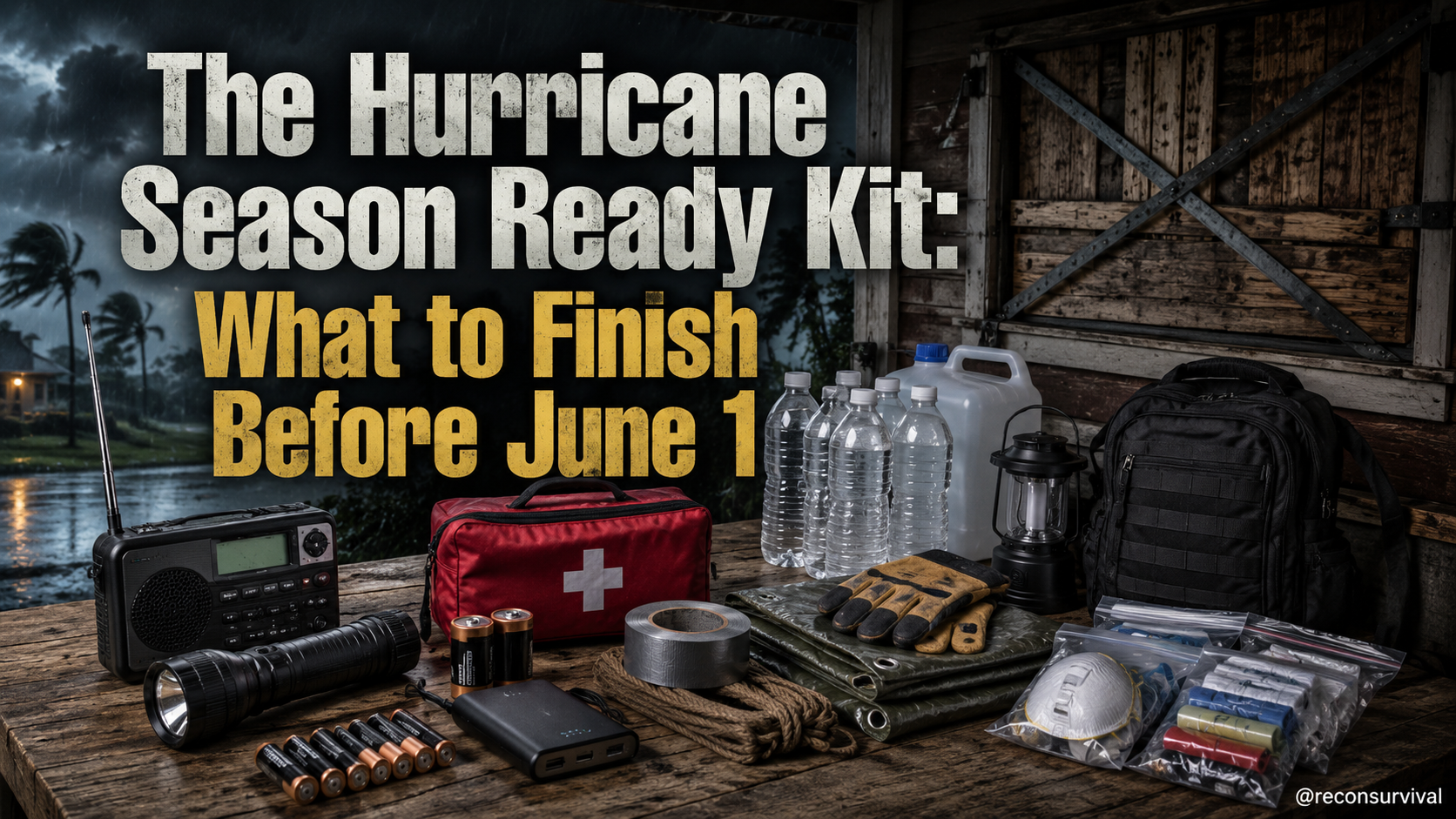
- Secure Water Storage: Water is the most critical resource. Store two gallons per person per day for seven days. Use food-grade containers that do not leach chemicals into the water. If storing water in a car or garage, ensure containers are sealed and protected from temperature extremes that could degrade seals or plastic.
- Medical and Hygiene Kit: Include first aid supplies, over-the-counter medications, and personal hygiene items. Do not assume a hospital will be available or functional. Include prescription medications for a minimum of one week, stored in waterproof containers. Hygiene items such as wet wipes, hand sanitizer, and menstrual products are often overlooked but are essential for preventing infection and maintaining dignity.
- Communication and Power: Bring a battery-powered or hand-crank radio to receive official weather updates. Include extra batteries for flashlights and phones. A solar charger or power bank can extend communication capabilities if grid power is restored but devices still need charging. Keep a physical map of your area and evacuation routes; GPS may fail without cellular or satellite coverage.
- Important Documents and Cash: Store copies of identification, insurance policies, and bank records in a waterproof, fireproof bag. Include physical cash in small denominations; digital payments may not work without power or internet.
- Organize for Accessibility: Arrange the kit so that essential items are at the top of the container or on the top shelf. Avoid items that require digging through layers to reach critical supplies. Label everything clearly so that anyone in the household can find it quickly.
Readiness Checklist and Decision Logic
Use this checklist to verify your kit covers the first week. Ask yourself these questions before considering your preparation complete:
- Water: Do I have at least two gallons per person per day for seven days in my kit?
- Food: Do I have enough non-perishable food for seven days without cooking?
- Medical: Do I have all necessary prescription medications and a first aid kit stocked for seven days?
- Communication: Do I have a working battery-powered radio and extra batteries?
- Power: Do I have a flashlight and extra batteries or a power bank?
- Documents: Do I have waterproof copies of critical documents and a list of important phone numbers?
- Cash: Do I have enough small-denomination cash to cover basic needs if ATMs are offline?
- Hygiene: Do I have wet wipes, hand sanitizer, and sufficient personal hygiene items?
Decision Tree for Verification:
- Scenario: You discover a gap in your water supply.
- Action: Purchase food-grade containers immediately and fill them from a safe source. Re-seal and date them.
- Scenario: You notice your food supply will expire before the hurricane season peak.
- Action: Rotate the food to a new shelf location and replace it with new stock before the expiration date.
- Scenario: Your communication plan relies solely on a cell phone.
- Action: Add a hand-crank radio to your kit to receive official updates if cell towers are down.
Timeline for Preparation This Season
Preparation should happen now, not when the weather forecast becomes dire.
Today: Complete the audit of your current supplies. Identify exactly what is missing for a first-week kit. Place these items on your shopping list or order them online. Begin organizing your kit in a designated location.
This Week: Acquire the missing items. Focus on bulk purchases where possible, such as water and food. Test your radio and flashlights. Practice rotating your food and water supplies to ensure freshness. Update your family emergency plan and practice retrieving your kit quickly.
Later This Season: Re-evaluate your kit after the storm season begins. If you have experienced a storm or if you have identified a new risk, update your supplies accordingly. Ensure that all documents are up to date. Keep your family informed of changes to your plan.
Recon Survival Principle: Verification Over Accumulation
The Recon Survival Principle for preparedness is clear: A kit is not ready until it has been verified. Having items does not mean they are accessible or functional. Verification involves testing the kit, checking expiration dates, and ensuring that every component works as intended. This mindset shifts the focus from "buying" to "building a system." A system that works under pressure is better than a system that looks good in a magazine photo. This principle applies to all levels of preparation, from food storage to gear maintenance. It is the foundation of long-term resilience.
Do Today
Follow these concrete actions to build and verify your hurricane-ready kit now.
- Empty your designated storage space and remove any expired items.
- Calculate your household's water needs for seven days based on two gallons per person per day.
- Check your water supply and replace any water that is near its expiration date or stored in compromised containers.
- Audit your food supply and calculate if you have enough for seven days. Add non-perishable items as needed.
- Check your flashlight, radio, and batteries. Test each device to ensure it functions correctly. Replace any weak batteries.
- Review your medication supply. Ensure you have at at least a week's supply of prescriptions and first aid items.
- Organize for accessibility. Arrange the kit so that critical items are at the top or easily accessible. Label everything clearly so that stress does not cause confusion.
Do Today
- Empty the Space: Remove expired items.
- Fill the Gaps: Calculate needs for seven days. Fill gaps with fresh supplies.
- Verify Functionality: Test radio and flashlights. Check expiration dates on all items.
Do Today
- Empty the Space: Remove expired items.