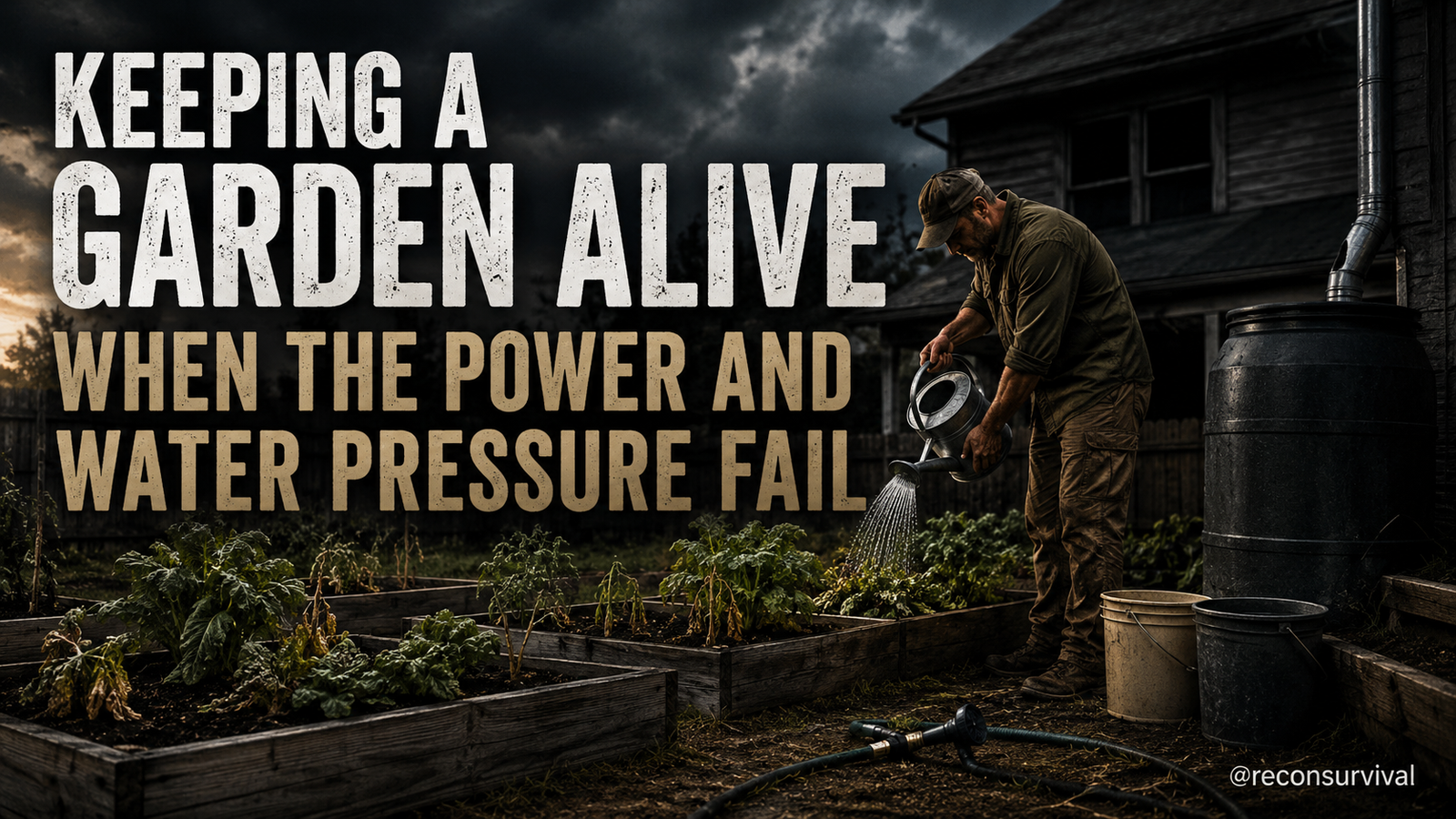
A practical way to prioritize watering, shade, mulch, rain barrels, and emergency irrigation during outages, but most advice is either too generic, too gear-focused, or too late.
As an Amazon Associate, I earn from qualifying purchases.
When the power grid falters and water pressure drops to a trickle, a lush garden can turn brown within forty-eight hours. This isn't about fantasy survival scenarios; it is a calculation of biology against infrastructure failure. You must know exactly how to prioritize watering, shade, mulch, rain barrels, and emergency irrigation when the pump stops and the hose stops delivering.
The Reality of Summer Grid Stress
High summer temperatures and storm activity place immense stress on the electrical grid. When air conditioning demand peaks and weather patterns shift, the likelihood of rolling blackouts or extended outages increases. In these conditions, the demand on local infrastructure is higher than usual, making resilience a necessity rather than a luxury. This matters because your plants are living organisms that require constant flow. They do not care about the reason the power is out; they only care that the pump stopped.
Without fearmongering or exaggerated threats, the risk is straightforward: moisture loss accelerates with heat. Soil temperature rises, transpiration speeds up, and root systems dry out. A garden that relies solely on mains water will fail quickly once pressure fails. The goal is not to predict a disaster, but to build a system that functions when the normal flow stops. This preparation ensures that when the lights flicker, your food source remains viable.
The Critical Timing Mistake
The most common mistake people make with this topic is waiting until an outage is underway to assess their garden's needs. Many readers assume they can water once or twice on a generator and then rely on stored water, only to find the plants have already suffered irreversible damage. This delay is fatal because it ignores the rate of evaporation and soil drying.
When stress becomes acute, decision-making capacity degrades. By the time you are actively coping with an outage, you are reacting to wilting leaves rather than preventing them. The system must be in place before the event, not just in reaction to it. Preparation allows you to remain calm and methodical. Panic is the enemy of effective irrigation management. You need a predefined protocol that you follow automatically, removing the cognitive load from the situation.
The Recon Survival Prioritization System
The Recon Survival approach uses a tiered system to allocate limited resources efficiently. This method focuses on prioritizing watering, shade, mulch, rain barrels, and emergency irrigation during outages based on plant survival needs. The system ranks tasks by their impact on plant health and water conservation.
First, address shade. This is a passive form of irrigation that prevents heat stress before it occurs. Next, manage soil moisture retention through mulch and rain barrels. Finally, implement active emergency irrigation. This hierarchy ensures you do not waste precious gallons on low-value plants while critical crops survive. You are essentially moving from preventing damage to correcting damage.
Step-by-Step Execution for Household Outages
This system breaks down into clear steps a normal household can use without specialized gear.
- Shade First. Identify the most heat-exposed areas of your garden. Install or adjust temporary shade cloth, move potted plants to shaded porches, or place reflective barriers near heat-absorbing surfaces. This reduces evaporation rates immediately.
- Mulch to Retain Moisture. Apply a thick layer of organic mulch or straw over the soil. This creates a barrier that keeps soil cool and retains moisture. Check that existing mulch is intact and not dry or compacted.
- Water Cisterns and Barrels. Inspect rain barrels and cisterns. Ensure they are full. If you have a backup pump, test it now, not during an outage. Have hoses ready and laid out near the most critical plants.
- Prioritize Watering. Focus your available water on the most important plants first. Edibles take precedence over ornamentals. Group plants together to allow for efficient watering runs.
- Monitor and Adjust. Check soil moisture frequently. If the soil is dry to the touch at a depth of two inches, the plant needs water. Adjust your schedule based on the actual state of the soil, not just the clock.
Applying the System to a Small Backyard
For a small backyard or homestead, space and resources are limited. You must maximize efficiency. Start by mapping your garden. Mark the locations of your most vulnerable plants, such as tomatoes, peppers, and leafy greens. These plants have high transpiration rates and require consistent moisture.
Next, look at your water storage. A single rain barrel might hold fifty gallons, which may last only a few hours of heavy watering during an outage. Consider stacking containers or using larger IBC totes for extended storage. Position these containers where you can easily access them. Lay out long hoses so you do not need to move them when water pressure is low.
In a small space, every gallon counts. You might need to water at night when temperatures drop to reduce evaporation. This simple change in timing can double the effectiveness of your emergency water supply. It is a practical adjustment that requires no equipment, just discipline.
Low-Cost Options and Upgrade Paths
You do not need expensive technology to survive a power outage. Start with low-cost options that provide immediate value. Mulch is one of the cheapest ways to save water. It can be sourced locally from landscaping waste or compost piles. A simple rain barrel attached to a downspout costs little and provides free water collection.
For a more durable upgrade, invest in a gravity-fed irrigation system or a manual pump. Gravity-fed systems utilize pressure from elevated water storage, requiring no electricity. A manual hand pump is a mechanical device that works regardless of the grid. Over time, you can upgrade to solar-powered pumps or larger storage tanks. These upgrades provide reliability and reduce reliance on the main grid. Always follow manufacturer instructions for assembly and safety, especially regarding fuel storage and battery handling.
The Recon Survival Principle
Recon Survival Principle
Resilience is built by redundancy, not reaction. Relying on a single water source creates a single point of failure. If the mains go down, the garden dies unless you have a backup. The principle here is simple: create multiple pathways for resources to reach your needs. Have shade ready, have water stored, and have a plan for manual distribution. This approach ensures that when the infrastructure fails, your homestead continues to function. It turns uncertainty into a manageable variable.
Do Today
Create an action plan you can execute immediately. Follow these concrete steps to build your readiness.
- Inspect your mulch. Walk through your garden beds and add fresh mulch to areas where the layer has worn down. Aim for a depth of three to four inches.
- Check your rain barrels. Verify that all rain barrels are secure and full. Clean any screens to ensure debris does not block the intake or outflow.
- Test your hose lines. Lay out a main hose line near your garden and ensure the nozzle functions. Ensure you can manually control the flow to specific zones.
- Map your watering priority. Write down the order of your plants based on their water needs. Place the most thirsty plants at the front of your hose line.
- Evaluate your shade. Identify areas where direct afternoon sun hits your plants. Plan to move potted plants or build a simple shade structure.
- Review your storage. Check your fuel and battery levels if you have a backup pump. Store water containers in a cool, shaded area to prevent algae growth.
- Share your plan. Explain your irrigation plan to household members so everyone knows what to do if the power fails.
By focusing on these actions, you transform a chaotic situation into a series of manageable tasks. You are not waiting for the worst to happen; you are preparing for the inevitable disruptions of summer. This is how you keep your garden alive when the power and water pressure fail.