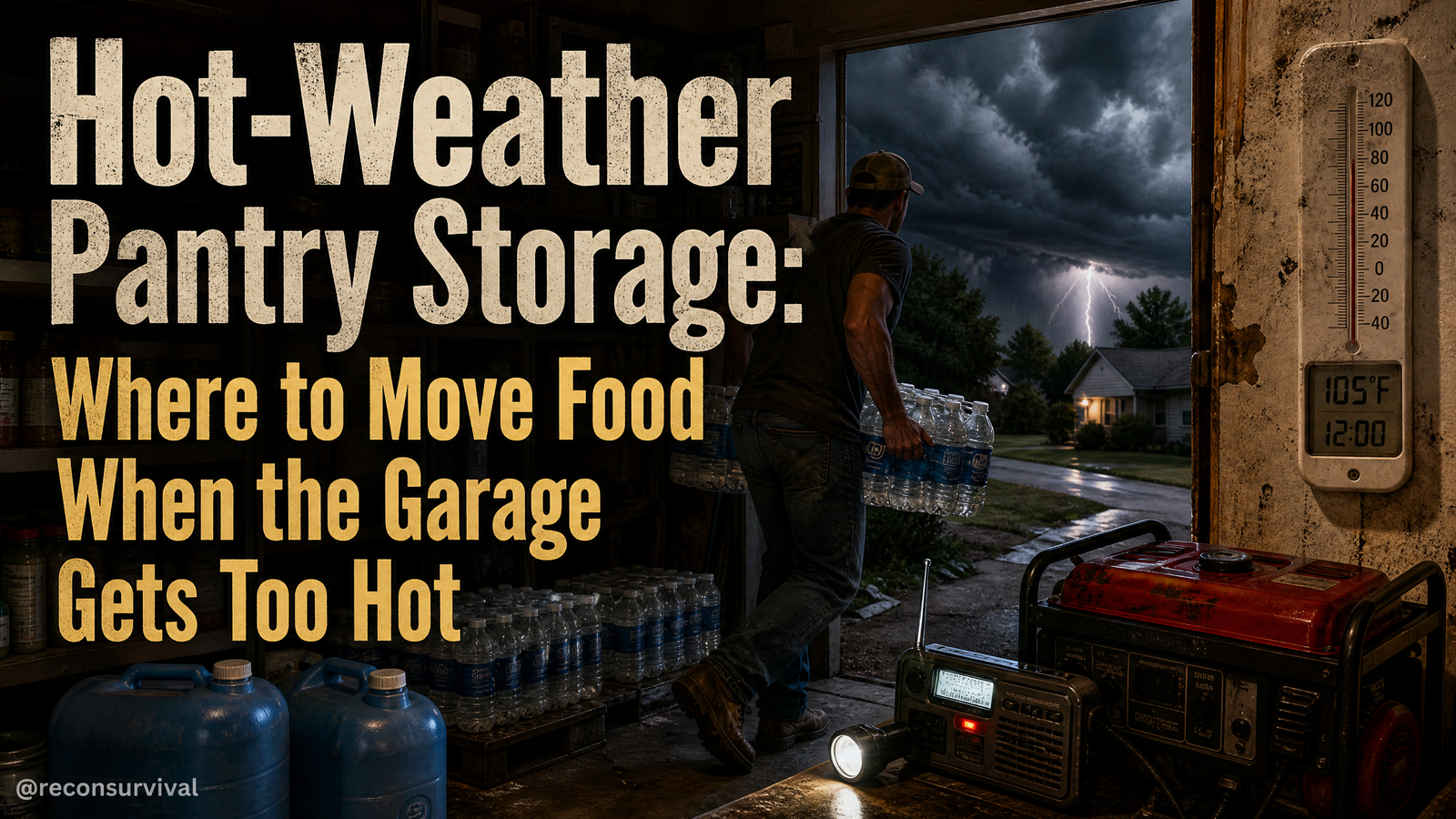
The garage thermometer reads 105°F at noon. Your emergency batteries sit on the concrete floor next to a stack of cans. By 6:00 PM, the heat soaks through the roof and into the vehicle where you kept your spare. Inside, the first items to fail are not the ones you think. It is the moisture-sensitive meds tucked in the back corner and the batteries losing charge overnight. A minor outage turns into a household emergency when the heat ruins what you have stored before you can use it. This article solves the immediate problem of protecting pantry food, water, medicine, and batteries from damaging summer temperatures without relying on fantasy gear or fear-based claims.
First Hour of Damage: What Breaks in the Heat
When the sun hits the side of the house in early July, the thermal mass of the garage and walls begins to rise. The garage becomes the most dangerous storage area for sensitive supplies. Concrete floors radiate heat up. Metal shelving conducts it inward. Paper boxes absorb it. The first things to fail are often the most critical. Medicine loses potency when exposed to sustained heat. Batteries swell and vent dangerous gas. Dehydrated foods get soggy and moldy. Fresh vegetables wilt and rot. Even canned goods can suffer from corrosion if the internal moisture gets out of balance due to extreme external heat.
You do not need to wait for a disaster to see this failure mode. Look at your current storage. Is there a stack of medication in the garage near the car door? Is there a case of bottled water sitting on a shelf that gets direct sun? These are the weak points in your plan. The real-world problem is that most advice ignores the specific physics of your garage. Generic tips about "keeping things cool" do not tell you which shelf to move your water to or how to separate the batteries from the heat source. You must act now to prevent the first hour of damage from becoming the end of your supply.
The Physics of the Garage: Why This Matters for Storage
This matters for off-grid cooling and water because the garage is often the most accessible but least controlled room in your home. Without active air conditioning, the temperature can soar well above the safe zone for food safety. The National Weather Service notes that July heat waves are becoming more common. When you lose power, your garage acts as a furnace. It does not cool down fast. The heat stored in the concrete and the roof continues to bake your supplies even after the sun sets.
This creates a specific risk for water and batteries. If your water supply includes perishable items or relies on specific storage conditions, the garage is a trap. You might think your water is safe because it is in a bucket. But if the bucket is black plastic and in the sun, the water warms up, creating ideal conditions for bacterial growth if the seal is ever broken. Batteries are also sensitive. Heat accelerates chemical reactions inside them, shortening their life and increasing the risk of rupture. You are not just protecting food; you are protecting the reliability of your backup power.
The common mistake people make with this topic is waiting for the outage to start moving things. By the time the power goes out, the garage has already baked your supplies. You wait until the stress is hard. The decision to move heavy cases of water becomes a struggle when you are already dealing with the stress of a blackout. You need to protect pantry food, water, medicine, and batteries from damaging summer temperatures before the heat becomes unbearable.
The Recon Survival Practical System for Storage
The Recon Survival practical system for how to protect pantry food, water, medicine, and batteries from damaging summer temperatures relies on location, separation, and labeling. You do not need a climate-controlled unit in the garage. You need a specific layout that accounts for heat rise. The system is simple: move sensitive items into the insulated space of the main house. Use the garage only for stable, heat-resistant goods. Stage your water and food in a way that allows for rotation without heavy lifting during a crisis.
Break the system into clear steps a normal household can use. Step one is assessment. Walk the perimeter of the garage. Count the items. Write down what is inside each box. Step two is relocation. Move anything sensitive to a cooler room. This includes medicine, batteries, and perishables. Step three is the separation. Keep batteries away from heat sources and flammable materials. Step four is the labeling. Put a clear date and temperature range on every container.
Connect supplies to actual meals, water use, rotation, and storage conditions. Your canned goods should be rotated based on the dates you write on the lids. Your water buckets should be checked for leaks and clarity. Your medicine cabinet should be kept at a stable, cool temperature. Store your batteries in a ventilated area away from direct sun. Do not store large quantities of food in the garage if you cannot move them quickly. The goal is to ensure that when you need to grab a meal or start your generator, the supplies are ready to use.
Triage Ladder for Heat Damage Checks
Here is a quick triage ladder with first-hour, same-day, and next-day checks to keep your supplies safe during a heat wave.
First-Hour Check
- Open the garage door and measure the temperature with a standard thermometer.
- Check the garage door gasket. Is it sealed against the heat?
- Identify items within 10 feet of the door or direct sun.
- Move medicine and batteries to a cooler room immediately.
- Check for any signs of swelling batteries or damaged packaging.
Same-Day Check
- Re-check the garage temperature at 4:00 PM and 6:00 PM.
- Inspect the water containers for condensation or warmth.
- Verify that food labels are legible and not peeling.
- Test any electronic batteries for voltage output if you have a multimeter.
- Adjust the airflow by opening windows if you have a cross-breeze.
Next-Day Check
- Re-evaluate the items left in the garage for the second day of heat.
- Rotate any food that shows signs of spoilage or off odors.
- Refill any water containers that have been compromised by heat.
- Trim the list of items that can no longer be stored in the garage.
- Write down the new locations for all sensitive supplies.
Pantry and Water Checklist for Waste Reduction
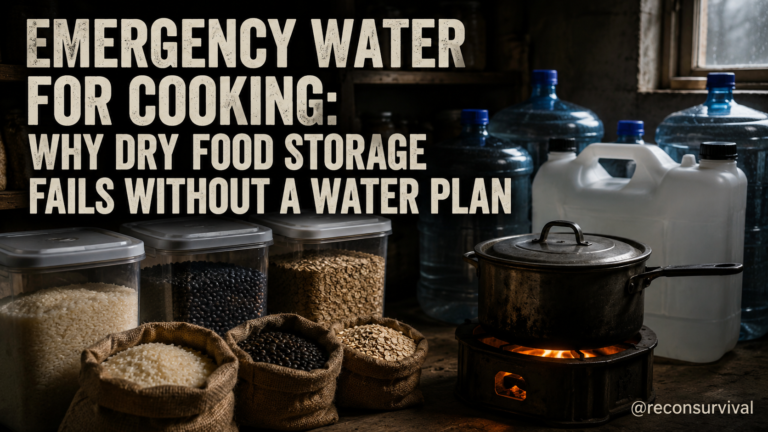
Include a pantry or water checklist that reduces waste. You want to ensure that every item you store is usable and rotates through the system. A clean pantry and water storage scene with labeled containers, meal planning notes, and rotation system looks like this.
- Medicine Check: Are all heat-sensitive drugs in a cool room? Do they have an expiration date printed clearly?
- Battery Check: Are batteries stored in a fire-safe, ventilated cabinet? Is the voltage holding steady?
- Water Check: Are water containers free of algae or sediment? Is the water rotation happening within six months?
- Food Check: Are canned goods stacked on the bottom shelf, not the top? Are the labels facing out?
- Labeling: Do all containers have a "Best By" date written by hand?
- Rotation: Did you move the oldest food to the front of the shelf?
- Airflow: Do you have a fan running to keep the garage air moving during the day?
Storage Conditions and Supply Limits
Connect supplies to actual meals, water use, rotation, and storage conditions. You must respect the limits of your storage environment. Do not store batteries in a sealed container that traps heat. Do not store food in a box that blocks the air circulation. The garage is not a freezer. It is a shed. Treat it as such. If the temperature exceeds 85°F regularly, move the perishables. If the temperature is consistently below 80°F, you can keep some stable goods like rice or dried beans.
The garage door is the gateway for the heat. When you open it to let in fresh air, you let the heat out too. Close it during the peak sun hours. Use the garage as a staging area for the items you can handle, not as a long-term vault. Your goal is to protect pantry food, water, medicine, and batteries from damaging summer temperatures without creating a new hazard. A hot garage with poor ventilation can ignite a fire if you store flammable liquids there. Keep the area clear. Keep the air moving.
Decision Points for Summer Outage Response
You face a few key decision points when planning for a summer outage. First, do you move the heavy water cases to the basement or keep them in the garage? Second, do you use a portable fan to circulate air in the garage, or do you shut the garage down entirely? Third, do you accept that your medicine needs to be kept in the main house during a heat wave?
Answer these questions before the heat rises. – Decide which items must stay in the house and which can wait in the garage. – Decide if you will use a fan or a window unit to lower the garage temp. – Decide how much water you can physically move without getting hurt. – Decide if you will rotate your food before the heat wave hits.
These choices define your readiness. They determine whether you are field-ready or just hoping for the best. The goal is to have a plan that works even if the power is out. You want to be able to grab your supplies and go, not struggle with melting food.
Field-Ready Gear Buying for the Garage
Consider field-ready gear buying options that improve your garage setup. A heavy-duty fan is a must. It keeps the air moving and prevents hot spots. A digital thermometer helps you track the heat. You do not need an expensive generator just for the garage. A standard fan and a good thermometer are enough to start.
Look for these specific items to upgrade your storage. – A heavy-duty fan with a long power cord to reach the garage. – A digital thermometer with an external probe to check hard-to-reach spots. – Rubber door sweep to keep the heat out when the garage is closed. – Rubber mats to protect the concrete floor and reduce heat transfer. – Sturdy shelves that can hold the weight of water cases without bending. – Ventilated battery boxes that keep the heat away from the cells. – Clear labels for water rotation so you do not have to guess what is usable.
Avoid gear that claims to "cool" the garage without power. Some products promise to lower the temperature without electricity, but they are usually just fans. A fan moves the air and prevents the heat from pooling. That is all you need. You do not need a complex cooling unit. You need simple, reliable tools to manage the heat.
Next Day of the Heat Wave: Final Actions
The next day, the heat may seem to break a little, but the damage is done if you did not act early. Revisit your checklist. Check the temperature again. If it is still high, move more supplies. If it drops, you might be able to bring back some stable food to the garage. Keep an eye on the batteries. If they feel warm to the touch, move them.
Do not wait for the outage to happen. Prepare your plan now. Move the sensitive items. Organize the rest. Label everything. Your garage is a resource, not a liability, if you manage the heat correctly. You can keep your supplies safe even in the worst summer heat. You just need to know where the weak points are and how to fix them before they break.
Recon Survival Principle
Recon Survival is not about waiting for stress to make the decision. It is about turning weak signals into household action while the fix is still small. Protect pantry food, water, medicine, and batteries from damaging summer temperatures.
Do Today
- Count stored water by person and day, then write the number where the household can see it.
- Date the oldest container and move it to the front of the rotation.
- Add extra water for pets, heat, illness, cooking, or anyone with higher needs.
- Stage the filter, clean pot, funnel, and water-moving container together.
- Write the no-power water sequence on paper: drink, cook, wash, flush, refill.
- Check every cap, container, shelf, and storage spot for leaks or heat exposure.
- Assign one person to refill, one to rotate, and one to recheck after the next alert.