Heat and humidity do not wait for you to finish your daily chores. Early June brings a convergence of rising temperatures, increased storm activity, and supply chain friction that tests household resilience. While the calendar says summer, the real-world pressure comes from the immediate reality of your pantry and your home security. The specific problem this addresses is the friction between having valuable supplies and the social friction they create when displayed. Many families find themselves in a position where they have built a cache of food and gear but feel a growing sense of isolation, not because they are being watched by authorities, but because they are being watched by neighbors or visitors who feel entitled to their resources.
As an Amazon Associate, I earn from qualifying purchases.
The Reality of Summer Heat and Social Exposure
Summer conditions change the rules for food security and household safety. Heat accelerates the spoilage of perishables, forcing more frequent access to stored goods. Storms can damage seals on windows and doors, compromising the security of your storage areas. Supply disruptions mean that restocking shelves becomes a race against time rather than a passive process. In these conditions, your food storage is not just a backup plan; it is a daily operational requirement.
However, the greatest threat during this season is often not physical destruction, but social exposure. When you display your reserves, you invite unnecessary pressure. You are essentially telling visitors, "This is my buffer against a crisis that you might need help with." The reality is that your buffer is for you and your family. The heat makes the food more vulnerable, but the open display makes your situation more vulnerable to social conflict. This matters for summer food security because stress lowers judgment. If your neighbors or visitors assume you have a massive stash that can be shared or that you are hiding something illegal, you invite scrutiny that can lead to conflict. You do not want a dispute over a jar of beans escalating into a situation where you feel unsafe in your own home.
The Common Mistake of Visible Preparedness
The most common mistake people make with food storage is the belief that transparency equals trustworthiness. Many individuals proudly display canned goods or bulk grains in communal spaces, believing it shows they are a good neighbor. This approach assumes that preparedness is a universal good that requires no boundaries. In a household context, however, the display of significant food reserves often triggers curiosity that quickly turns into pressure.
This mistake ignores the principle of separation of responsibilities. Your supplies are your family's liability insurance, not a community charity fund. By putting them on display, you blur the line between your private safety planning and public perception. The pressure mounts when others suggest, "We could use some of that if things go bad," or when they question how you store it. This creates a scenario where you are no longer the manager of your household safety but a participant in someone else's narrative. You lose control over how your supplies are discussed and where they might be moved. The conflict arises not from malice, but from a misunderstanding of ownership and the legal and practical limits of your own safety planning.
The Recon Survival Principle
Recon Survival Principle
The Practical System for Secure Storage and Discussion
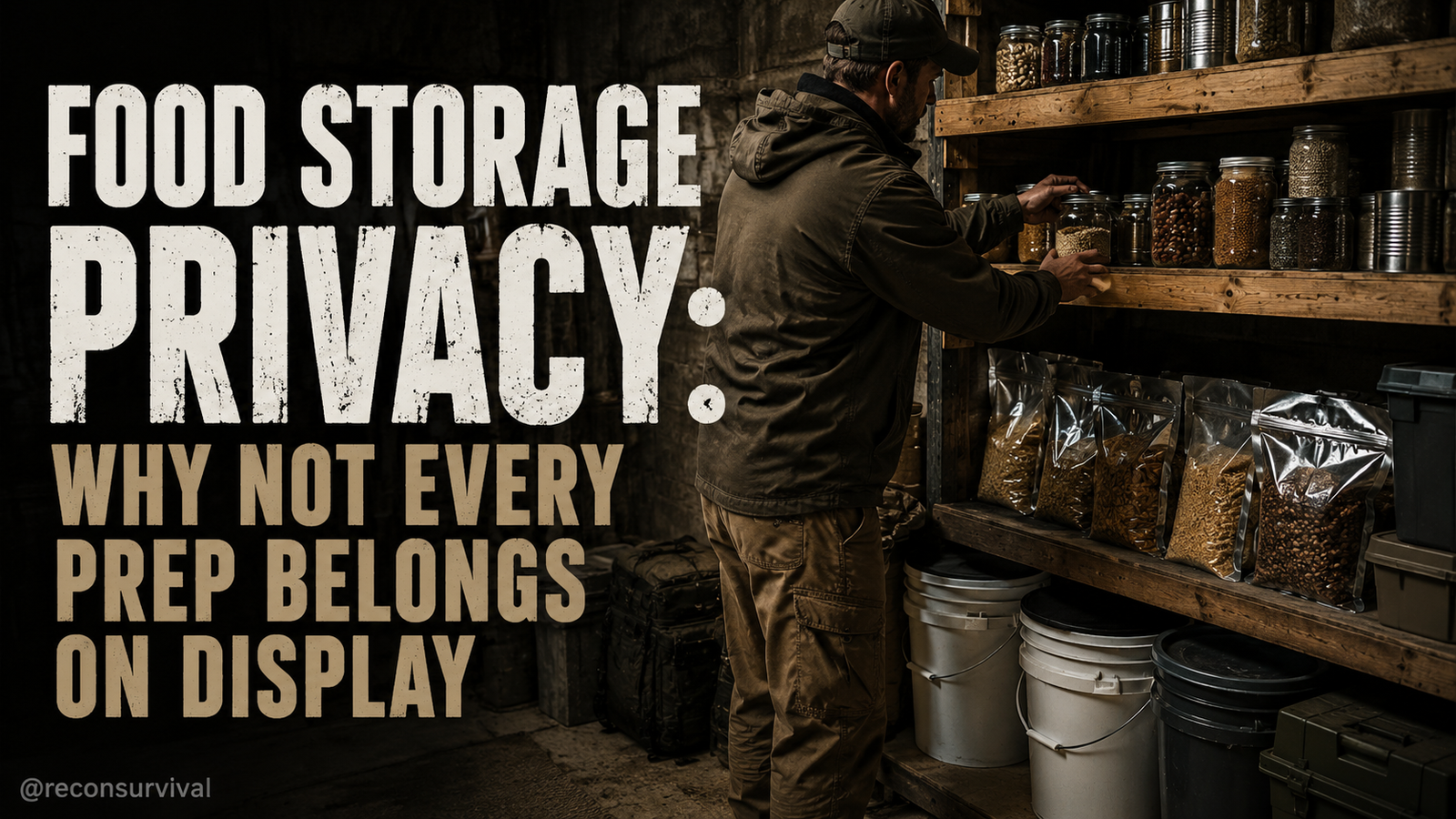
The Recon Survival practical system for handling food supplies focuses on habits, visibility, communication, and prevention. This approach ensures you can discuss your plans without inviting pressure or conflict. The system treats your food storage as a critical infrastructure component that requires quiet operation. You must separate the storage location from the social space. Your pantry or storage closet should be a functional utility room, not a showroom.
This method prioritizes prevention. By keeping your supplies organized and strictly for household use, you remove the excuse for others to intervene. You establish a clear protocol for who knows what about your storage. Communication is key, but it must be managed on your terms. You define the narrative before others can distort it. If someone asks about your supplies, you answer directly, calmly, and briefly, then redirect the conversation. You do not argue or explain the details. You do not justify the quantity. You simply state that it is for your family's use. This sets a boundary that is difficult to cross.
Step-by-Step Implementation for Normal Households
Breaking the system into clear steps allows a normal household to implement these changes effectively.
- Zone Your Storage Areas. Physically separate your food reserves from areas where guests are frequently present. Use a dedicated closet or a specific shelf in a utility area. Do not keep emergency rations in the living room or kitchen counters where they are visible to visitors.
- Establish Access Protocols. Decide exactly who is authorized to access the primary storage area. Limit this to immediate household members or trusted individuals in a written agreement if living with others. Ensure that the physical lock or latch on the storage area is simple but effective, using standard deadbolts or combination locks as appropriate.
- Define Conversation Boundaries. Prepare a standard response for inquiries about your food reserves. Practice stating, "This is for our family's needs," and then changing the subject. Avoid engaging in debates about quantity or rationing plans. If the conversation becomes heated, disengage politely.
- Audit Your Visibility. Walk through your home and identify any items that are out of place or visible from public areas. Move them to their secure zones. Ensure that boxes or bags of supplies are not left on sidewalks or near the front door where neighbors can see them.
- Secure Your Documentation. Keep your inventory lists and planning documents in a secure location, not on a desk in the guest room. This prevents accidental leaks of information if your home is visited unexpectedly.
Defensive, Lawful, Non-Escalatory Household Checklist
This checklist focuses on defensive measures that are lawful and non-escalatory. It does not suggest tactics that could be interpreted as aggressive or illegal. It is designed to maintain your safety while respecting community norms.
- Check Door and Window Security: Inspect all exterior doors and windows for proper locks. Ensure that any gaps are sealed to prevent unauthorized entry. Verify that security lighting covers approaches to your home without being blinding.
- Secure Entry Points: Install peepholes or video viewers on doors if you have a porch where packages or supplies might be left. Ensure that mailboxes are not accessible to strangers in a way that exposes your comings and goings.
- Maintain Visual Privacy: Use curtains or blinds on windows adjacent to food storage areas if they are visible from the street or neighboring properties. This prevents visual assessment of your activity levels.
- Control External Access: If you have a shed or garage used for storage, ensure that the entrance is locked and that there are no loose tools or ladders that could be used to gain unauthorized access.
- Review Neighbor Interactions: Identify neighbors who might pose a risk of harassment regarding your storage. Maintain a polite but firm distance. Do not invite them to inspect your home. If they ask questions, give short, non-committal answers.
- Document Household Rules: Have a simple household agreement regarding access to storage areas. This agreement should be signed by all household members to prevent internal conflict.
- Practice Calm Disengagement: If a neighbor becomes persistent, use a neutral tone. State, "I appreciate your concern, but this is my family's private matter." Do not argue facts or statistics. Repeat the boundary if necessary.
- Check for Leaks: Ensure that no data or documents containing supply details are visible on computers or printed papers. Shred old inventory lists before disposal.
Recon Survival Takeaway
The takeaway is clear: your food security depends on your ability to manage your environment without interference. Displaying your supplies creates a vulnerability that heat and stress can exploit. By keeping your storage private and your boundaries firm, you protect your family from both physical threats and social pressure. You allow yourself the peace of mind to focus on the actual preparation of your supplies rather than managing the gossip or demands of others. This is a serious, practical approach to resilience.
Do Today
Take concrete action to secure your supplies and your discussion habits before the weekend heat sets in.
- Relocate Visible Items: Move all food storage containers from public view to a secure, locked location. Ensure that no boxes or bags are visible from the street or neighbor's windows.
- Lock Your Storage: If you have a specific storage closet, install a new lock or upgrade your existing one. Test the lock to ensure it functions smoothly and resists tampering.
- Draft a Statement: Write down a short, neutral sentence to use when asked about your supplies. For example, "We have enough food for our family, and we are happy with that." Practice saying it until it feels natural.
- Review Your Environment: Walk around your property and identify any areas where your storage might be visible or accessible. Adjust curtains, move boxes, and secure gates or fences as needed.
- Talk to Your Family: Have a brief conversation with your household members to ensure everyone understands the importance of keeping storage private. Reiterate that this is a safety measure, not a social faux pas.
By taking these steps, you reinforce your household's resilience against the summer heat and the social pressures that accompany it. You reclaim your right to prepare for your family without undue interference.
- Put a working flashlight and charged battery bank where people sleep.
- Write the household contact plan on paper and place it with the radio or main flashlight.
- Assign one person to recheck the list after the next storm, outage, or heat alert.