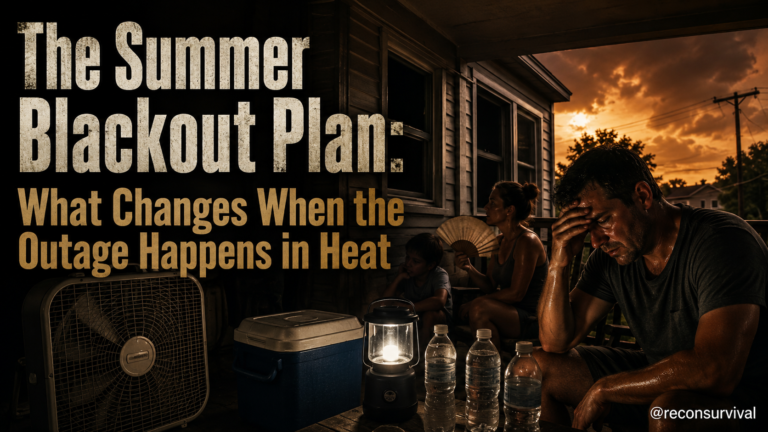
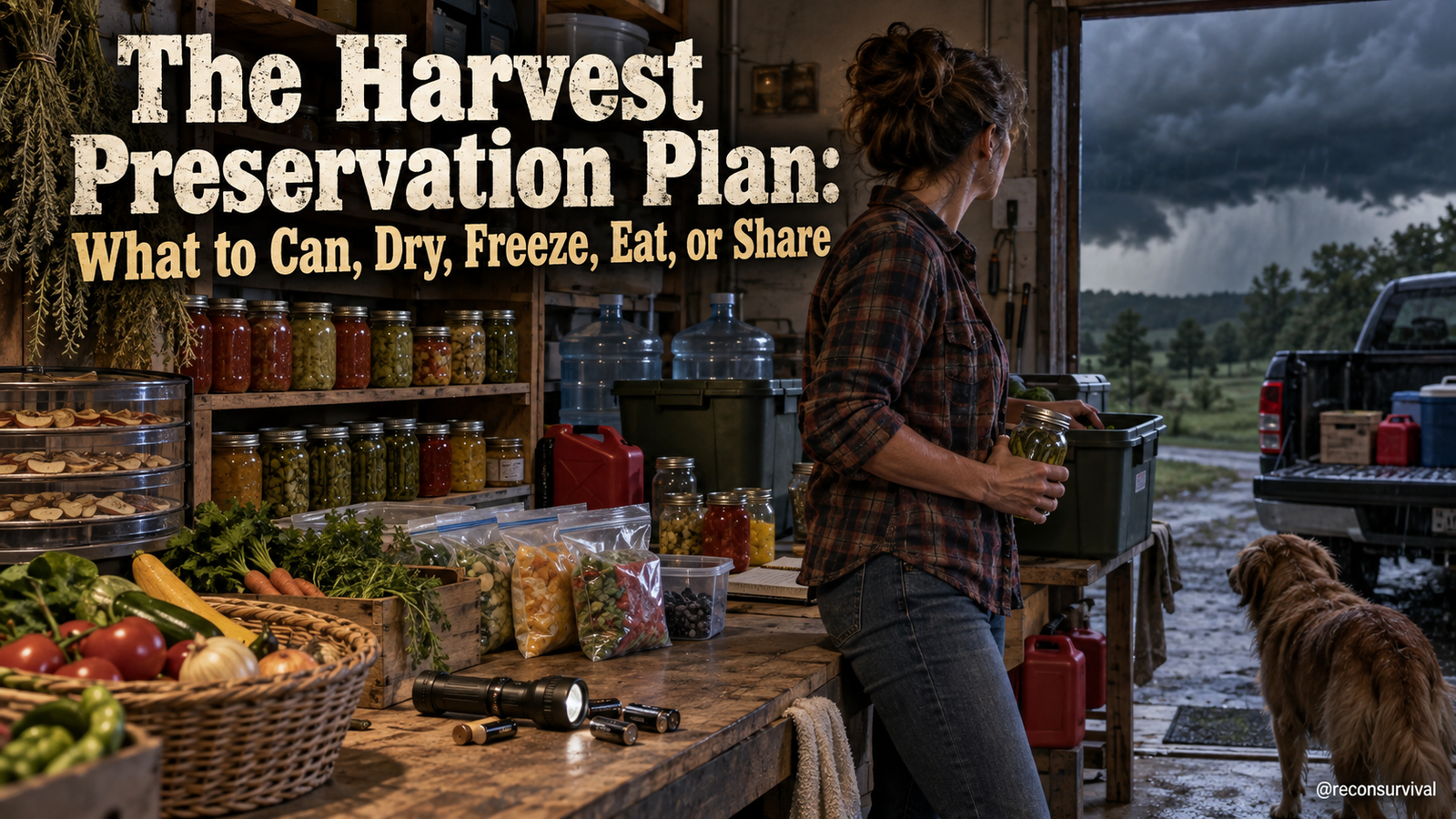
The batteries are dead. The weather radio is silent. The water containers are sitting on the counter, waiting to be filled, while the pantry door swings open to reveal only dry cereal and a jar of dried beans that nobody knows how to process yet. This is the moment the plan turns from a list into a panic: when the harvest is in, the sun is setting, and the window to preserve food is closing fast.
As an Amazon Associate, I earn from qualifying purchases.
Recon Survival: The Harvest Preservation Triage
When a family is unprepared, the harvest becomes a liability. Ripe fruit rots in days. Vegetables wither under a summer sun. Meat spoils before you can cook it. The first hour of a survival crisis or a sudden supply chain cut-off is not about finding a perfect recipe; it is about stopping the rot. You do not need a commercial dehydrator, a sophisticated canning setup, or a deep freezer to make a difference. You need a hierarchy of actions that prioritizes what will fail fastest.
The first thing to fail is the perishable yield itself. If the power goes out or a storm is coming, you cannot wait for the "perfect" system. You must move immediately to the most accessible method that keeps food safe. This is not about tradition; it is about triage. You assess the crop, the weather, and your gear, then you execute the method that buys you the most time with the least equipment.
The Four Windows of Preservation
In a Recon Survival context, preservation is not a single method but a series of windows based on safety and storage life. These are the four paths you can take with a harvest, ranked by how quickly you must act and what resources you need to start.
1. Immediate Consumption and Basic Freezing
The fastest way to save a harvest is to eat it or freeze it. If you have a working freezer or ice, this is the priority for the most delicate items: berries, leafy greens, and cut fruits. * Action: Wash, chop, and package for immediate use or rapid freezing. * Risk: If you wait too long, these items lose nutritional value and flavor, and then spoil. * Equipment: Basic freezer, ziplock bags, or a cool basement with ice.
2. Drying (The Low-Tech Anchor)
If you have no freezer or power is unstable, drying is the most robust method for long-term survival storage. It requires almost no electricity and creates a product that is immune to insect infestation if done correctly. * Action: Slice produce thinly and expose it to hot, dry air. * Risk: Improper drying leads to mold growth, which renders the food unsafe. * Equipment: Sun, a warm room, a fan, or a solar dehydrator.
3. Canning (The Long-Term Seal)
Canning is the gold standard for shelf stability, but it requires more planning and safety knowledge. It is best for high-acid fruits and vegetables, or for meats and stocks using pressure canning. * Action: Fill sterilized jars with food and acid, process in a boiling water bath or pressure canner. * Risk: Botulism is a real threat if the process is not followed with scientific precision. * Equipment: Jars, lids, canning pot or pressure canner.
4. The "Share" Strategy (Community Resilience)
The final category is not a preservation method, but a distribution strategy. In a Recon Survival scenario, hoarding is a failure of the system. If you cannot preserve everything yourself, the most resilient move is to share the excess with neighbors or community groups who have different skills (e.g., someone who knows how to pressure can meat while you focus on drying vegetables). * Action: Identify immediate needs in your circle and trade surplus for needed skills or resources. * Risk: Social friction or lack of reciprocity if not managed clearly. * Equipment: Communication tools, trust, and a network of allies.
The Recon Survival Triage Ladder
Do not try to do everything at once. Use this ladder to decide what happens in the first hour, the first day, and the next week.
First Hour: Stabilize and Stop the Rot
- Check: Is the power out? Is the temperature rising? * Action: Move perishables to the coolest place available. Start eating fresh items immediately. * Goal: Buy time for the next steps.
Same Day: Select Your Primary Method
- Check: What equipment do you have? (Freezer? Sun? Oven? Canning jars?)
- Action: Choose one primary method for the bulk of the harvest based on that equipment. Start drying or prepping for canning. * Goal: Get the bulk of the food into a stable state.
Next Day: Secure and Label
- Check: Are the dried goods sealed? Are the jars cooled and sealed? * Action: Label everything with the date and contents. Store in a cool, dark place. * Goal: Ensure long-term safety and ease of retrieval during a crisis.
The Recon Survival Principle
The core principle of the Harvest Preservation Plan is safety-first triage over perfection. Do not wait for the ideal conditions, the perfect gear, or the "right" recipe to act. The difference between a food crisis and a survival success is not the method you use, but the speed at which you choose a valid method and execute it. If you can dry food in a sun-drenched room, do not obsess over a solar dehydrator you don't own. If you have jars and acid, can the fruit. If you have nothing but the sun and your hands, dry the vegetables. Action, not perfection, is the anchor of preparedness.
Do Today
To ensure you are ready for the next harvest, take these three concrete steps today:
- Inventory Your Gear: Walk through your kitchen and storage areas. Identify exactly what you have for preservation: jars, lids, a dehydrator, a pressure canner, or just a sunny window. 2. Map Your Risk: Look at your calendar. When is the next harvest season for your region? What are the specific seasonal risks (e.g., heat waves, storms) that could cut off your supply lines? 3. Test One Method: Pick one simple item (like tomatoes or apples) and practice one preservation method. Dry it, or can a small batch. The goal is not to save a whole garden, but to master the process of keeping one batch safe.