The First To Fail Is Your Water
Why Summer Stability Requires Early Planning
Summer heat changes the rules for food storage and safety. The primary risk is not just the weather itself, but the compounding effect of high temperatures on perishable items and the strain on municipal infrastructure. During periods of extreme heat or storms, the demand for cold chain logistics drops, but the risk of spoilage in your own storage rises if you are not prepared. Furthermore, power outages during peak summer months can disrupt refrigeration and cooking capabilities simultaneously. By the time a storm hits and the grid goes down, you must have a plan that accounts for the fact that your stove may not work and your water pressure may be inconsistent. This is not about fearing the unknown; it is about ensuring your pantry holds what is necessary to function when the external grid slows down. Planning now, while supplies are stable and temperatures are moderate, reduces the panic that comes later when you are trying to ration resources under pressure.
The Mistake Of Generic Rations
The most common mistake people make with emergency food planning is treating their pantry as a generic insurance policy rather than a meal plan. Many individuals buy a standard kit based on online recommendations and assume that "canned goods" cover their needs. This approach fails because it ignores the reality of protein density, calorie density, and water usage. If you buy food that requires a complex cooking process but you cannot generate heat, that food is useless. If you buy a high-calorie food that provides zero protein, you will suffer rapid muscle loss and immune decline. The mistake is assuming that a box of MREs or a generic survival bag matches your household's dietary restrictions or taste preferences. When stress hits, people do not want to eat "survival food"; they want to eat meals they recognize. A plan that does not account for the actual weight of food needed to sustain a household for a specific number of days is simply a collection of items that will go bad or be wasted.
The Recon Survival Practical System For Matching Needs
The Recon Survival practical system uses a four-part calculation: calories, protein, water, and cooking method. You must match these inputs to your specific household requirements before the first heatwave hits. The system works by establishing a baseline of daily needs and then inventorying your stock to see how many days of that baseline you can actually support. This requires a shift from thinking in terms of "buying supplies" to thinking in terms of "supporting days." You start by determining the caloric load required for your household during a stress event. Next, you calculate the protein sources required to maintain health. Then, you assess the water needed for cooking and sanitation, not just drinking. Finally, you verify that your cooking equipment matches the fuel you have stored. This methodical approach removes guesswork and ensures that every item in your pantry has a defined purpose within a specific meal plan.
Step One: Calculate Your Household Caloric Baseline
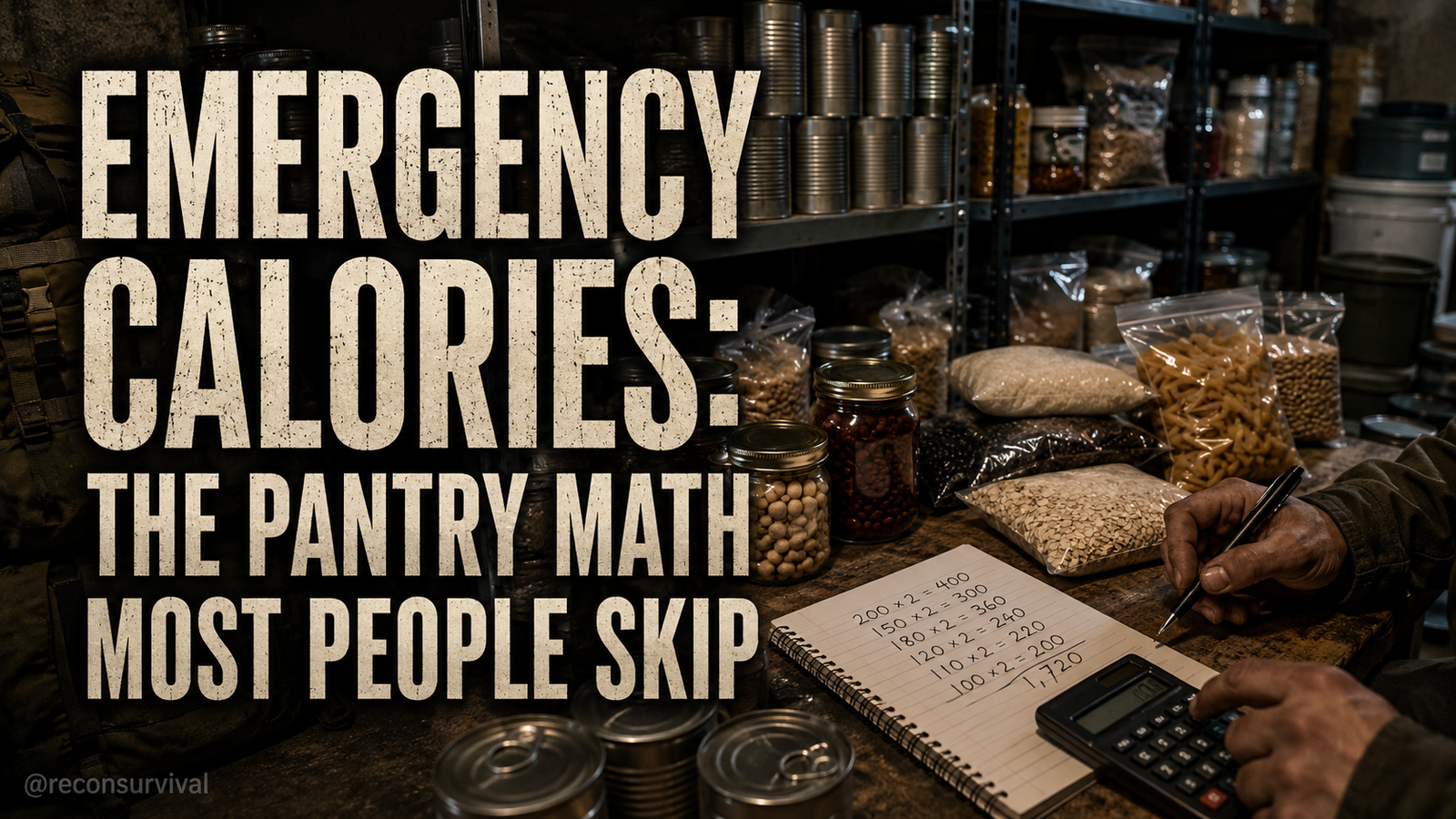
The first step in the system is to calculate your total caloric baseline. This is not an average estimate; it is a specific number based on your household composition and activity levels. Start by listing every person in your home, including pets if they require stored food. Determine the caloric needs for each person based on their age and activity level. A sedentary adult requires roughly 2,000 calories a day, while an active teenager or manual laborer may need significantly more. Add these numbers together to get your household total. For example, a family of four might need between 8,000 and 12,000 calories per day depending on the individuals involved. Once you have this number, look at your current pantry. Count every calorie-storing item you own. Divide your total inventory calories by your daily household need to see exactly how many days you are covered. If you have 20,000 calories in stock and need 9,000 per day, you have a two-day runway. This number is your critical decision trigger for what to buy next.
Step Two: Audit Your Protein And Water Sources
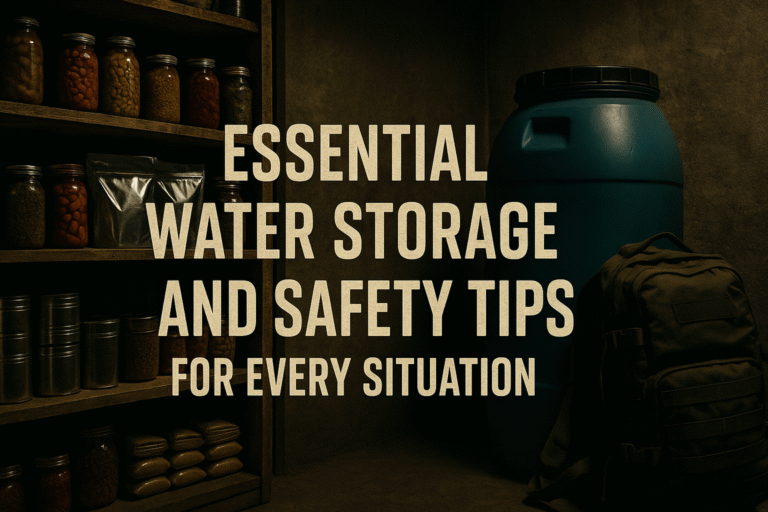
The second step involves auditing your protein and water sources against your calculated baseline. High-calorie items like nuts, dried fruit, and powdered milk are not enough on their own because they lack complete protein profiles. You need a balance of animal protein, plant protein, and fats to maintain muscle mass and organ function. List your sources of lean meat, fish, eggs, and legumes. Calculate the gram-per-day protein requirement for each household member. If your inventory is low in protein, you must prioritize filling that gap before you spend money on extra calories. Water usage is often underestimated. You need enough water for drinking, cooking, cleaning, and sanitation. A standard recommendation is one gallon per person per day for drinking and minimal sanitation, but this increases if you are cooking dehydrated meals. If your water supply is unreliable, you must increase your water storage ratio to ensure you can rehydrate your food safely.
Step Three: Match Cooking Methods To Your Fuel Supply
The third step is to match your cooking methods to your fuel supply. This is a frequent failure point. Many people assume they have "cooking gear" but fail to consider the fuel required to operate it. You cannot cook dried pasta if you do not have the fuel to boil water for ten minutes. You cannot dehydrate vegetables if you do not have the fuel to run your dehydrator. Assess your fuel inventory: propane, white gas, charcoal, and solar power. Ensure that your cooking plan fits within your fuel limits. If you store a lot of dehydrated food, you must have a way to rehydrate it quickly without wasting fuel. If your fuel supply is limited, your meal plan must rely on no-cook items like shelf-stable milk, freeze-dried meals, or raw fruits and vegetables. This alignment ensures that you can actually prepare your food when the need arises.
Step Four: Connect Supplies To Meals And Rotation
The fourth step connects your supplies to actual meals and establishes a rotation system. A list of random cans is not a plan; a list of ingredients that form specific meals is a plan. Create a weekly menu that utilizes your stored supplies. For example, use your dried beans to make chili with your stored rice and your powdered eggs to make a scramble. This ensures you eat well while using your supplies efficiently. When you rotate items, use the oldest food first. Label your containers with the date of storage and the use-by date. This prevents waste and ensures that you are always using food that is safe and palatable. Regularly check your storage conditions to ensure that heat and humidity are not degrading your supplies. This rotation system keeps your inventory fresh and your meals varied, reducing the psychological toll of eating the same food for an extended period.
The Triage Ladder: Checks By Time Horizon
To manage your supplies effectively, use a triage ladder with first-hour, same-day, and next-day checks. The first-hour check involves a visual inspection of your immediate environment. Are there any obvious leaks? Is your primary fuel source accessible? Can you access your water storage without breaking glass or heavy equipment? The same-day check involves reviewing your pantry inventory against your weekly menu. Did you use the oldest items? Do you have enough water for the next 24 hours? The next-day check involves a broader review of your fuel reserves and long-term storage conditions. Are there any items approaching their expiration date? Do you need to restock specific categories based on your consumption rate? This ladder ensures that you are always aware of your status without getting overwhelmed by the details. It turns a complex inventory management task into a series of manageable daily actions.
Pantry And Water Checklist For Waste Reduction
This checklist reduces waste by focusing on high-impact items and clear decision triggers. Check your water storage: Ensure you have at least one gallon per person per day for drinking and sanitation. Check for sediment; if present, replace the water or use a filtration system. Check your food storage: Ensure you have a mix of calories, protein, and fats. Check for spoilage; if food smells off or packaging is bulging, discard it immediately. Check your fuel: Ensure you have enough fuel for the cooking time required by your meals. Check your cooking gear: Ensure your pots and pans are clean and your fuel sources are safe. Check your menu: Ensure you have a plan for how to combine these items into meals. Use this checklist regularly to keep your plan sharp and your supplies ready.
Decision Points On Fuel And Cooking Efficiency
Make a decision today on your fuel and cooking efficiency. The decision points are: Do you have enough fuel to boil water for every meal? Do you have a backup fuel source if your primary fails? Can you cook a hot meal in under 15 minutes without wasting fuel? If you cannot answer yes to these questions, your plan is not viable. Your decision should be to either restock fuel or adjust your meal plan to no-cook items. This is not about limiting yourself; it is about ensuring that your food preparation matches your actual capability in a stress scenario. Efficiency means doing the right amount of work with the resources you have, not trying to do too much too fast.
Next-Day Action Items For Inventory Refresh
On the next day, refresh your inventory by checking the oldest items first. Use those items in your next meal or discard them if they are unsafe. Review your menu plan to see what gaps you need to fill. If you used a lot of rice, buy more rice. If you used up your powdered eggs, buy more eggs. Ensure that you are buying items that match your specific needs, not generic items. If you are not sure about a product, ask yourself: Will my family eat this? Can I cook this with my fuel? If the answer is no, do not buy it. Keep your inventory lean, focused, and ready for the next stress event. This continuous refinement of your plan ensures that you are always prepared for the reality of your situation.
Recon Survival Principle
Recon Survival is not about waiting for stress to make the decision. It is about turning weak signals into household action while the fix is still small. Match calories, protein, water, and cooking needs to real household requirements.
Do Today
Today, perform a single audit of your pantry and water supply. Count your water gallons and your calorie sources. Create a simple menu for the next week using only what you already own. Identify one item that is expiring soon and use it in a meal. This action ensures that your plan is grounded in reality and that your supplies are actually useful. Do not wait for a storm to start planning; the heat of summer is already here, and the grid is vulnerable. Make the decision to align your food and fuel with your household needs now. Your family's safety depends on the clarity of your plan today.
- Walk the main system named in the brief and write down the first weak point.
- Assign one person to own that fix before the day ends.
- Check the related supplies, tools, batteries, labels, or documents by hand.
- Put the next review date on a calendar instead of relying on memory.
- Move one critical item to the place where it will actually be used.
- Tell the household what changed and where the updated item now lives.
- Repeat the check after the next outage, storm warning, trip, or schedule change.