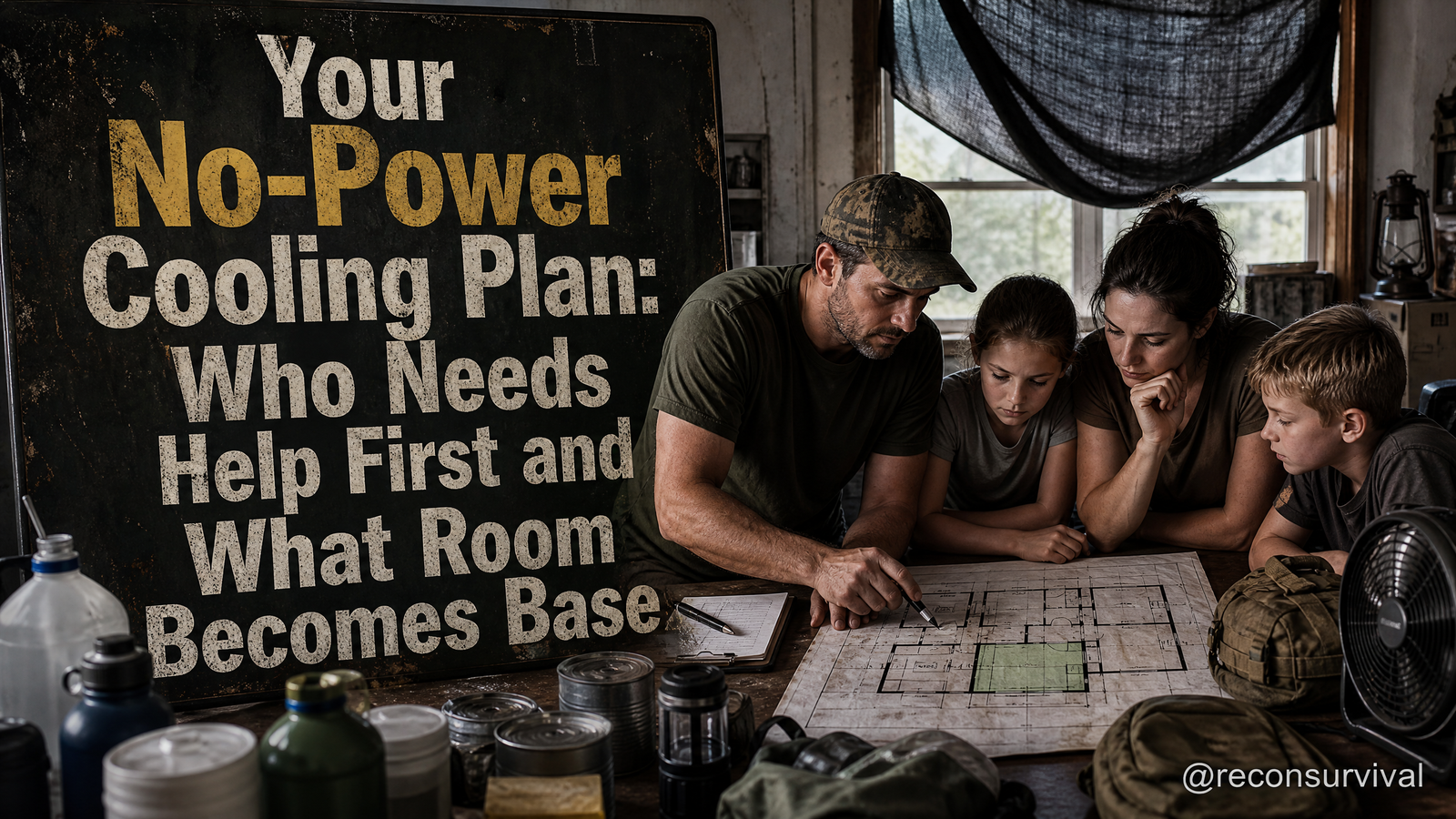
Inside the Kitchen: The First Stop for Water and Hydration
The heat rising from the floorboards is the first signal that standard comfort is gone. When the grid drops, the kitchen immediately transforms from a space of sustenance to a critical resource hub. Your readers often assume the pantry holds the answer, but in a cooling failure, the kitchen shelves must also hold the tools to manage the immediate aftermath of an outage.
As an Amazon Associate, I earn from qualifying purchases.
Stand at the kitchen counter. Look at the water jugs. Are they capped today or yesterday? If a household member is elderly or has medical needs requiring medication, those pills rely on cool storage to remain effective. Check the ice chest in the back of the kitchen. Is it packed with blocks of ice, or has the ice melted from a previous heat spell? This room is where the family gathers for food, but in a no-power event, it becomes the primary staging area for distributing water to the most vulnerable first. Move any perishables that are not needed to the refrigerator before the heat spikes. Label the current water inventory with today's date and the expiration. Do not wait for the outage to happen before checking if the current stock of electrolytes or IV fluids can be accessed. The kitchen is the entry point for managing hydration needs across the whole house.
Why Room Prioritization Matters in the Heat
Heat stress does not spread evenly across a home. The master bedroom often stays cooler because of larger mass, while the living room and second-floor rooms can become ovens. Understanding which rooms serve as the base camp is a matter of life and safety. When the air conditioning fails, the priority is to identify where the heat is lowest and keep the family there until conditions improve or power returns.
This matters for off-grid cooling because the body loses water through sweat faster when the ambient temperature exceeds skin temperature. Without a designated cool zone, everyone spreads out, increasing surface area exposure and dehydration risk. Vulnerable people, such as infants, the elderly, or those with compromised respiratory systems, cannot regulate their body temperature well enough to survive a prolonged heat spike in an unprepared space.
Water becomes the limiting factor. If the house cannot be cooled, the body uses water to sweat and cool down. Once that water is gone, the risk of heat exhaustion becomes immediate. A planned strategy for keeping the vulnerable group in a specific room, coupled with a supply of water ready in that same room, prevents panic. It allows the family to rest, communicate, and manage medications without moving to a hotter part of the house. This is practical risk management, not fear. It is about organizing the physical space so that the people who need it most are safe.
The Common Mistake of Waiting for the Worst
Many households treat the power outage as a binary event: it happens, then they react. The most common mistake people make is waiting for the temperature to climb dangerously high before they start cooling the vulnerable members of the family. By the time the thermostat shows a spike, the heat has already built up in the insulation and the walls. The temperature inside the house will often be ten degrees higher than the outside forecast, sometimes reaching dangerous levels even when the weather report says ninety degrees.
People also make the mistake of trying to run the air conditioner on a generator or by window units in every room simultaneously. This is a recipe for disaster. Generators produce carbon monoxide, which kills silently in enclosed spaces. Furthermore, running multiple units drains the fuel supply faster than the heat can be removed from the building. The family must accept that some rooms will not cool down fully and must learn to adapt to that reality. The mistake is trying to fight the physics of the home instead of working with the thermal mass of the walls and windows. The family must be ready to retreat to the single coolest room and defend it with water and shade.
The Recon Survival Practical System for Prioritization
The Recon Survival practical system is a method of assigning roles and locations before the grid fails. This system breaks the task into three distinct groups of priority. First, the vulnerable care group includes anyone who cannot regulate their body temperature effectively, infants, the elderly, and pets. Second, the sleep and rest group includes everyone else who needs to conserve energy. Third, the comms and water hub, which includes the adults managing resources.
This system works by designating one room as the "Base." The Base is the room with the most thermal mass, usually the basement or the ground-floor bedroom. The kitchen acts as the logistical support hub for the Base. In this room, water, ice, and shade are stored. The family moves to the Base immediately upon an outage. Pets go to the coolest part of the house, often near a window with a fan, or in a crate on a tiled floor. The system ensures that no one is left in a room without a water source or a way to stay cool.
Step-by-Step Implementation for the Household
To implement this system, start by walking the house and marking the coolest spots. Use a thermometer or a smart device that can report temperature to find the coldest room. This room will be the Base. Move the most vulnerable people there immediately. If the power goes out at night, this room is where the family sleeps.
Next, stage the resources. In the Base, you need water, fans, and batteries for lights and communications. Do not store these in the living room. Store them in the Base where they will be needed most. Label the water containers so everyone knows where to refill them. If you have a window fan, place it in the Base to create negative pressure and pull cool air from the open window.
Assign roles. One person manages the water delivery to the vulnerable. Another person monitors the battery levels for the communication devices. Another person checks the pets. Write these roles down and pin them to the fridge or the Base door. If someone is unable to perform these duties, assign a helper. This prevents the confusion that often occurs when stress rises. The family must know exactly who is in charge of what, and where they are supposed to be.
The Cool-Zone Readiness Checklist
Use this simple checklist to verify your cooling plan is ready for the season ahead. Walk through the house and check each item.
- Identify the coolest room as the Base.
- Check that the thermostat is set to the lowest safe temperature (usually 70 to 75 degrees).
- Verify that the water jug in the Base is full and capped.
- Ensure ice packs or frozen water jugs are in the refrigerator.
- Check that the battery backup for the thermostat works.
- Confirm that fans are plugged into a surge protector with a generator-ready outlet if applicable.
- Check that the pets have access to a tiled floor or water bowl in the Base.
- Ensure that the comms devices (walkie-talkies or radios) are charged and stored near the Base.
- Write a list of medications that require cooling and ensure they are in the Base.
- Test the carbon monoxide alarm to ensure it functions correctly.
If any of these items are missing, add them to your supply list. Do not wait for the heat to force you to buy them. The supplies are cheap and the cost of failure is too high.
The Action Timeline for This Season
The preparation for the heat season happens in stages. Today, you check the water levels and ensure the Base room is identified. This week, you check the batteries and the fans. You need to rotate the batteries every six months to ensure they hold a charge. Later this season, review the medical needs of the vulnerable people. If a prescription requires refrigeration, confirm that you have a backup cooling method ready.
When the heat index rises above ninety degrees, move the family to the Base. Do not wait for the power to go out. If the temperature is already high, close the blinds and curtains to block the sun. Open the windows on the shady side to create airflow. This is the time to practice the plan. If the power goes out, everyone knows where to go.
If the outage lasts more than four hours, begin the process of checking the water rations. If the water runs low, ration it carefully for the vulnerable people first. Adults can wait longer, but the elderly and infants need water frequently. Use the ice packs to keep the water cool. If the ice melts, use the remaining water to cool down the food and drink.
The Garden and Entry: Secondary Cooling Options
The garden and the entryway offer secondary options for cooling. If the house is too hot to stay in, the family can sit on a porch or in the shade of a tree. The garden must be watered, but the family can also use it as a space to rest if the house is uncool. Bring the water into the garden if needed, but do not leave the vulnerable in the garden without supervision.
The entryway is where the fresh air enters. If the windows are open, the breeze from the entry can help cool the house. Place a fan in the entryway to pull cool air in and push warm air out. This creates a cross-draft that lowers the temperature in the living areas. This is especially useful if the house has a high ceiling and the hot air rises.
The garden is also where the family can grow food that does not require refrigeration. Herbs, leafy greens, and fruits like apples can be stored in a cool, shaded spot in the garden. This reduces the need to use electricity to cool food. The family should plan meals that use these garden products to conserve the water and energy resources.
The Vehicle: A Mobile Cooler for the Household
The vehicle serves as a mobile cooler and a safe space if the house becomes uninhabitable due to extreme heat. The trunk can be cooled with a thermoelectric cooler or by placing water jugs inside. The family can retreat to the vehicle if the house temperature becomes dangerous. The vehicle also has a battery for devices, which can run a small fan.
If the vehicle is parked in the shade, the interior can be cooler than the house. The family can sit in the car with the windows slightly cracked and a fan running. This is a temporary measure, not a long-term solution. The vehicle must be parked safely, away from traffic and in a secure location. The family should not leave children or pets unattended in the vehicle, even for a short time. The vehicle is a tool, not a shelter.
Utility Area: The Heart of Resource Management
The utility area, including the garage and laundry room, often contains the water pump, the generator, and the fuel storage. This room must be kept clear and accessible. If the pump fails, the water supply stops. If the generator fails, the comms stop. The family must know how to restart the pump and the generator if they fail.
The laundry room can also be used to cool clothes for the vulnerable. Soak the clothes in cool water and hang them in the shade. If the family is in the house, the laundry room can serve as a second cooling zone if the utility area is cool. This room must be safe from carbon monoxide and other hazards.
Recon Survival Principle
Recon Survival is not about waiting for stress to make the decision. It is about turning weak signals into household action while the fix is still small. Prioritize cooling for vulnerable people, pets, sleep, hydration, and communications.
Do Today
Today, you check the water levels in the kitchen. You identify the coolest room as the Base. You move the vulnerable people there. You check the fans and the batteries. You write down the roles and responsibilities. You check the garden for shade. You check the vehicle for supplies. You check the utility area for the pump and the generator. You do not wait for the heat to force you to act. The family is ready for the heat season. The plan is simple, practical, and effective.
- Count stored water by person and day, then write the number where the household can see it.
- Date the oldest container and move it to the front of the rotation.
- Add extra water for pets, heat, illness, cooking, or anyone with higher needs.
- Stage the filter, clean pot, funnel, and water-moving container together.
- Write the no-power water sequence on paper: drink, cook, wash, flush, refill.
- Check every cap, container, shelf, and storage spot for leaks or heat exposure.
- Assign one person to refill, one to rotate, and one to recheck after the next alert.