A practical way to match stored foods with realistic cooking and rehydration water requirements, but most advice is either too generic, too gear-focused, or too late.
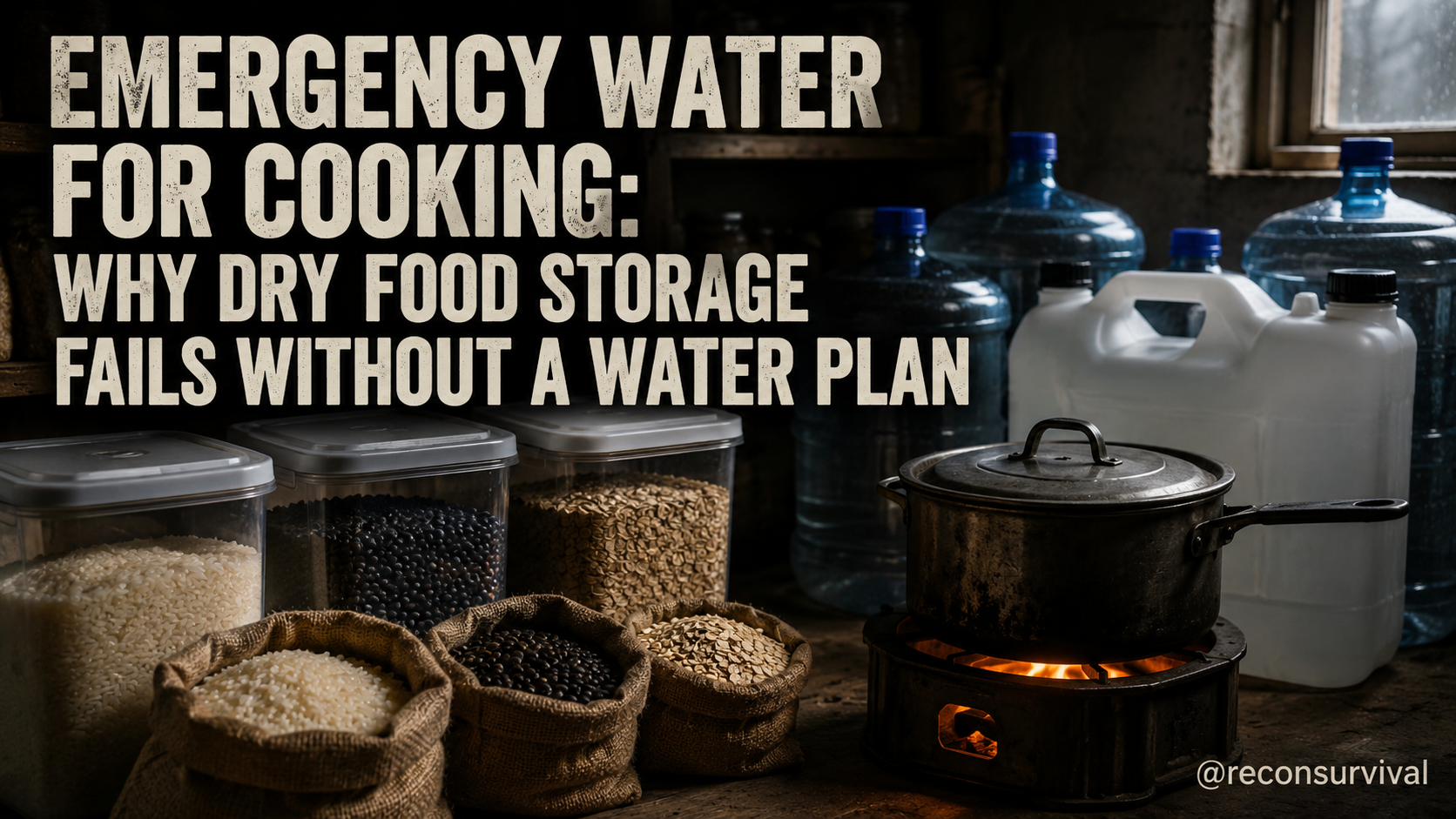
A pantry full of dry staples is not a survival solution until you know exactly how much water it takes to make those staples into meals. Many families stock rice, beans, pasta, and freeze-dried rations but face a crisis moment where the fuel fails or the power goes out. When the lights dim, you cannot rely on a simple guess of how much water is needed to boil or rehydrate food. The water cost is the variable that breaks most long-term food plans.
Why Water Before Storm Season Matters
Storm season brings the highest risk for infrastructure failure. When summer storms, heat, and flooding coincide, municipal water systems often become unreliable. You do not need to fear the worst-case scenario, but you must respect the reality that water supply chains can be interrupted. Early in the year, solving water storage is a strategic move to protect your food supply against these inevitable weather challenges. Without enough clean water, even a perfect stockpile of canned goods becomes difficult to prepare and unsafe to eat.
The goal here is to match stored foods with realistic cooking and rehydration water requirements before stress makes the decision harder. You want to plan in a calm state where you can measure and count accurately. This preparation allows you to focus on meal efficiency rather than struggling with cold meals and running water. It is a matter of aligning your inventory with your actual capacity to produce food without grid electricity or running water.
The Most Common Mistake With Pantry Planning
The most common mistake people make is assuming that dry food equals a meal. Families buy bulk bags of rice and oats, thinking they have a guaranteed source of calories. They forget the water cost. In a disaster scenario, boiling a liter of water to rehydrate a packet of freeze-dried dinner requires significant fuel and time. If you are using a manual pot on a limited fuel supply, the water volume dictates how many people you can feed and how often you can prepare a meal.
Another frequent error involves ignoring the difference between drinking water and cooking water. People often assume stored water is only for drinking, yet without a specific allocation for cooking, they cannot prepare safe hot meals or wash dishes. Hygiene requires water to wash produce or clean surfaces, even if you are eating shelf-stable items. When the planning phase is skipped, the household ends up with a situation where they have food that cannot be safely prepared due to a lack of clean water for cooking. This mismatch leads to unnecessary waste of both food and water resources.
The Recon Survival Water-Matching System
The Recon Survival practical system for matching stored foods involves a straightforward calculation of water volume per person per meal. You must treat cooking water as a non-negotiable part of your inventory count. This approach ensures that every item in your pantry has a realistic path to becoming a meal. The system connects your dry staples directly to the water containers you store. By doing this, you eliminate the guesswork that often leads to poor decision-making under pressure.
This method applies to rehydration meals, stews, soups, and boiled grains. Each category of food has a specific water requirement that varies based on the cooking method. You will learn to distinguish between the water needed for rehydration, which is often included in the package instructions, and the additional water needed for boiling grains or preparing hot beverages. By categorizing your water needs, you can build a complete picture of your kitchen capabilities.
Step-by-Step Household Implementation
Follow these clear steps to implement the water-matching system in your home.
- List every dry food item in your current pantry or storage area. Include items like rice, beans, pasta, oats, and freeze-dried meals.
- Record the maximum cooking yield and water requirement for each item. Consult package inserts and local emergency management guidance for standard rehydration ratios.
- Calculate the total water needed for a standard family meal based on your household size.
- Compare this total against your current stored water inventory. Identify gaps where water is missing to support your food plan.
- Adjust your water storage levels to match the calculated needs of your food stockpile.
- Review your fuel supply to ensure you have enough to heat the water required by your food plan.
By following these steps, you move from vague planning to a structured inventory management system. You can now see exactly what your pantry can support without relying on external utilities.
Connecting Supplies to Meals and Storage Conditions
Connecting your supplies to actual meals requires a clear understanding of storage conditions. Store your water containers in a cool, dry location to prevent evaporation and maintain water quality. Keep your dry food items in sealed, moisture-proof containers to prevent spoilage and pest infestation.
Review the connection between your fuel source and your cooking water needs. If you use propane or kerosene, ensure you have enough fuel to boil the specific amount of water your food plan requires. If you plan to use wood stoves, verify that your stove can handle the volume of boiling water safely. Always adhere to manufacturer instructions for your cooking equipment and local fire codes for ventilation. This attention to detail ensures that your system remains safe and functional.
Rotation is also critical. As you consume items from your food storage, replace them with new supplies and update your water count accordingly. This process maintains a current inventory that reflects your actual cooking needs. It prevents the buildup of old stock that may eventually expire or lose its quality. By rotating both food and water, you ensure that your pantry remains ready for the next emergency event.
Pantry and Water Checklist for Waste Reduction
Use this checklist to audit your supplies and reduce waste.
- Does every dry food item have a recorded water requirement?
- Is the stored water quantity sufficient to cook all planned meals?
- Are water containers stored away from direct sunlight and heat sources?
- Is fuel available to boil the required water volume?
- Are there manual tools, such as a can opener, available if the power is out?
- Can you wash produce or cook with available water?
- Do you have a plan to replace expired or damaged food items?
Checking these items regularly helps you maintain a functional food system. It reduces the risk of wasting food that cannot be cooked or water that goes unused. This routine audit keeps your preparations practical and effective.
Recon Survival Principle
Recon Survival Principle: Food is Fuel, Water is the Enabler
In a high-stress situation, the ability to produce food depends entirely on your water capacity. Without a water plan, your food storage is merely a collection of raw ingredients. A well-matched system turns those ingredients into nourishing meals. Focus on the relationship between your food stock and your water storage. Do not separate them in your planning process. Treat water as a critical resource that enables your food survival strategy.
Do Today
Perform these concrete actions to update your readiness plan today.
- Take your water containers and your dry food items out of storage.
- Write down the specific water volume required to cook each food item on a list.
- Calculate the total water needed for a typical family meal for each category of food.
- Measure your current water inventory and subtract the required cooking volume.
- Identify the specific gap in your water supply based on your food plan.
- Plan to acquire or store additional water to fill the identified gap.
- Update your inventory log with the new water and food counts to reflect your current reality.
By completing these actions, you ensure that your pantry is truly ready for the challenges ahead. You have aligned your resources with your needs. This alignment provides the security needed to handle unexpected interruptions in your daily life.