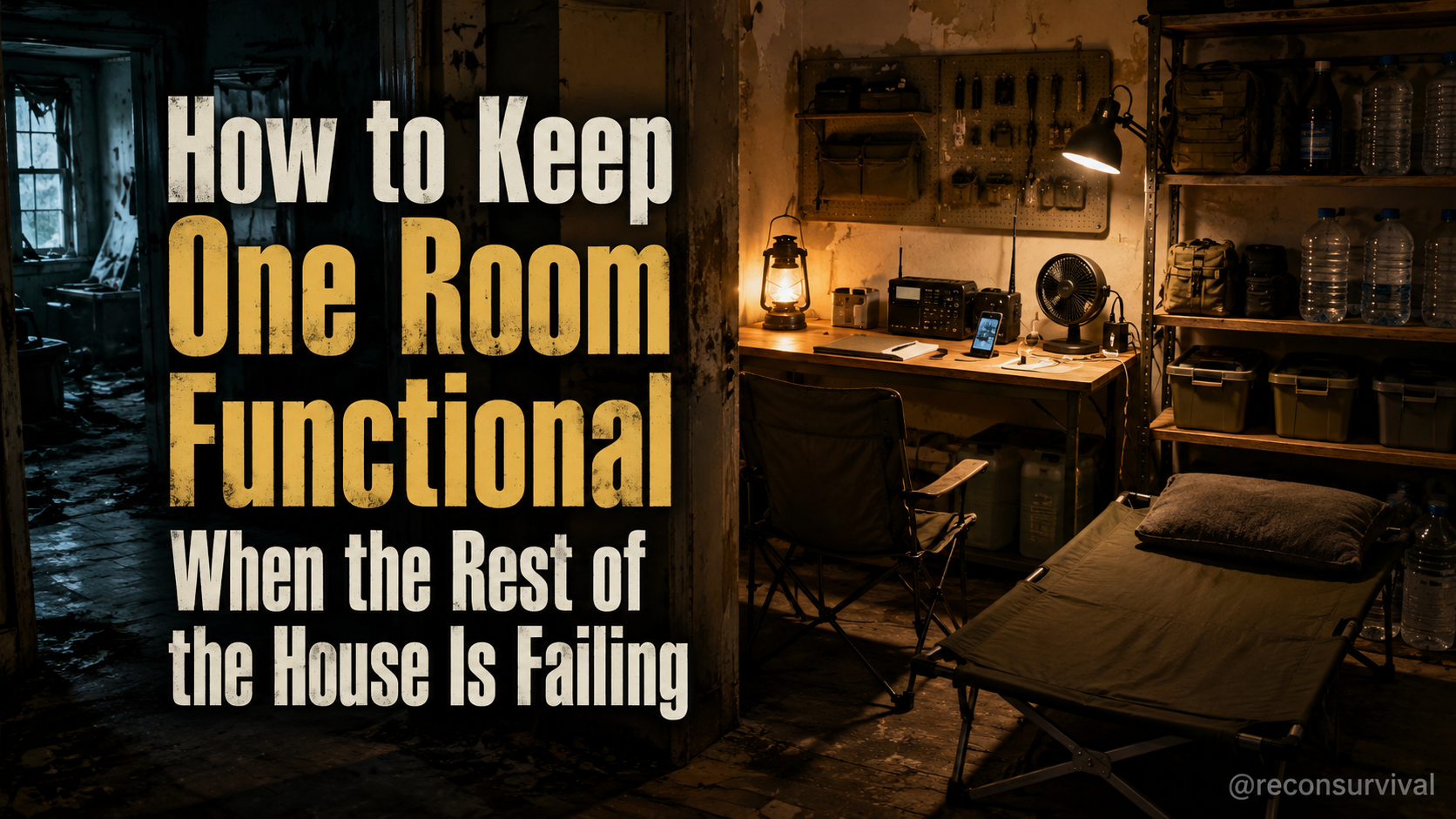
A practical way to set up a single household control room for cooling, heat, charging, light, information, and sleep, but most advice is either too generic, too gear-focused, or too late.
As an Amazon Associate, I earn from qualifying purchases.
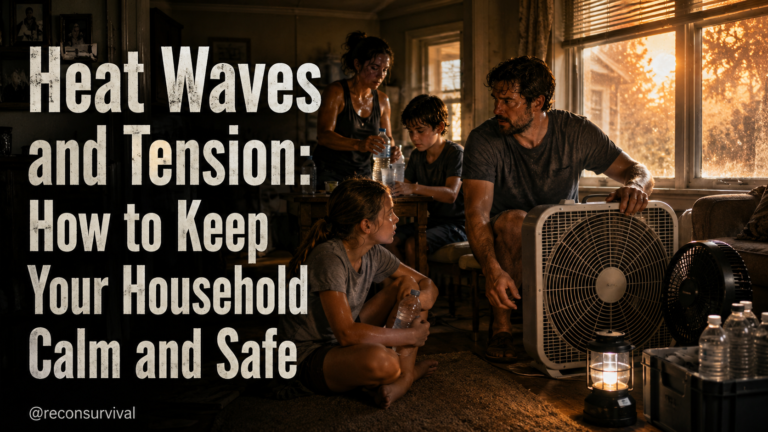
When the rest of your home loses power, cooling stops, lights go out, and the network disconnects, the immediate instinct is often panic or a desperate search for a generator. In reality, the solution is simpler and more robust: designating one room in your home as a functional control center that can operate independently of the grid. May is a transitional season where households face increasing heat and storms, making this a critical time to establish routines that prioritize safety over comfort. This article solves the specific problem of setting up a single household control room for cooling, heat, charging, light, information, and sleep without relying on failing infrastructure.
Why a Single Room Matters for Family Preparedness
Designating one room as the "control room" shifts the focus from saving the home's appliances to saving the household unit itself. This room becomes the anchor for family communication, information gathering, physical safety, and rest. When the rest of the house is failing, this room remains the command center where decisions are made, children are supervised, and adults can rest without the distraction of dark corridors or silent alarms. It matters because it prevents the chaotic decision-making that occurs when a family is scattered across a dark, cold, or stifling house, ensuring that critical tasks like water rationing, first aid, and mental health support happen in a controlled environment.
The Most Common Mistake in Off-Grid Planning
The most common mistake people make when discussing backup power and off-grid living is trying to power every appliance as if nothing happened. There is a belief that if you have a generator or solar array, you should run the refrigerator, the HVAC system, the pool pump, the washer, and every electronic device simultaneously. This approach ignores the reality of fuel limits, battery degradation, and the psychological stress of maintaining a false sense of normalcy.
Another frequent error is treating the backup setup as a complex project that requires a large budget or specialized equipment before it can be effective. Readers often wait until a disaster strikes to start building their system, assuming that if they buy enough gear, they will be ready. This is a dangerous form of procrastination. The system must be practical, legal, and built on prioritizing essential life functions rather than convenience. By focusing on one room, you reduce the complexity of the task, making the system viable for a normal household that cannot afford industrial-grade power loads.
The Recon Survival Practical System for a Control Room
The Recon Survival practical system for a control room focuses on six essential functions: cooling or heating, charging, light, information, sleep, and safety. The system is designed to be modular, meaning you start with what you can afford and add more as capacity allows.
The core philosophy is that the control room must be self-contained regarding power and air quality. You do not need to cool the whole house; you need to keep one space safe from heat or cold. You do not need to charge every device; you need to charge communication tools and essential medical devices. The system relies on a hierarchy of needs, ensuring that life safety and information flow take precedence over entertainment or non-essential electronics.
Step-by-Step Setup for a Normal Household
Setting up this room requires specific household checks and tool placements rather than vague preparation. Follow these steps to establish the room's functionality.
First, designate the location. Ideally, this is a bedroom or a spare room that has access to a window for air intake and a source of water. Ensure the room is insulated from external noise if possible, or accept that noise management becomes part of the survival plan.
Second, address thermal regulation. Identify the most efficient way to cool or heat the specific square footage of this room. This might be a portable electric heater with a thermostat, a window unit, or simply a heavy curtain and thermal blanket if the HVAC fails. Do not rely on a furnace that requires a filter change; use a device that can run directly on a battery or generator without drawing significant current to a central unit.
Third, establish lighting and charging. Place a rechargeable battery-powered lantern or LED strip in a fixed location. Designate a specific shelf or rack for charging devices, ensuring that the cables are labeled and organized to prevent tripping hazards. Limit the number of devices charging at once to prevent overloading small inverter systems.
Fourth, secure information sources. Set up a radio and a charging station for your primary communication devices. Keep physical copies of local emergency guidance and maps in a waterproof folder within reach. These should be accessible without needing to navigate the rest of the dark house.
Fifth, arrange for sleep and sanitation. Ensure the room has a clean mattress, sleeping bag, and access to water bottles. If the bathroom in this room is shared, establish a protocol for maintaining water hygiene. If the room has a toilet, ensure it has a supply of water for flushing or has a backup method like a portable toilet or deep bucket system ready.
Sixth, implement safety limits. Install carbon monoxide detectors and smoke alarms that are battery-operated or hardwired to a backup power source. Ensure that any fuel-burning devices, like propane stoves or heaters, are never used in this room without active ventilation. Check local codes regarding indoor heating and fuel storage to ensure compliance.
Defining the Minimum Viable System
Before discussing upgrades, define the minimum viable system (MVS) that keeps the room functional. The MVS consists of a single heat source or cool source, one rechargeable light source, one primary communication radio, and a secure sleeping surface.
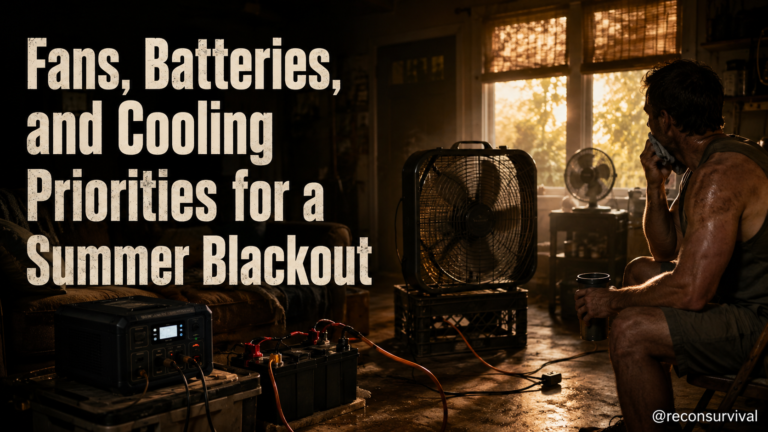
This system does not require a full inverter setup or a large bank of batteries immediately. It requires the identification of existing household assets that can be repurposed. For example, a small portable AC unit rated for 500 watts is often sufficient to cool a small bedroom if the rest of the house is abandoned. A single 50Ah deep-cycle battery can run a small inverter to charge phones and power a fan. The MVS prioritizes the ability to survive the night and communicate with outside help over the ability to watch television or wash dishes.
Safety Limits and Realistic Failure Points
No system is immune to failure, and understanding the failure points is part of the safety plan. Battery banks degrade over time and have a limited cycle life. Inverter systems can overheat if they attempt to draw too much power from a depleted battery bank, leading to shut-downs that must be managed manually.
Fuel for generators is a volatile resource; it can degrade if stored too long and poses a fire hazard if not kept in approved containers away from living spaces. Propane lines can freeze in extreme cold, and batteries can leak if dropped or exposed to moisture. Carbon monoxide detectors can fail silently, so testing them weekly is mandatory.
Realistic failure points include the loss of the primary power source, the freezing of water lines that supply the room, and the failure of electronic devices. Plan for these scenarios by having manual backups for lighting (candles, fire safety kits), manual communication methods (whistles, signal mirrors, paper maps), and passive heat sources (sleeping bags, thermal blankets) that do not require power. Always follow manufacturer instructions for the use and storage of fuel and batteries. Keep a fire extinguisher rated for electrical fires nearby.
Recon Survival Principle
Recon Survival Principle: Power is for Life Support, Not Convenience
The fundamental principle of off-grid room planning is that backup power is about priorities, not powering every appliance like nothing happened. When you lose the grid, the goal is not to restore the comfort of a normal life but to sustain the biological and psychological functions necessary to stay safe until help arrives or power is restored. Every watt of power used should be justified by a specific survival need. Running a television is a luxury; running a medical device or a communication radio is a necessity. By adhering to this principle, you make rational decisions under stress rather than emotional ones. You avoid the trap of trying to maintain a normal lifestyle that your resources cannot support, which leads to resource depletion and increased vulnerability.
Do Today
Complete the following concrete actions to begin establishing your household control room today.
- Select one room in your house to serve as the control room and mark it on your home floor plan.
- Inspect the windows in that room for sealing and insulation, and ensure they can open for ventilation.
- Check your carbon monoxide detector in that room to ensure it is functional and replace the batteries if needed.
- Identify one portable device capable of heating or cooling the room that can run on battery or generator power.
- Gather three fully charged rechargeable battery packs and place them on a designated shelf in the room.
- Organize a small kit in the room containing physical maps, a flashlight, a radio, and basic first aid supplies.
- Write down a simple list of items you cannot live without and rank them by priority for your backup system.