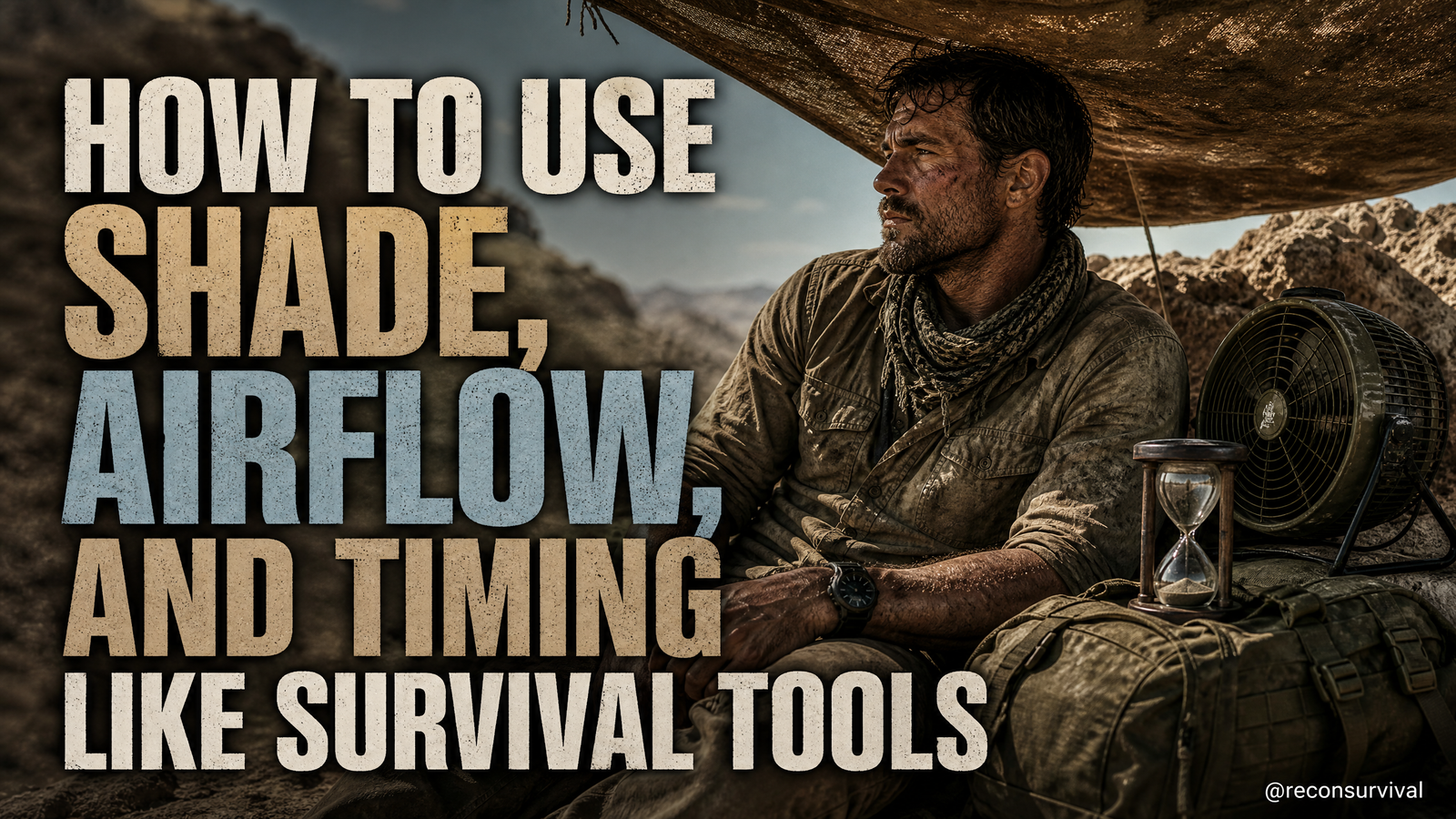
You open the bedroom closet to pull a clean sheet of fabric over a stack of linens, but the heat from the afternoon sun streaming through the window has already warmed the dry room air. This simple interaction highlights the real-world problem: when power fails, your ability to stay cool depends on managing heat load before it becomes an emergency. Today, we focus on how to use shade, airflow, and timing like survival tools. The goal is not to build a bunker or store gallons of water for a decade-long event, but to reduce the thermal burden on your home so a minor outage does not turn into a household crisis.
As an Amazon Associate, I earn from qualifying purchases.
When the grid goes down, mechanical cooling stops. The heat that builds up in your walls, floors, and appliances must be managed manually. Without active air conditioning, a house acts like an oven. The air becomes stagnant, humidity rises, and the human body struggles to regulate its own temperature. For off-grid cooling and water, this physical reality means that your environment becomes hostile quickly if you do not intervene. You do not need to fear the worst-case scenarios of a grid collapse; you simply need to understand that without shade and movement, the ambient temperature inside your home will climb until safety becomes compromised. This is why these habits matter for every household, regardless of their equipment level.
The Most Common Mistake
The most common mistake people make with this topic is waiting until the outage starts to practice low-tech cooling habits that reduce heat load before and during outages. Families often assume that because their home is built for modern living, they can simply rely on backup generators or battery inverters to run their AC units. This approach has two failure points. First, generators can run out of fuel, and inverters can fail under heavy electrical load. Second, even if power returns, the heat trapped in the structure requires time to dissipate. If you have not already reduced the heat load by using shade and ventilation, the return to normalcy is slower. People also tend to focus on gear buying rather than the physics of their building envelope. They assume a fan is enough, ignoring how still, hot air circulates. This delay in preparation makes the decision process harder when stress is present.
Practical System: Inspecting the House Structure
To practice low-tech cooling habits that reduce heat load before and during outages, you must inspect your home as a series of thermal zones. Think of your house not as a single room, but as a collection of spaces that trap heat. Start by identifying which rooms face the midday sun. These are the priority areas. Next, locate the windows that let in direct light but have no overhang or shading device. Finally, map the airflow paths from your street-facing side to your deepest interior rooms. This inspection creates a physical plan that reduces the heat load on your systems. By knowing exactly where the sun hits and where the air moves, you can stage your response before a power issue occurs.
The Kitchen and Dining Zone
In the kitchen and dining zone, you manage heat through the timing of food preparation and storage. When the sun is at its peak, the kitchen is often the warmest part of the house because appliances generate heat. During a calm period, you should move heavy cookware and ovens into the shade or away from direct sunlight through the window. If your pantry has glass-front cabinets, cover them with reflective tape or a removable shade cloth when the sun is strongest. Do not store perishable items near heat-generating electronics like microwaves or coffee makers. Instead, organize your pantry shelves so that the coldest items are away from the door, where outside air enters. This simple rearrangement prevents warm air from pooling around food storage. Keep a printed list of your thermal zones near the refrigerator door so you remember to check the ambient temperature during hot days.
The Living Room and Entryway
The living room and entryway are critical for managing airflow when the house is calm. These areas usually have large windows and doors that connect to the outdoors. Check your exterior doors to ensure they seal tightly against drafts but can be propped open for cross-ventilation if needed. Inside, remove furniture that blocks the natural path of cool air from windows to vents. If you have blinds, set them to reflect light during the day and open them at night to let cooler air in. Label your curtains or shades with a date and location tag to remind yourself to close them before the midday heat arrives. In the entryway, place a mat that allows air to pass underfoot if you are wearing sandals or boots. This detail helps prevent hot pavement heat from entering the room. Do not clutter these spaces with rugs that block airflow; instead, keep the floor clear to allow the natural breeze to move through the house.
The Bedroom and Sleeping Quarters
For the bedroom and sleeping quarters, you must practice low-tech cooling habits that reduce heat load before and during outages. These rooms require the lowest temperature to maintain sleep quality. Inspect your bedding to ensure it allows for air circulation around your body. Avoid plastic sheets or synthetic linens that trap heat. Instead, use natural fibers like cotton or linen that breathe. Check your closet for items that block airflow to the room. If your bed is pushed against a cold window, ensure there is a small gap for air to circulate. Place a fan on the floor pointing toward the head of the bed, not directly at your face, to create a circulation pattern. This setup reduces the feeling of stuffiness without lowering the thermostat on a unit that might not be available. Keep a fan with a fresh battery charger in a drawer nearby.
The Garage and Utility Spaces
The garage and utility spaces often act as heat sinks for the entire house. Heat from the car, water heater, or laundry machines radiates into the adjacent living spaces. Inspect the garage door for cracks or gaps that let hot air in. If possible, stage a cooling fan near the garage door opening to push cool air from the house into the garage at night and pull it back in the morning. Do not leave the garage door open during the day in the summer, but check your ventilation fans to ensure they are working. Label your utility lines to know where the water heater is located, as hot water pipes can heat the surrounding air. Rotate your fuel storage so that tanks are in the shade, not under direct sunlight. This practice keeps the fuel temperature down and ensures you have a reserve when you need it.
Recon Survival Principle: Reduce Heat Load Before Stress
The core principle for using shade, airflow, and timing is that you must reduce heat load before stress makes the decisions harder. This means performing actions like closing blinds, moving fans, or repositioning furniture when the weather is calm. Waiting for a storm or an outage to act is reactive and dangerous. By reducing the heat load in advance, you lower the total energy your home absorbs. This principle applies to every room you manage. It is not about panic; it is about maintaining a thermal margin so that if power fails, your body and your home have a buffer. Practice this habit every day, not just during emergencies.
Measuring Progress
To measure whether this skill is actually improving, use a simple thermal check routine. On a hot day, measure the air temperature at three key locations: your bedroom, your kitchen, and your garage. Record these numbers in a notebook. Compare them to the outside temperature. If your indoor temperatures rise significantly slower than the outside temperature, your shading and ventilation plan is working. Next, test your airflow by holding your hand near window openings and checking for a breeze. If you feel consistent movement, your layout is effective. Finally, track how long it takes for your home to cool down at night. If this time decreases week by week, your practice is paying off. Write these results down to see the trend. Do not rely on memory; use a printed log or a digital app to track the data. This proof of work keeps you honest about your progress.
Do Today
- Count stored water by person and day, then write the number where the household can see it.
- Date the oldest container and move it to the front of the rotation.
- Add extra water for pets, heat, illness, cooking, or anyone with higher needs.
- Stage the filter, clean pot, funnel, and water-moving container together.
- Write the no-power water sequence on paper: drink, cook, wash, flush, refill.
- Check every cap, container, shelf, and storage spot for leaks or heat exposure.
- Assign one person to refill, one to rotate, and one to recheck after the next alert.
Do Today
Start your day by performing one small readiness action to practice low-tech cooling habits that reduce heat load before and during outages. Follow these concrete steps immediately:
- Walk through your home and identify the single window that receives the most direct sunlight between 12:00 PM and 2:00 PM.
- Move a large piece of furniture, such as a bookshelf or sofa, away from that window to clear a path for airflow.
- Close all blinds or shades in the room facing the sun, and apply a strip of reflective tape to the glass if you do not have shades.
- Locate the fan you own and ensure it is plugged in near the open window of that room.
- Place a sign or a sticky note on the switch that reminds you to open the window at 8:00 PM and close it at 6:00 AM.
Complete this checklist before you start your morning routine. This act of inspection and adjustment reduces the thermal burden on your home. Do not wait for a forecast to issue a warning. Treat every hot day as a rehearsal for an outage. By managing the heat load now, you ensure that when the grid goes down, your home remains cooler and safer. Your family will feel the difference in air quality and comfort. This daily discipline builds resilience without needing expensive equipment. You are ready for whatever comes next.