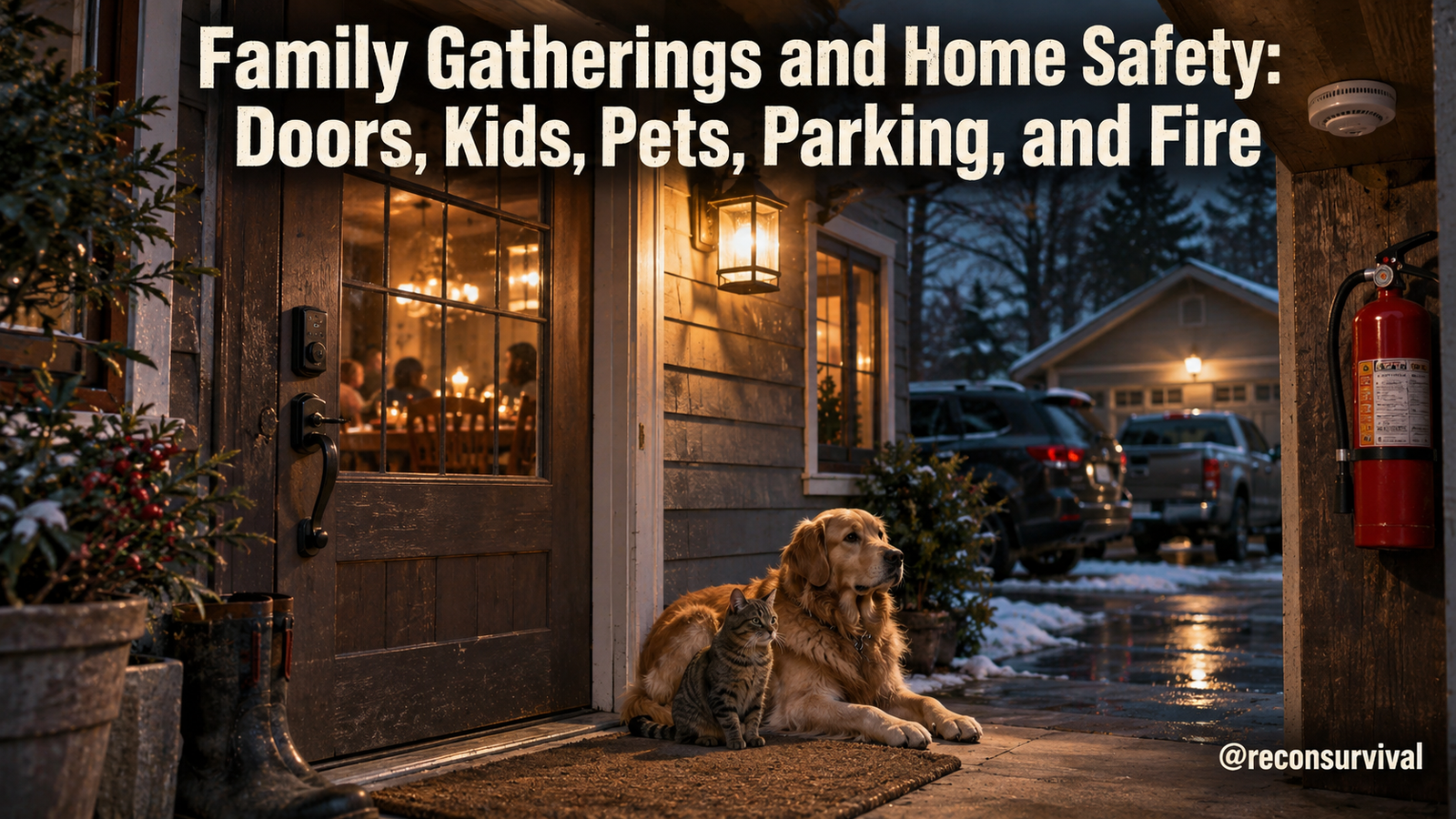
The most visible point of failure during a family gathering is the front door. It becomes the busiest spot where you are juggling a hot pot, a barking dog, and a crying child, yet it remains the primary barrier between a secure interior and the outside world. The practical goal is to secure entry points so you can answer the door without leaving the main house exposed to a stranger or an unsecured path.
As an Amazon Associate, I earn from qualifying purchases.
Entry and Door Controls
The first step is to verify that all entry points are physically secure before the crowd arrives. Check the deadbolt on the main entry and any side or back doors to ensure they move smoothly and lock firmly without a key. Ensure any peepholes are not blocked by holiday decorations, coats, or stored items, providing a clear view of visitors before you touch the latch. For homes with keypad locks, verify that the batteries are current and that access codes are known only to household adults. Avoid leaving spare keys in hidden outdoor locations like under doormats or in fake rocks.
The common mistake is waiting until a delivery arrives or a car pulls up to check these locks. By then, the routine is already broken. Instead, make a point to walk to each exterior door today, lock it, and test the mechanism. Push on the door to confirm it does not open when the handle is engaged. If a door swings open, or if the latch bolt does not seat fully, the frame or strike plate may need adjustment. Tighten any loose hinge screws, and if the screws spin in the wood, use longer screws or wood dowels to anchor them securely to the house frame.
Living Spaces and Pet Safety
Inside the home, the risk shifts to visibility and containment. With strangers, children, and pets in the same room, a pet requiring specific medication or a child playing with small objects can become a distraction or a hazard. A pet that needs insulin or allergy medication may require a calm, quiet spot where you can access the supply quickly.
Take a moment to photograph the pet's current medication label and save it offline on your phone or cloud storage. This ensures you have the dosage, frequency, and veterinary contact information if the pet needs emergency care while you are hosting. Keep the medication in a secure, labeled container away from food and children. If the pet wears a collar, ensure it has an ID tag with your current phone number.
Children need clear boundaries when the house is crowded. Establish a "safe zone" where they can play without being in the kitchen or near heating equipment. Move sharp objects, breakable ornaments, and small toys that could pose a choking hazard out of reach. If you have a fireplace, use a sturdy screen to block access. The mechanism here is simple: reduce the number of variables a child or pet must navigate. A clear path from the entry to the safe zone prevents trips and falls. If a child wanders into a restricted area, redirect them to the safe zone rather than chasing them, keeping the kitchen clear for cooking and the living room open for guests.
Kitchen and Cooking Systems
The kitchen is where the most heat, flame, and sharp tools concentrate. When cooking for a crowd, the likelihood of a burn or fire increases if attention is divided. The most common mistake is assuming a single person can manage the stove, the oven, and the table simultaneously.
Before guests arrive, inspect your smoke alarms and carbon monoxide detectors. These devices should be mounted on the wall near sleeping areas and in the kitchen. They require fresh batteries to function correctly and detect exhaust from a gas stove or heater. Do not ignore a low battery signal; follow the manufacturer's instructions to replace batteries immediately if the device indicates a need.
Test your fire extinguisher to ensure it is mounted in an accessible location, not buried behind a cabinet. Check the pressure gauge and verify that the needle is in the green zone. If the gauge is in the red, the extinguisher is not ready for use and should be serviced or replaced. When cooking, use a timer for every item. Set a distinct timer for each dish so you do not have to remember the roast's cooking time. Keep a lid nearby for the stove. If a grease fire starts, turn off the heat and slide the lid over the pan to smother the flames. Do not throw water on it. Keep the lid on until the pan cools.
Ventilation is critical. If you are using a gas range or a wood-burning stove, ensure the vent is clear of snow or debris. A blocked vent can cause carbon monoxide to build up in the house. If you smell gas, open a window slightly, turn off the appliance, and leave the house. Contact a qualified technician to inspect the heating components and wiring rather than attempting internal repairs yourself.
Driveway and Parking
Vehicles outside the house present a unique risk when the family is crowded. A dark driveway can hide obstacles, and a guest car may block an emergency exit. The first step is to clear a path for a fire truck or ambulance. Ensure the driveway is wide enough and free of snow and ice.
Check your outdoor lighting. A motion-sensor light on the side of the house helps you see the driveway without fumbling for a switch in the dark. If the light flickers or fails to turn on, replace the bulb or the sensor battery. A well-lit driveway reduces the chance of a guest tripping over a car door or a child running into a parked vehicle.
When guests park, ask them to leave enough space for a fire hose to lay across the driveway if needed. Do not block the hydrant with a snowplow or a pile of firewood. If your home has a gas meter, ensure the area around it is clear. A fire department crew needs to access the meter quickly to shut off the gas.
Recon Survival Principle
The goal is not to buy new locks, cameras, or alarms, but to manage the risk when many people, vehicles, children, pets, and cooking systems overlap. Most advice is too generic or too late because it waits for a crisis to happen. The practical system is to inspect and adjust before the crowd arrives.
Prioritize habits, visibility, communication, and prevention. A clear path, a working alarm, and a known medication label are better than a new gadget that sits on a shelf. If you are unsure about a system, follow the manufacturer's instructions. If you need local guidance, contact your fire department or emergency management office. Keep the advice practical, legal, and defensive, focusing on prevention and de-escalation.
Do Today
Finish the evening with a three-step check to ensure your household is ready for the next holiday.
- Entry: Lock the main door and test the deadbolt. Ensure hinges are tight and no gaps wider than a credit card exist around the frame.
- Pet: Photograph the pet's medication label and save it offline.
- Kitchen: Verify carbon monoxide alarms are mounted correctly and check the fire extinguisher pressure gauge is in the green zone.
If you can complete these three steps, your household is ready. If not, fix the issue today. Do not wait for a guest to arrive to make the decision. Manage household risk when many people, vehicles, children, pets, and cooking systems overlap before stress makes the decisions harder. A calm, realistic, value-first approach keeps your family safe without fear or gear clutter.