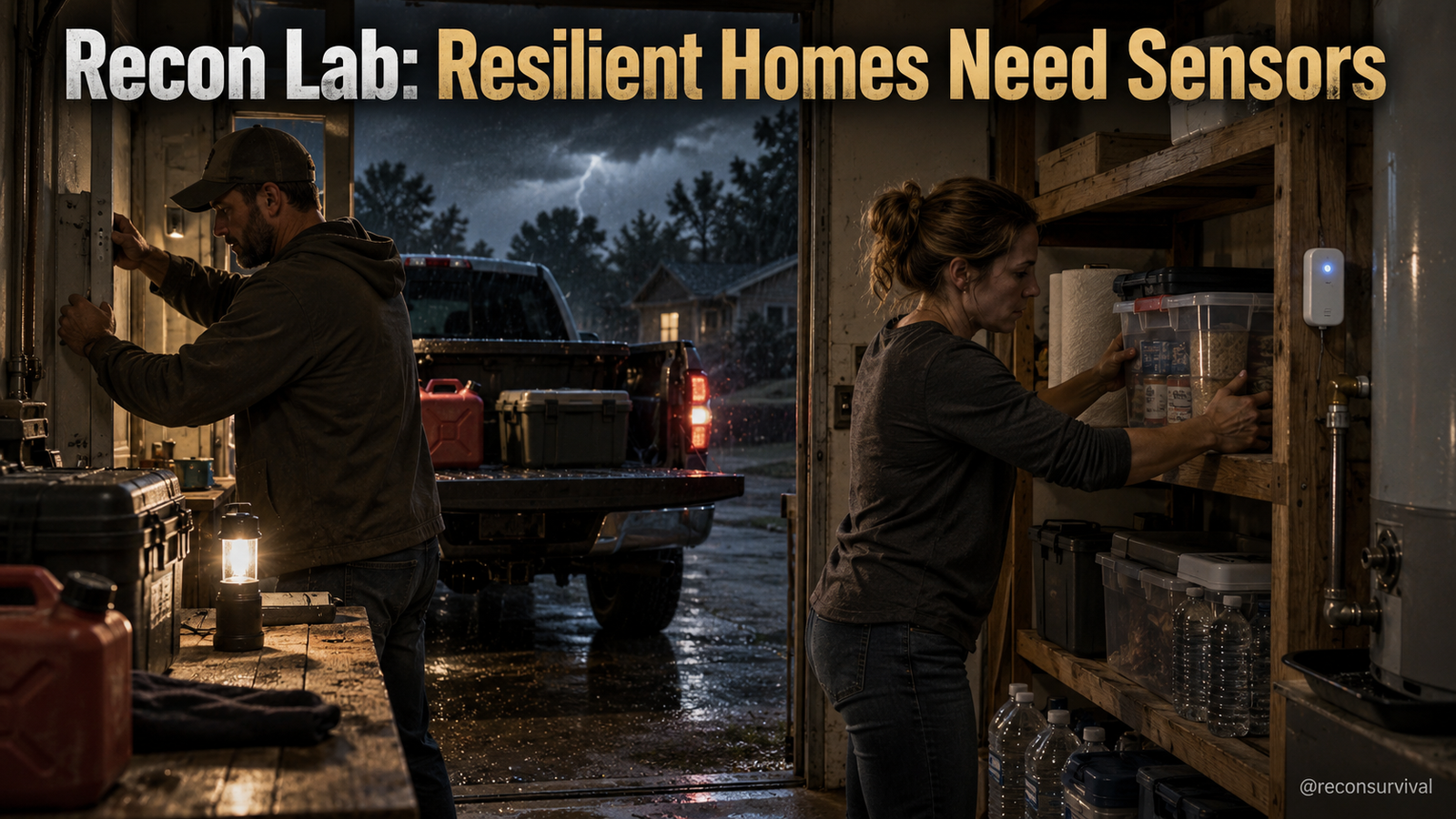
If this happened tonight, would your household already know how to handle it? It is early October. The air is turning cool, and the first real cold snap is coming. Most preparedness advice focuses on the pantry: canned food, water, and blankets. That list is necessary, but it is reactive. It answers what you need after a power fails or a pipe bursts. It does not answer what you need to know before the problem stops your night. A resilient home does not just hold supplies; it holds information. <p class="rs-affiliate-disclosure"><em>As an Amazon Associate, I earn from qualifying purchases.</em></p>
Why Sensors Matter for Fire Safety and Heating
When heating systems kick on for the first time, they introduce risks that are invisible until something fails. Carbon monoxide leaks, overheating furnaces, or electrical faults do not always announce themselves with a loud crash. They often start with a slow change in air quality or a specific sound that gets ignored in the background hum of daily life. Fire safety and heating prep rely on knowing something is wrong before it becomes a catastrophe. A smoke alarm that chirps once a minute warns of a dying battery before the unit fails entirely. A temperature sensor that reads an unexpected drop in the basement can signal a heating failure or a frozen pipe risk before walls crack. A leak sensor placed near the water heater or washing machine catches a small drip that would otherwise swell into a flood while you are sleeping. Without these sensors, you are waiting for a smell or a sound that is usually too faint to notice until it is too late. ### The Most Common Mistake
The biggest mistake households make is treating sensor checks as a "set it and forget it" task. People buy a smoke alarm, plug in a battery monitor, or install a leak sensor, then assume the device is now active and watching. The reality is that sensors have a limited life. Batteries drain. Sensors can accumulate dust that blocks detection. Electronic monitoring units can lose connection or develop dead zones in the house. If you rely on a generic reminder or a vague sense of security, you will likely find out too late that the battery was dead for months or the sensor is lying. Most advice is either too generic ("check your alarms") or too gear-focused, promising a smart home hub that solves everything without a routine. The missing piece is a simple, human-led routine to verify the system works. ### The Recon Survival Practical System
1. Test the smoke alarm and record the result. Locate every smoke alarm in the house. Press and hold the "test" button on each unit. Listen for the sound the manufacturer intends. Follow the specific instructions found in the device's manual or on the unit label. If the alarm does not sound, or if you have reason to believe it is not functioning, treat the unit as needing service. Consult the manufacturer's guidance for the next steps, which may involve battery replacement or unit replacement. Write the date and the result on a paper card and tape it to the wall next to the alarm. This card is your evidence. ## 2. Inspect temperature and leak sensors for active status. Find your temperature sensors (often in the thermostat or separate monitoring devices) and leak sensors (small devices placed on the floor near water heaters, washing machines, or under sinks). Check the indicator lights or the display as directed by the manufacturer. Does the light show an "active" symbol? Does the display show current data? If a leak sensor is on the floor, ensure the sensor pads are clean and dry. A sensor that is physically present but not transmitting data is useless. Follow the manufacturer's instructions if you notice low battery indicators or connectivity issues. If you see a battery icon flashing, replace the battery according to the device's manual. Test the unit to confirm it reports a status update to your monitoring screen or base station. ## 3. Verify battery monitors and simple monitoring routines. Check any dedicated battery monitor systems in your home. These often track the voltage of backup power systems. Ensure the display shows a voltage level within the normal range specified on the device label. If the reading is low, consult the manual to determine if the battery needs charging or replacement. For simple monitoring routines, look at where you keep the "check" list. If you do not have one, create a small notebook or a dedicated page in a planner. This is where you log the results of your sensor checks. Do this once a week for a month, or at least once before the first cold snap. The routine is the key. You are not looking for a complex dashboard; you are looking for a confirmation that the device is alive and reporting. ### Future-Facing Resilience: The Lab Concept
There is a concept of a "Resilience Lab" where sensors, notebooks, and off-grid prototypes sit on a desk alongside maps and clean practical tech. This is not about building a high-tech fortress. It is about creating a dedicated space where you can track the data your home generates. In a future-facing view, your home's sensors become a network of data points. Instead of just reacting to a fire or a flood, you can see a temperature trend or a pressure change that precedes the event. This allows you to decide to stay, leave early, or wait based on information rather than fear. ### Practical Today vs. Experimental
What you can do today is physical verification. It is the test of the smoke alarm, the swap of the battery, the visual check of the leak sensor. These actions are practical, legal, and defensive. They require no internet connection, no subscription, and no new hardware purchase if your current gear is functional. What is experimental or future-looking is the integration of these sensors into a centralized digital dashboard that predicts issues before they happen. While the idea of a "Resilience Lab" is a powerful vision, the immediate value lies in the manual, physical check of the devices you already own. Do not wait for a perfect smart home system to start. The manual check is the foundation upon which any future automation must stand. ### Recon Survival Takeaway
Resilience is not just about what you have in a box; it is about what you know is working. The most effective safety measure is a sensor that you have personally verified is active. If you can walk through your home and confirm that your alarms, temperature sensors, and leak detectors are all reporting their status, you have done the most important preparatory work. ### Action Checklist
Complete this before you leave for the day:
- [ ] Locate every smoke alarm. Press the test button. * [ ] Follow the device's instructions to record the test date and result on a card and stick it to the wall. * [ ] Find all temperature sensors. Confirm the display shows current data. * [ ] Find all leak sensors. Check indicator lights and clean sensor pads. * [ ] Check battery monitors. Confirm voltage readings are within normal range. * [ ] Record the date of this check in your household log or notebook. This is your Recon Survival action. Test the alarms. Check the sensors. Know your home.